
What should you know about severe case of cradle cap?
Short answer
A severe case of cradle cap causes thick, greasy scalp scale and redness, and needs gentle care with review if inflamed or persistent.
This answers one question. It is not a diagnosis and does not replace an assessment by a licensed doctor.
At a glance
- Also called
- Infantile seborrhoeic dermatitis
- Typical scale
- Greasy yellow or white flakes
- Safe approach
- Soften and brush gently
What cradle cap looks like
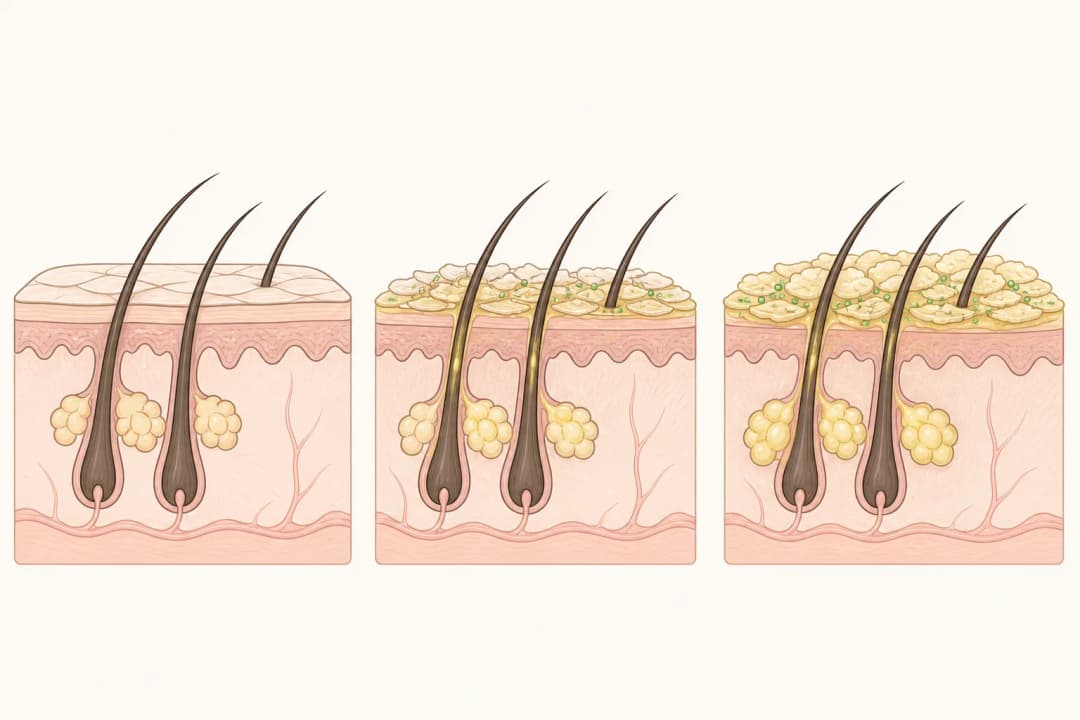
Cradle cap, also called infantile seborrhoeic dermatitis, produces yellow, white, or brown greasy scales on an infant's scalp. It can spread to the eyebrows, behind the ears, or skin folds. The scalp may look red underneath, but babies are often otherwise well and the condition is not caused by poor care.
Thick scale can cling to the scalp and may be mistaken for infection or eczema. Weeping, crusting, marked tenderness, foul smell, fever, or a baby who seems unwell needs medical assessment rather than home removal.
Gentle home care
Massage a small amount of a plain emollient into the scale, leave it for a short period, then loosen flakes gently with a soft baby brush and wash with a mild shampoo. Repeat gradually rather than trying to lift every scale at once. Never pick, scrape, or pull attached crusts, and keep oils away from the eyes and nose.
If the scalp is very inflamed, extensive, or not improving, a clinician may recommend a specific treatment. Topical antifungal treatment can be considered when yeast-related seborrhoeic dermatitis is suspected, but infants need product and dosing advice suited to their age.
When to seek help
Contact a clinician promptly for spreading redness, pus, bleeding, painful cracks, swelling, fever, poor feeding, unusual sleepiness, or a rash involving much of the body. Arrange a routine review when thick scale keeps returning, home care causes irritation, or the diagnosis is uncertain. Urgent assessment is appropriate when the baby appears seriously unwell.
Questions for the appointment
Ask whether the appearance fits cradle cap, how often to use an emollient, which shampoo is suitable, and whether an antifungal is needed. Ask which signs mean the scalp is infected and how to protect the baby's eyes and sensitive skin during care.
Find care
General Clinics & Polyclinics in Abu Dhabi
That answer is general. If you want it applied to your own case, these are licensed general clinics & polyclinics listed in Abu Dhabi.
27 Ar Ruwwad St - Shakhbout City - MSH4 - Abu Dhabi - United Arab Emirates
Accepts: Daman, Thiqa, Cigna, MetLife +20 more
Al Ruwais, Al Dhafrah
Accepts: Daman, Thiqa, AXA, Cigna +16 more
Al Bahyah - Al Bahyah Old - Abu Dhabi - United Arab Emirates
Accepts: Daman, Thiqa, Cigna, Allianz Care +18 more
Abu Dhabi
Accepts: Daman, Thiqa, AXA, Cigna +27 more
Ordered by verification status and how complete each clinic's public record is, then alphabetically. This is a directory listing, not a ranking — Zavis does not rate or recommend providers.
A factual listing drawn from the DHA, DOH and MOHAP licence registers. It is not a referral, an endorsement, or advice that any of these providers is right for you.
Questions people ask
Can I scrape off thick cradle-cap scales?
No. Soften them and loosen only what comes away easily; scraping can injure the scalp and allow infection.
Does cradle cap mean the baby has an allergy?
Not necessarily. It is commonly a form of infantile seborrhoeic dermatitis, though another rash may look similar and should be checked if severe.
Related
Related reading
Keep reading
Medical disclaimer. This page is general health information, not medical advice, and it cannot diagnose you. Always consult a licensed healthcare provider about your own symptoms and treatment. In an emergency in the UAE, call 998 for an ambulance.