
What should you know about sequestration crisis in sickle cell disease?
Short answer
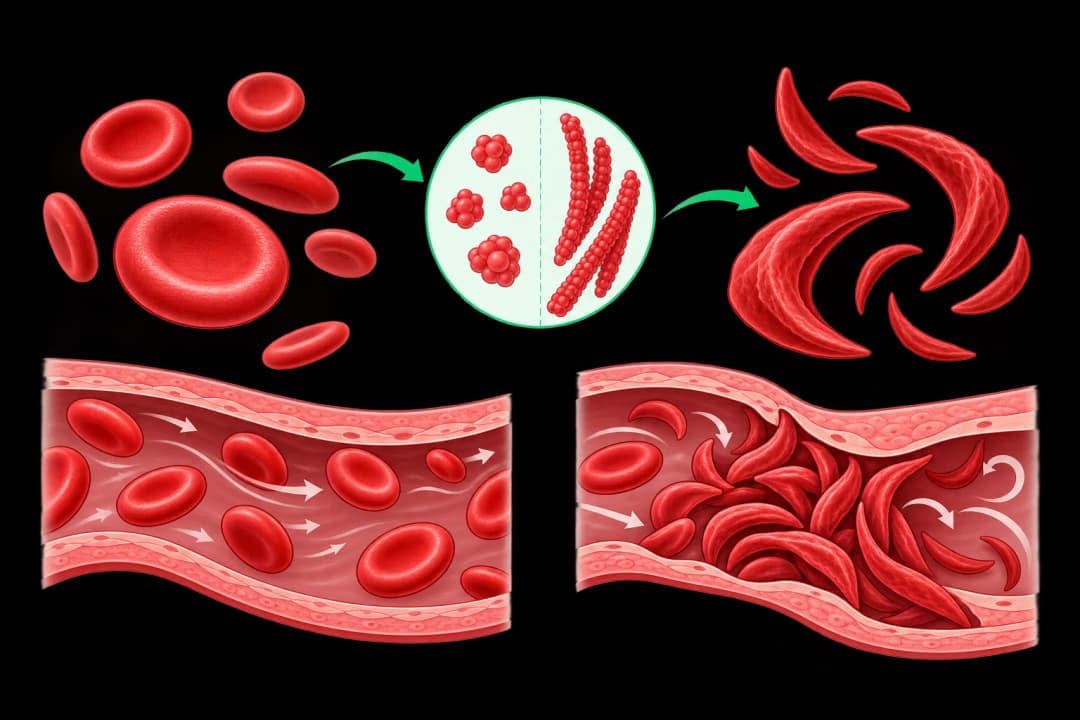
A sequestration crisis is an emergency in which blood becomes trapped in the spleen or liver, causing a rapid fall in circulating blood and potentially severe anaemia.
This answers one question. It is not a diagnosis and does not replace an assessment by a licensed doctor.
At a glance
- Main problem
- Blood trapped in the spleen or liver
- Key warning
- Sudden pallor, weakness or abdominal swelling
- Response
- Seek emergency assessment immediately
What it means
In sickle cell disease, the spleen may suddenly enlarge as red blood cells collect there. In some people, the liver can also become enlarged. The body then has less blood moving through the circulation, so the heart works harder and tissues receive less oxygen.
Possible clues include unusual tiredness, weakness, dizziness, pale skin, a fast heartbeat, breathlessness, or a swollen or painful abdomen. A child may become unusually sleepy, irritable, or floppy. A sequestration crisis is a presentation of sickle cell disease, but symptoms can overlap with other urgent problems.
What to do now
Treat suspected sequestration as an emergency. Contact your sickle cell team or emergency service immediately, especially if the abdomen is enlarging or the person looks pale, weak, faint, confused, or short of breath. Keep the person resting and warm, and take their medicines and medical information with them.
Clinicians may check the blood count, reticulocyte count, vital signs and spleen or liver size. A blood test helps assess anaemia and guide treatment. Hospital care may include fluids, close monitoring and a blood transfusion when clinically needed. Do not wait for home treatment to correct a suspected crisis.
When to seek urgent care
Seek emergency care at once for fainting, severe weakness, difficulty breathing, chest pain, confusion, reduced alertness, a rapidly swollen abdomen, or inability to drink. These signs can indicate that circulation or oxygen delivery is deteriorating. Even milder new symptoms deserve same-day advice from the sickle cell team because the change can progress quickly.
Questions for your doctor
Ask how to measure abdominal enlargement, which symptoms should trigger an ambulance, whether you need a personal emergency plan, and how your family should respond if a crisis is suspected.
Find care
General Clinics & Polyclinics in Abu Dhabi
That answer is general. If you want it applied to your own case, these are licensed general clinics & polyclinics listed in Abu Dhabi.
27 Ar Ruwwad St - Shakhbout City - MSH4 - Abu Dhabi - United Arab Emirates
Accepts: Daman, Thiqa, Cigna, MetLife +20 more
Al Ruwais, Al Dhafrah
Accepts: Daman, Thiqa, AXA, Cigna +16 more
Al Bahyah - Al Bahyah Old - Abu Dhabi - United Arab Emirates
Accepts: Daman, Thiqa, Cigna, Allianz Care +18 more
Abu Dhabi
Accepts: Daman, Thiqa, AXA, Cigna +27 more
Ordered by verification status and how complete each clinic's public record is, then alphabetically. This is a directory listing, not a ranking — Zavis does not rate or recommend providers.
A factual listing drawn from the DHA, DOH and MOHAP licence registers. It is not a referral, an endorsement, or advice that any of these providers is right for you.
Questions people ask
Can sequestration crisis happen without severe pain?
Yes. Sudden anaemia and abdominal enlargement may be more noticeable than pain, particularly in children.
Can it happen again?
A previous episode can increase concern about recurrence, so ask the specialist team for an individual monitoring and emergency plan.
Related
Related reading
Keep reading
Medical disclaimer. This page is general health information, not medical advice, and it cannot diagnose you. Always consult a licensed healthcare provider about your own symptoms and treatment. In an emergency in the UAE, call 998 for an ambulance.