
What should you know about secondary prevention of cancer?
Short answer
Secondary prevention begins after a cancer or precancerous change has been identified. It may include surveillance, treatment of remaining disease, management of treatment effects and changes that lower future risk. It is tailored to the original cancer, treatment history, current health and personal priorities.
This answers one question. It is not a diagnosis and does not replace an assessment by a licensed doctor.
At a glance
- Starts when
- After cancer or a precancerous change is identified
- May include
- Surveillance, treatment and symptom monitoring
- Plan is based on
- Cancer type, treatment history and current health
What it means
Follow-up can involve examinations, blood tests or scans at intervals chosen by the oncology team. The purpose is to notice recurrence, a new cancer or a treatment-related problem early enough to discuss options. Screening for people without symptoms is different from follow-up after cancer and follows its own plan.
Prevention also includes checking symptoms rather than waiting for the next appointment, taking prescribed treatment as directed, avoiding tobacco, protecting skin from excess sun and keeping vaccinations and other health care up to date when appropriate. These steps support health but cannot remove every risk.
What to do next
Keep a written survivorship or follow-up plan with the cancer type, treatments, expected effects, warning symptoms and contact details. Tell the team about a new lump, persistent pain, unexplained bleeding, lasting cough, bowel change or weight change. Ask which symptoms need a same-day call and which can wait for routine review.
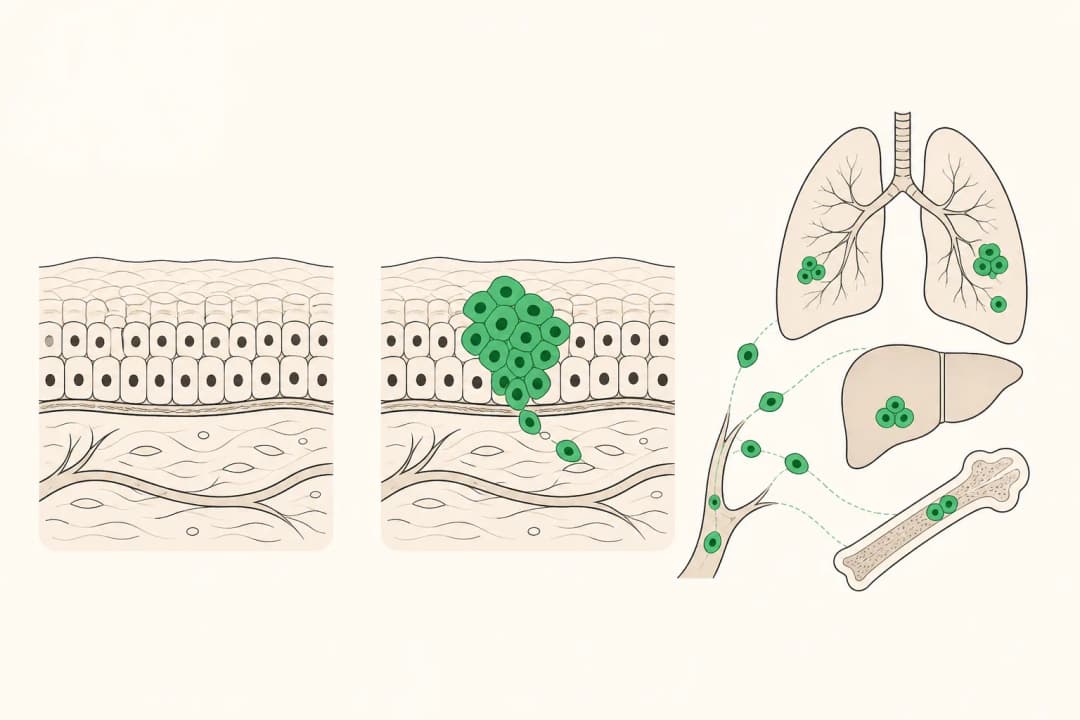
If disease has returned or spread, options may include systemic treatment such as chemotherapy, symptom-focused palliative care and discussion of a clinical trial. A second opinion can help clarify choices when the diagnosis or treatment plan feels complex.
When to seek urgent care
Get urgent help for severe breathlessness, chest pain, sudden weakness, confusion, uncontrolled bleeding, a high fever during treatment, or inability to keep fluids down. Contact the oncology team promptly for a new symptom that is worsening or persistent rather than waiting for a scheduled visit.
Questions for your doctor
What is my follow-up schedule and what is each test checking? Which symptoms should trigger an urgent call? What can I do to reduce treatment-related harm? How will we assess recurrence? Would a second opinion or clinical trial be relevant if the cancer changes?
Questions people ask
Does secondary prevention guarantee that cancer will not return?
No. It is designed to detect change early and reduce avoidable harm, but recurrence and new cancers cannot always be prevented.
Is follow-up the same as screening?
No. Follow-up monitors someone with a previous cancer, while screening looks for disease in people without a known diagnosis.
Related
Related reading
Keep reading
Cancer care in the UAE
Hospitals & Medical Centers in Abu Dhabi
Most UAE cancer care is delivered inside hospital services rather than by standalone oncology clinics, so these are licensed hospitals & medical centers listed in Abu Dhabi. Confirm the specific cancer service exists before you travel, and know that asking for a second opinion is routine.
Ahalia Hospital Musaffah Building - Musaffah - Musaffah Industrial - Abu Dhabi - United Arab Emirates
Accepts: Daman, Thiqa, AXA, Cigna +26 more
Al Ruwais Industrial City - Abu Dhabi - United Arab Emirates
Accepts: Daman, Thiqa, AXA, Cigna +30 more
Abu Dhabi, Abu Dhabi
Accepts: Daman, Thiqa, AXA, Cigna +30 more
Second opinions are routine in cancer care and asking for one does not affect your treatment. How to arrange a second opinion in the UAE.
Ordered by verification status and how complete each clinic's public record is, then alphabetically. This is a directory listing, not a ranking — Zavis does not rate or recommend providers.
A factual listing drawn from the DHA, DOH and MOHAP licence registers. It is not a referral, an endorsement, or advice that any of these providers is right for you.
Medical disclaimer. This page is general health information, not medical advice, and it cannot diagnose you. Always consult a licensed healthcare provider about your own symptoms and treatment. In an emergency in the UAE, call 998 for an ambulance.