
What should you know about SCLC staging?
Short answer
SCLC staging shows how far small cell lung cancer has spread and helps guide treatment planning.
This answers one question. It is not a diagnosis and does not replace an assessment by a licensed doctor.
At a glance
- Common stage groups
- Limited-stage and extensive-stage
- Staging tools
- Scans, examination, biopsy, and selected brain imaging
What the stage means
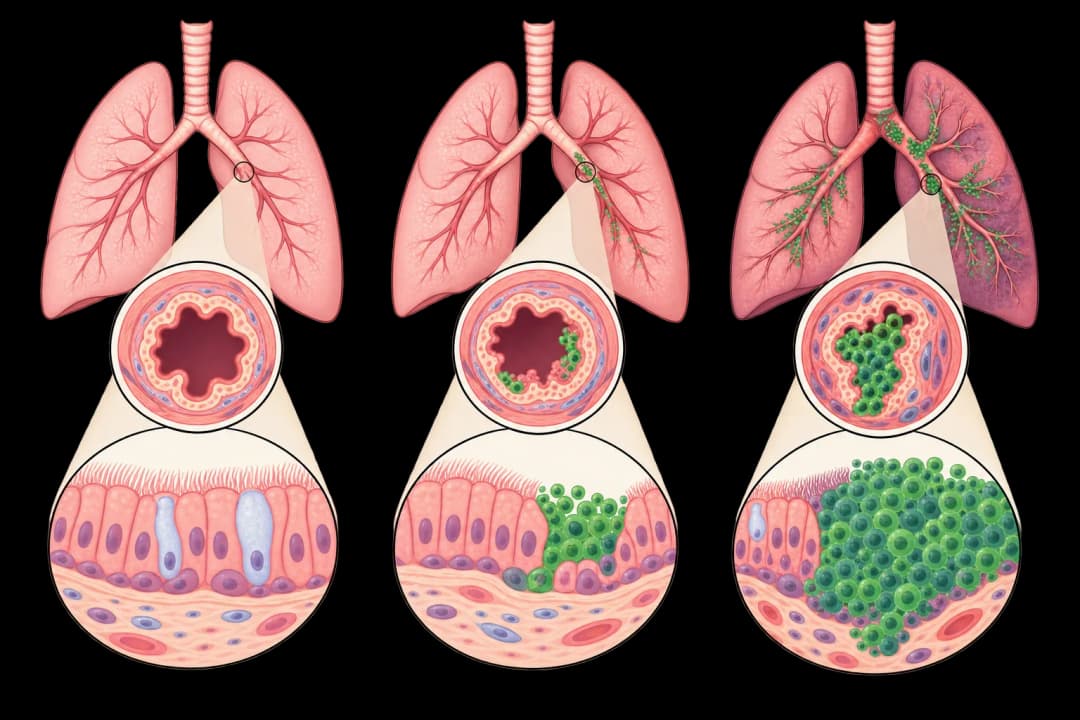
Small cell lung cancer is commonly described as limited-stage or extensive-stage disease. Limited-stage disease is confined enough to a region that treatment may focus on the chest and nearby areas. Extensive-stage disease has spread beyond that practical treatment area, such as to the opposite lung, distant organs, or fluid around the lung. Doctors combine scans, examination, biopsy findings, and sometimes brain imaging to make this assessment.
The stage is a map for decisions, not a prediction of one person’s future. It can affect whether chemotherapy is combined with chest radiotherapy, whether immunotherapy is included, and whether treatment is aimed at controlling disease in several locations. Brain imaging matters because SCLC can involve the brain even when there are no neurological symptoms.
What to do after staging
Ask which tests established the stage, which areas were examined, and whether the result is limited-stage or extensive-stage. Request a clear treatment sequence, including the purpose of each part. Options may include Chemotherapy, Immunotherapy, Radiotherapy, or Whole Brain Radiotherapy, depending on the scan findings and your general health. Keep a written list of medicines and new symptoms, and bring a support person if information feels difficult to absorb.
When to seek care promptly
Contact the oncology team promptly for new or worsening breathlessness, chest pain, coughing blood, confusion, a seizure, new weakness, severe headache, or difficulty walking. Sudden severe breathing difficulty, collapse, or a seizure needs emergency help. These symptoms can have several causes, but they should not wait for a routine staging appointment.
Questions for your doctor
Which stage applies to me, and what scan or biopsy information supports it? Has the brain been assessed? What is the aim of treatment in my situation? How will you check whether treatment is working? Which symptoms should trigger an urgent call?
Questions people ask
Can SCLC stage change?
The stage may be refined when new scan or biopsy information becomes available. Your team can explain whether a result changes the treatment plan.
Does staging tell me exactly what will happen?
No. It describes the disease extent, while response also depends on tumour features, overall health, and how treatment is tolerated.
Related
Related reading
Keep reading
Cancer care in the UAE
Hospitals & Medical Centers in Abu Dhabi
Most UAE cancer care is delivered inside hospital services rather than by standalone oncology clinics, so these are licensed hospitals & medical centers listed in Abu Dhabi. Confirm the specific cancer service exists before you travel, and know that asking for a second opinion is routine.
Ahalia Hospital Musaffah Building - Musaffah - Musaffah Industrial - Abu Dhabi - United Arab Emirates
Accepts: Daman, Thiqa, AXA, Cigna +26 more
Al Ruwais Industrial City - Abu Dhabi - United Arab Emirates
Accepts: Daman, Thiqa, AXA, Cigna +30 more
Abu Dhabi, Abu Dhabi
Accepts: Daman, Thiqa, AXA, Cigna +30 more
Second opinions are routine in cancer care and asking for one does not affect your treatment. How to arrange a second opinion in the UAE.
Ordered by verification status and how complete each clinic's public record is, then alphabetically. This is a directory listing, not a ranking — Zavis does not rate or recommend providers.
A factual listing drawn from the DHA, DOH and MOHAP licence registers. It is not a referral, an endorsement, or advice that any of these providers is right for you.
Medical disclaimer. This page is general health information, not medical advice, and it cannot diagnose you. Always consult a licensed healthcare provider about your own symptoms and treatment. In an emergency in the UAE, call 998 for an ambulance.