
What should you know about salmonella in sickle cell disease?
Short answer
Salmonella infection can be more serious in people with sickle cell disease, so fever or worsening illness needs prompt medical advice.
This answers one question. It is not a diagnosis and does not replace an assessment by a licensed doctor.
At a glance
- Higher concern
- Infection may become serious more quickly
- Report promptly
- Fever, chills, severe pain or worsening weakness
- Possible assessment
- Examination, blood tests and cultures
Why the combination matters
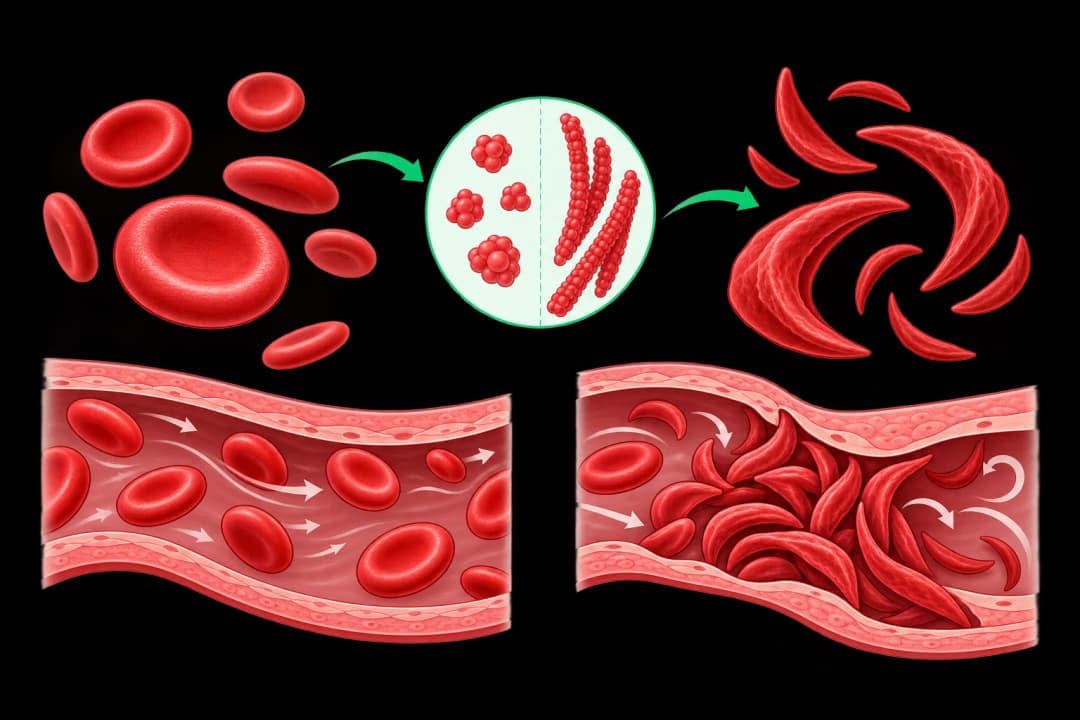
[Sickle Cell Disease](/conditions/sickle-cell-disease/) affects red blood cells and can change how the body responds to infection. Salmonella may remain in the gut or enter the bloodstream and can be associated with fever, weakness, bone or joint symptoms. Infection can overlap with a sickle cell crisis, so new [Joint Pain](/symptoms/joint-pain/), [Fatigue](/symptoms/fatigue/) or [Pale Skin](/symptoms/pale-skin/) should not be dismissed as routine food poisoning.
A healthcare professional may assess vital signs, hydration and pain, and request a [Blood Test](/treatments/diagnostics-and-screening/blood-test/) or cultures when appropriate. The symptoms do not identify the cause without assessment.
What to do
Follow the personal infection plan provided by your haematology team. Check your temperature if you feel unwell, drink according to your clinician's advice and keep taking prescribed medicines unless a professional tells you otherwise. Do not use leftover antibiotics or delay contact because diarrhoea seems mild. Tell the team about stool changes, vomiting, recent food or water exposures and anyone else who is ill.
When to seek care
Contact your haematology or urgent-care service promptly for fever, chills, new severe pain, breathing difficulty, confusion, fainting, persistent vomiting, inability to drink or reduced urine. Emergency help is appropriate for collapse, severe weakness or difficulty breathing. Early assessment can distinguish infection from other complications and guide antibiotics, fluids and monitoring.
Questions for your doctor
Ask which temperature or symptom threshold should trigger your emergency plan, whether blood or stool testing is needed, how to manage fluids during diarrhoea, and which medicines are safe with your regular treatment. [Premarital Screening](/treatments/diagnostics-and-screening/premarital-screening/) is a separate service and does not diagnose an acute infection.
Find care
General Clinics & Polyclinics in Abu Dhabi
That answer is general. If you want it applied to your own case, these are licensed general clinics & polyclinics listed in Abu Dhabi.
27 Ar Ruwwad St - Shakhbout City - MSH4 - Abu Dhabi - United Arab Emirates
Accepts: Daman, Thiqa, Cigna, MetLife +20 more
Al Ruwais, Al Dhafrah
Accepts: Daman, Thiqa, AXA, Cigna +16 more
Al Bahyah - Al Bahyah Old - Abu Dhabi - United Arab Emirates
Accepts: Daman, Thiqa, Cigna, Allianz Care +18 more
Abu Dhabi
Accepts: Daman, Thiqa, AXA, Cigna +27 more
Ordered by verification status and how complete each clinic's public record is, then alphabetically. This is a directory listing, not a ranking — Zavis does not rate or recommend providers.
A factual listing drawn from the DHA, DOH and MOHAP licence registers. It is not a referral, an endorsement, or advice that any of these providers is right for you.
Questions people ask
Why is salmonella concerning with sickle cell disease?
Infection can place extra stress on the body and may enter the bloodstream, while symptoms can overlap with a sickle cell complication.
Should fever be reported?
Yes. Follow your haematology team's fever plan and seek prompt advice rather than waiting for symptoms to settle.
Related
Related reading
Keep reading
Medical disclaimer. This page is general health information, not medical advice, and it cannot diagnose you. Always consult a licensed healthcare provider about your own symptoms and treatment. In an emergency in the UAE, call 998 for an ambulance.