
Rhabdomyolysis after spinning: what to know
Short answer
Rhabdomyolysis can follow unusually intense spinning, particularly with heat or dehydration, and severe muscle symptoms warrant prompt medical review.
This answers one question. It is not a diagnosis and does not replace an assessment by a licensed doctor.
At a glance
- Common setting
- Unaccustomed high-intensity cycling in heat
- Leg warning signs
- Severe pain, weakness, or increasing swelling
- Activity advice
- Pause training until assessed when symptoms are significant
Why a spinning session can matter
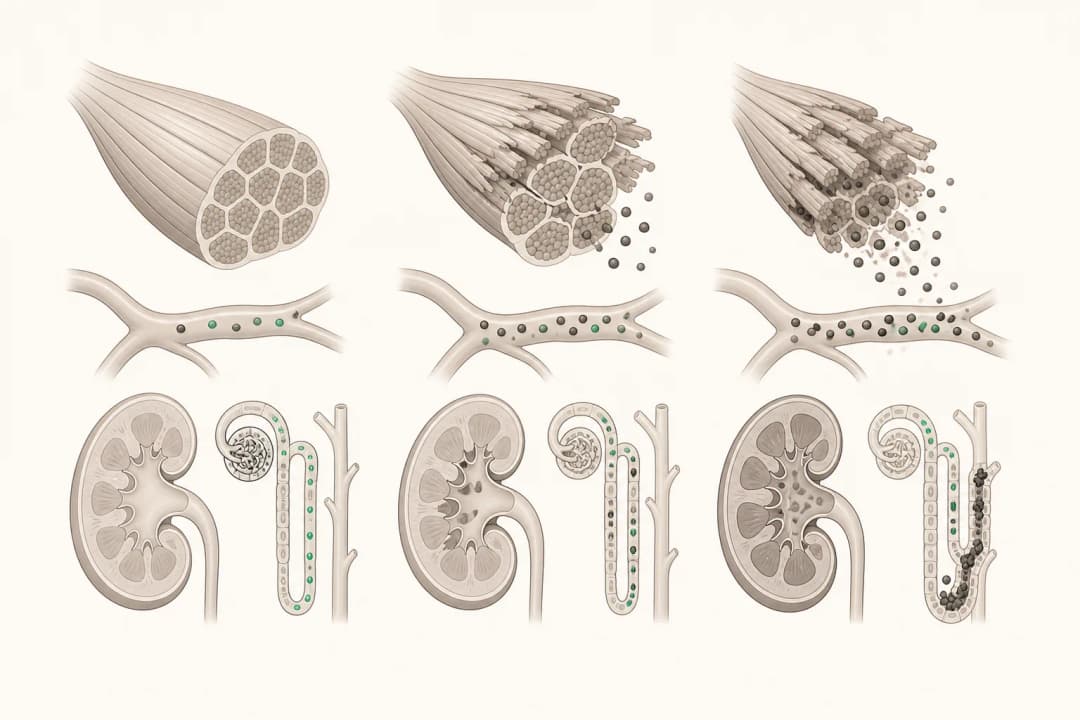
A demanding cycling class can keep large leg muscles working hard for a sustained period, especially when resistance is high or the rider is not accustomed to the workload. Heat, limited breaks, illness, and inadequate fluid intake can add stress. Rhabdomyolysis involves muscle-cell injury and may cause pain that is out of proportion to expected post-class soreness, along with weakness, thigh swelling, tenderness, or dark urine. Ordinary muscle soreness after exercise usually follows a different course, but appearance alone cannot distinguish the conditions.
What to do after a hard class
Stop cycling and avoid another class while symptoms are significant. Cool down in a cool place without forcing a painful stretch. Arrange prompt medical advice if pain is severe, swelling is increasing, weakness limits walking, or urine looks unusually dark. Tell the clinician the class duration, resistance or intensity, room heat, breaks, fluid intake, and any medicines or supplements. Do not use a massage gun or return to intervals to test the legs.
When urgent care is needed
Seek urgent care for dark or scant urine, inability to walk normally, rapidly increasing thigh or calf swelling, severe weakness, repeated vomiting, dizziness, confusion, chest symptoms, or breathing difficulty. Compartment pressure and kidney effects need assessment in person. If you feel faint, ask someone else to take you or call emergency services.
Questions for your doctor
Ask whether blood and urine tests are needed, when you may cycle again, how to reduce resistance and heat exposure on return, and whether a physiotherapist should guide conditioning. Discuss any previous exertional episode and medicines that may increase risk.
Find care
General Clinics & Polyclinics in Abu Dhabi
That answer is general. If you want it applied to your own case, these are licensed general clinics & polyclinics listed in Abu Dhabi.
27 Ar Ruwwad St - Shakhbout City - MSH4 - Abu Dhabi - United Arab Emirates
Accepts: Daman, Thiqa, Cigna, MetLife +20 more
Al Ruwais, Al Dhafrah
Accepts: Daman, Thiqa, AXA, Cigna +16 more
Al Bahyah - Al Bahyah Old - Abu Dhabi - United Arab Emirates
Accepts: Daman, Thiqa, Cigna, Allianz Care +18 more
Abu Dhabi
Accepts: Daman, Thiqa, AXA, Cigna +27 more
Ordered by verification status and how complete each clinic's public record is, then alphabetically. This is a directory listing, not a ranking — Zavis does not rate or recommend providers.
A factual listing drawn from the DHA, DOH and MOHAP licence registers. It is not a referral, an endorsement, or advice that any of these providers is right for you.
Questions people ask
Are sore legs after spinning always rhabdomyolysis?
No. Soreness is common after hard exercise, but severe or worsening pain, weakness, swelling, or dark urine needs prompt assessment.
Should I drink as much water as possible after class?
Do not force fluids blindly; seek medical advice because the right fluid plan depends on your symptoms and health.
Related
Related reading
Keep reading
Medical disclaimer. This page is general health information, not medical advice, and it cannot diagnose you. Always consult a licensed healthcare provider about your own symptoms and treatment. In an emergency in the UAE, call 998 for an ambulance.