
Rhabdomyolysis and autoimmune myopathy
Short answer
Rhabdomyolysis is sudden muscle breakdown, while autoimmune myopathy is immune-related muscle inflammation or weakness that may persist.
This answers one question. It is not a diagnosis and does not replace an assessment by a licensed doctor.
At a glance
- Key distinction
- Rhabdomyolysis is acute muscle breakdown; autoimmune myopathy can cause ongoing weakness.
- Useful clues
- Pain, weakness, urine changes, recent exertion, medicines, and infection history guide assessment.
How the conditions differ
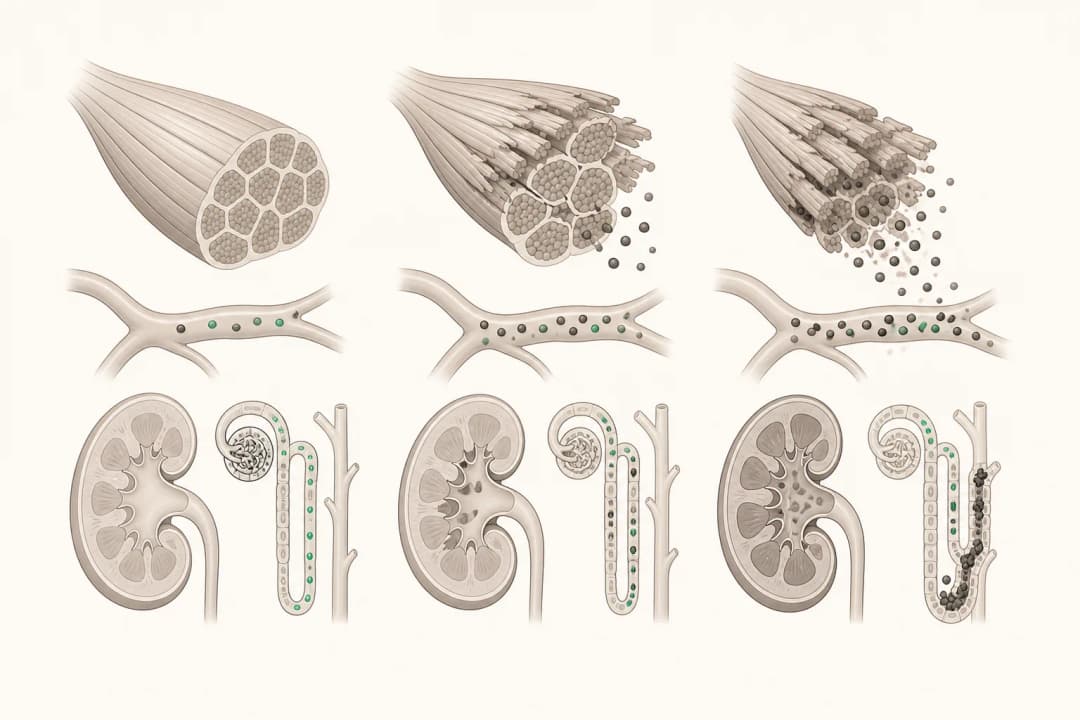
Rhabdomyolysis can follow intense exertion, heat exposure, injury, infection, seizures, or a medicine reaction. Damaged muscle releases substances into the bloodstream and can affect kidney function. Autoimmune myopathy develops when the immune system targets muscle tissue. Weakness is often more noticeable in the hips, thighs, shoulders, or upper arms, and may make stairs, rising from a chair, or lifting objects difficult.
The two problems can overlap: active autoimmune muscle disease can trigger muscle breakdown, but ordinary post-exercise soreness does not establish either diagnosis. A clinician may compare your history with strength testing and blood tests such as creatine kinase, kidney markers, and tests for inflammation or muscle-related antibodies.
What to do next
Stop strenuous exercise until a clinician has assessed significant pain, weakness, swelling, or dark urine. Drink fluids only as advised if you have heart or kidney problems, because the right amount depends on your health. Bring a list of medicines, supplements, recent infections, exercise changes, and family history. If weakness has been building over weeks or returns without a clear trigger, ask about a neurology or rheumatology assessment.
When to seek care
Seek urgent medical care for severe muscle pain or swelling, marked weakness, confusion, fainting, very dark or reduced urine, trouble breathing, or inability to keep fluids down. These features can signal substantial muscle injury or a complication affecting the kidneys or electrolytes. Chest pressure, a new irregular heartbeat, or severe shortness of breath needs emergency attention.
Questions for your doctor
Could my symptoms be from an exertional episode, an autoimmune muscle condition, or both? Which blood and urine tests should be repeated? Do I need kidney, heart, neurology, or rheumatology follow-up? When can I safely resume activity?
Find care
General Clinics & Polyclinics in Abu Dhabi
That answer is general. If you want it applied to your own case, these are licensed general clinics & polyclinics listed in Abu Dhabi.
27 Ar Ruwwad St - Shakhbout City - MSH4 - Abu Dhabi - United Arab Emirates
Accepts: Daman, Thiqa, Cigna, MetLife +20 more
Al Ruwais, Al Dhafrah
Accepts: Daman, Thiqa, AXA, Cigna +16 more
Al Bahyah - Al Bahyah Old - Abu Dhabi - United Arab Emirates
Accepts: Daman, Thiqa, Cigna, Allianz Care +18 more
Abu Dhabi
Accepts: Daman, Thiqa, AXA, Cigna +27 more
Ordered by verification status and how complete each clinic's public record is, then alphabetically. This is a directory listing, not a ranking — Zavis does not rate or recommend providers.
A factual listing drawn from the DHA, DOH and MOHAP licence registers. It is not a referral, an endorsement, or advice that any of these providers is right for you.
Questions people ask
Can autoimmune myopathy cause rhabdomyolysis?
It can be a contributing cause in some people, so recurring or unexplained episodes deserve specialist evaluation.
Is exercise soreness the same as rhabdomyolysis?
No. Soreness is common after unfamiliar activity, while severe pain, weakness, swelling, or dark urine requires prompt assessment.
Related
Related reading
Keep reading
Medical disclaimer. This page is general health information, not medical advice, and it cannot diagnose you. Always consult a licensed healthcare provider about your own symptoms and treatment. In an emergency in the UAE, call 998 for an ambulance.