
Pulmonary hypertension in sickle cell disease
Short answer
Pulmonary hypertension in sickle cell disease may develop when ongoing blood-vessel stress, anaemia, clots, or lung problems strain the heart and lungs.
This answers one question. It is not a diagnosis and does not replace an assessment by a licensed doctor.
At a glance
- Underlying condition
- Sickle cell disease
- Possible strain
- Anaemia, clots, low oxygen, or vessel changes
- Useful review
- Heart, lung, and blood assessment
Why the conditions can be linked
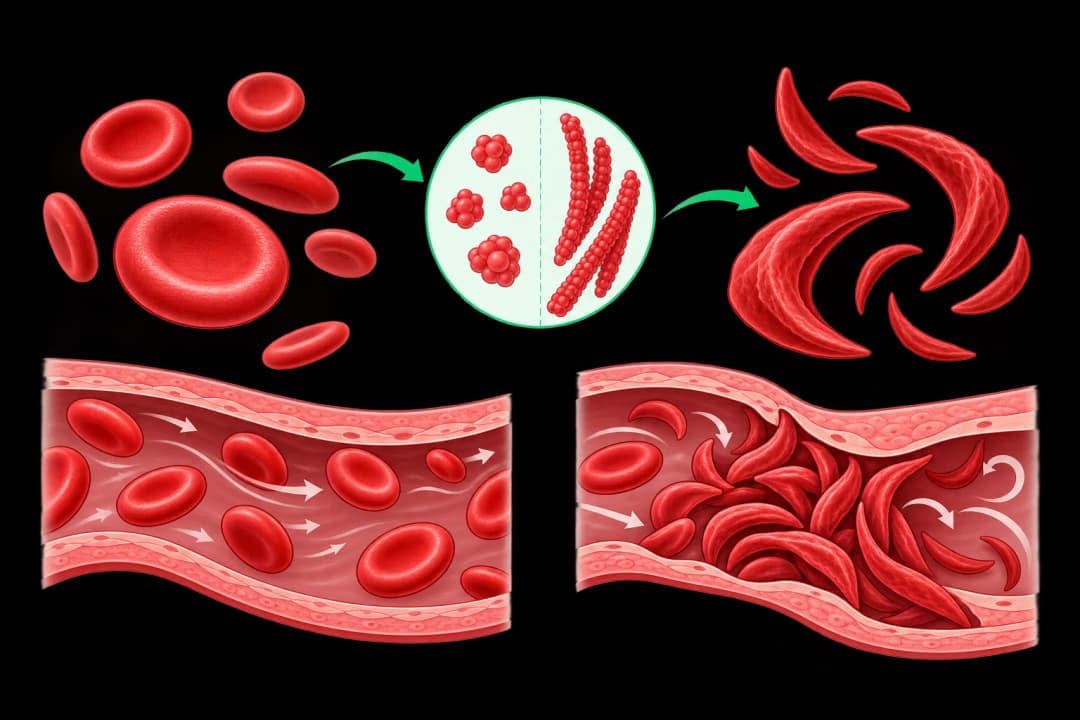
Sickle cell disease changes red blood cells and can cause episodes of blocked small-vessel flow, inflammation, and reduced oxygen delivery. Over time, anaemia makes the heart work harder. Previous clots, repeated chest illness, or sleep-related low oxygen can add strain to the vessels in the lungs.
Possible symptoms include breathlessness with activity, reduced exercise tolerance, fatigue, dizziness, chest discomfort, or swelling. Fatigue, joint pain, and pale skin can also reflect sickle cell disease itself, so symptoms need clinical context rather than self-diagnosis.
How it is assessed
Tell your haematology or cardiology team about new breathlessness, fainting, reduced stamina, or swelling. Assessment may include examination, oxygen measurement, an electrocardiogram, echocardiography, and a Blood Test to review anaemia and organ function. The team may also consider clot history, chest symptoms, and sleep quality.
Keep the sickle cell care plan available, take prescribed medicines as directed, and attend planned reviews. Do not start exercise changes or oxygen treatment without advice tailored to your heart, lungs, and blood condition.
When symptoms are urgent
Get emergency help for sudden breathlessness, severe chest pain, fainting, new weakness, confusion, blue lips, or coughing blood. In someone with sickle cell disease, chest symptoms with fever or difficulty breathing may signal a serious acute problem and need immediate assessment.
Questions to ask
Could my symptoms be related to pulmonary hypertension, anaemia, a clot, or another sickle cell complication? Which tests are needed, and how will results change my care? What should I do during a pain episode or chest illness?
Find care
General Clinics & Polyclinics in Abu Dhabi
That answer is general. If you want it applied to your own case, these are licensed general clinics & polyclinics listed in Abu Dhabi.
27 Ar Ruwwad St - Shakhbout City - MSH4 - Abu Dhabi - United Arab Emirates
Accepts: Daman, Thiqa, Cigna, MetLife +20 more
Al Ruwais, Al Dhafrah
Accepts: Daman, Thiqa, AXA, Cigna +16 more
Al Bahyah - Al Bahyah Old - Abu Dhabi - United Arab Emirates
Accepts: Daman, Thiqa, Cigna, Allianz Care +18 more
Abu Dhabi
Accepts: Daman, Thiqa, AXA, Cigna +27 more
Ordered by verification status and how complete each clinic's public record is, then alphabetically. This is a directory listing, not a ranking — Zavis does not rate or recommend providers.
A factual listing drawn from the DHA, DOH and MOHAP licence registers. It is not a referral, an endorsement, or advice that any of these providers is right for you.
Questions people ask
Does sickle cell disease always cause pulmonary hypertension?
No. It is a possible complication, not an expected outcome for every person with sickle cell disease.
Can fatigue alone diagnose it?
No. Fatigue has several possible causes in sickle cell disease and needs assessment alongside other symptoms and test findings.
Related
Related reading
Keep reading
Medical disclaimer. This page is general health information, not medical advice, and it cannot diagnose you. Always consult a licensed healthcare provider about your own symptoms and treatment. In an emergency in the UAE, call 998 for an ambulance.