
PT1a melanoma treatment: what to know
Short answer
Treatment for PT1a melanoma usually centres on complete surgical removal, followed by pathology review and planned skin surveillance.
This answers one question. It is not a diagnosis and does not replace an assessment by a licensed doctor.
At a glance
- Main treatment
- Surgical removal of the melanoma
- After treatment
- Pathology review and skin surveillance
Why treatment is planned this way
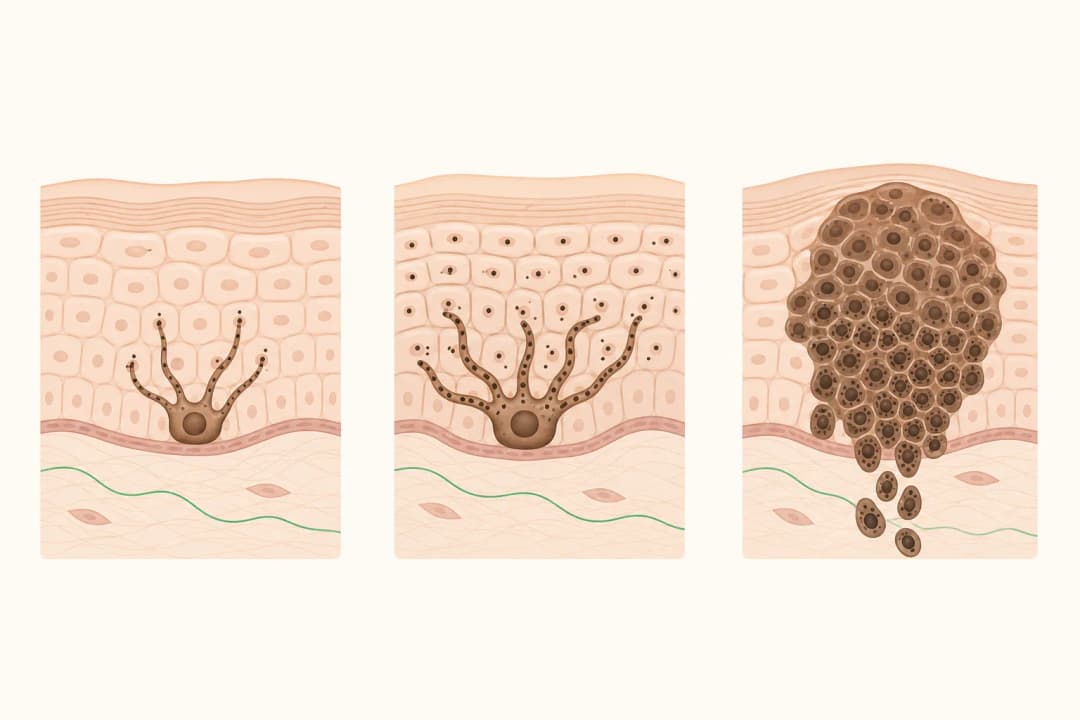
PT1a identifies a thin primary melanoma without ulceration. Because the diagnosis is based on tissue, the first biopsy may be followed by a wider excision to remove a margin of surrounding skin. The amount of tissue and the closure method depend on the lesion's site, size and the initial procedure. The final specimen is checked to confirm the margins and refine staging. A sentinel lymph node biopsy is considered selectively rather than assumed from the PT1a label alone.
Preparing for treatment and follow-up
Ask the surgeon what procedure is proposed, where the scar will be, how to care for the wound and when activity can resume. Keep the wound clean and follow the dressing instructions you receive. Do not apply unapproved products to a healing incision. Once your clinician says it is healed, protect the scar from strong sun. Keep a record of the pathology result and attend follow-up visits. Immunotherapy or other systemic treatment is not routine for every PT1a case; it depends on additional findings and specialist assessment.
When to contact your team
After surgery, seek prompt advice for spreading redness, increasing warmth or pain, wound separation, persistent bleeding, pus or fever. Outside the recovery period, report a new changing mole, a spot that bleeds or does not heal, a lump near the scar or swelling in a nearby lymph-node area. Sudden neurological symptoms require urgent assessment.
Questions to ask
Ask whether you need a wider excision, what the final margins show, whether sentinel node assessment is appropriate, and how often your skin should be examined. Ask how to recognise wound problems and which service to contact after hours.
Find care
General Clinics & Polyclinics in Abu Dhabi
That answer is general. If you want it applied to your own case, these are licensed general clinics & polyclinics listed in Abu Dhabi.
27 Ar Ruwwad St - Shakhbout City - MSH4 - Abu Dhabi - United Arab Emirates
Accepts: Daman, Thiqa, Cigna, MetLife +20 more
Al Ruwais, Al Dhafrah
Accepts: Daman, Thiqa, AXA, Cigna +16 more
Al Bahyah - Al Bahyah Old - Abu Dhabi - United Arab Emirates
Accepts: Daman, Thiqa, Cigna, Allianz Care +18 more
Abu Dhabi
Accepts: Daman, Thiqa, AXA, Cigna +27 more
Ordered by verification status and how complete each clinic's public record is, then alphabetically. This is a directory listing, not a ranking — Zavis does not rate or recommend providers.
A factual listing drawn from the DHA, DOH and MOHAP licence registers. It is not a referral, an endorsement, or advice that any of these providers is right for you.
Questions people ask
Is a wider excision always needed?
Your surgeon decides after reviewing the biopsy, site, margins and pathology details; the next procedure is not identical for everyone.
Is immunotherapy automatically used for PT1a melanoma?
No. It is considered only when the complete clinical and pathology picture supports it.
Related
Related reading
Keep reading
Medical disclaimer. This page is general health information, not medical advice, and it cannot diagnose you. Always consult a licensed healthcare provider about your own symptoms and treatment. In an emergency in the UAE, call 998 for an ambulance.