
PPROM with a cerclage: what to know
Short answer
PPROM with a cerclage needs prompt maternity assessment because the stitch and broken membranes require an individual plan for infection and birth.
This answers one question. It is not a diagnosis and does not replace an assessment by a licensed doctor.
At a glance
- Cerclage
- A stitch supports the cervix during pregnancy.
- Leakage
- Suspected PPROM needs urgent maternity assessment.
- Do not do
- Do not pull, examine or remove the stitch yourself.
Why the combination matters
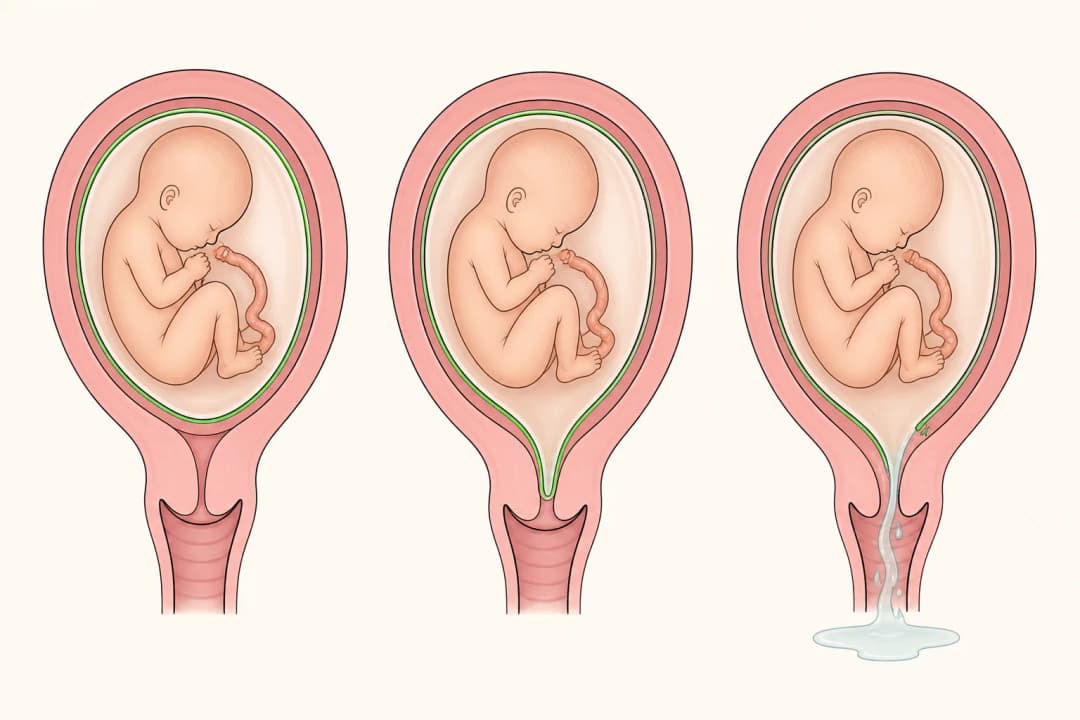
A cerclage is a stitch placed around the cervix to help it stay closed during pregnancy. If the membranes rupture, fluid can leak around the stitch and the risk of infection or labour must be assessed. The stitch may need to be removed if labour starts, if infection is suspected or if birth is advised, but the decision depends on your examination and pregnancy circumstances.
Do not try to feel for, loosen or remove the stitch yourself. A cerclage does not prevent PPROM, and fluid leakage should be assessed even when there are no contractions or pain.
What to do
Call your maternity unit urgently if you notice a gush or trickle of fluid. Use a clean pad, record the time and colour of the leakage, and avoid sex or inserting anything into the vagina until reviewed. Tell the team when the cerclage was placed, why it was recommended, and whether you have had bleeding, contractions, fever or reduced fetal movements.
The team may discuss monitoring, infection treatment when indicated, an antenatal steroid injection and the safest timing of birth. If birth is planned, induction of labour may be discussed when clinically appropriate. See [Antenatal Steroid Injection](/treatments/pregnancy-and-birth-care/antenatal-corticosteroid-injection/) and [Induction of Labour](/treatments/pregnancy-and-birth-care/induction-of-labour/).
When urgent help is needed
Seek immediate maternity assessment for fever, chills, feeling unwell, abdominal tenderness, regular contractions, pelvic pressure, vaginal bleeding, foul-smelling or green fluid, or reduced fetal movements. These signs can require rapid review of the cerclage and the pregnancy, even if the fluid leak later stops.
Questions to ask
Ask whether the cerclage should remain in place, what findings would require removal, how infection will be checked, and whether you need hospital monitoring. Ask who to call day or night and what plan applies if contractions begin before you reach the hospital.
Find care
General Clinics & Polyclinics in Abu Dhabi
That answer is general. If you want it applied to your own case, these are licensed general clinics & polyclinics listed in Abu Dhabi.
27 Ar Ruwwad St - Shakhbout City - MSH4 - Abu Dhabi - United Arab Emirates
Accepts: Daman, Thiqa, Cigna, MetLife +20 more
Al Ruwais, Al Dhafrah
Accepts: Daman, Thiqa, AXA, Cigna +16 more
Al Bahyah - Al Bahyah Old - Abu Dhabi - United Arab Emirates
Accepts: Daman, Thiqa, Cigna, Allianz Care +18 more
Abu Dhabi
Accepts: Daman, Thiqa, AXA, Cigna +27 more
Ordered by verification status and how complete each clinic's public record is, then alphabetically. This is a directory listing, not a ranking — Zavis does not rate or recommend providers.
A factual listing drawn from the DHA, DOH and MOHAP licence registers. It is not a referral, an endorsement, or advice that any of these providers is right for you.
Questions people ask
Does PPROM always mean the cerclage is removed immediately?
Not always. The decision depends on labour, infection concerns, pregnancy stage and the findings of your maternity team.
Can I wait for contractions if I have a cerclage and fluid leakage?
No. Contact your maternity service when leakage begins because PPROM can occur without contractions and needs assessment.
Related
Related reading
Keep reading
Medical disclaimer. This page is general health information, not medical advice, and it cannot diagnose you. Always consult a licensed healthcare provider about your own symptoms and treatment. In an emergency in the UAE, call 998 for an ambulance.