
PPROM management guidelines explained
Short answer
PPROM guidelines focus on confirming membrane rupture, assessing infection and fetal wellbeing, offering appropriate medicines, and deciding when continued monitoring or birth is safer.
This answers one question. It is not a diagnosis and does not replace an assessment by a licensed doctor.
At a glance
- Guidance principle
- The plan is adapted to pregnancy stage and current findings.
- Checks
- Assessment covers the membranes, infection, labour, and fetal wellbeing.
- Change over time
- New symptoms or monitoring results can change the recommended plan.
How guidance is applied
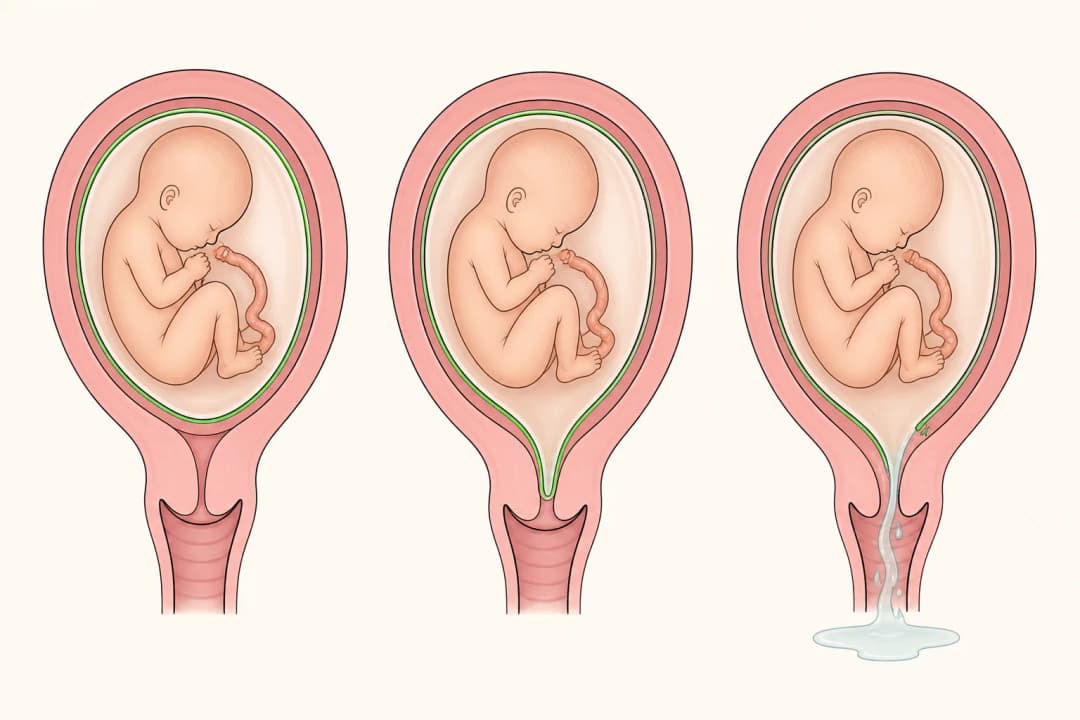
Guidance for PPROM is a framework, not a timetable that fits every pregnancy. PPROM occurs when the membranes rupture before labour and before 37 weeks. Clinicians first establish whether the fluid is amniotic fluid and look for infection, contractions, bleeding, and problems with the baby's heart rate. They then weigh the pregnancy stage against the risks of waiting. Stable patients may receive observation and regular reassessment; concerning findings may make delivery the safer course. Local hospital procedures and your individual history can affect the details.
Following the care plan
Report suspected leaking promptly and attend the assessment your maternity team recommends. Record when the leak began and whether fluid is clear, blood-stained, green, or unpleasant-smelling. Use sanitary pads, not tampons, and follow advice about washing, sex, activity, and examinations. Care can include maternal observations, blood tests, fetal heart monitoring, ultrasound, antibiotics, and an antenatal corticosteroid injection when appropriate. If the risks of continuing outweigh the benefits, the team may discuss induction of labour or another birth plan.
Red flags that need review
Call the maternity unit urgently for fever or chills, worsening abdominal or back pain, uterine tenderness, foul-smelling or green fluid, vaginal bleeding, contractions, or reduced fetal movement. Feeling faint or generally unwell also warrants immediate advice. Do not wait for routine monitoring when a warning sign appears.
Useful questions
Ask which parts of the guideline apply to your pregnancy, what monitoring is planned, what symptoms indicate infection, and which findings would change the delivery plan. Ask when medicines may help, how long you may need observation, and whom to call overnight.
Find care
General Clinics & Polyclinics in Abu Dhabi
That answer is general. If you want it applied to your own case, these are licensed general clinics & polyclinics listed in Abu Dhabi.
27 Ar Ruwwad St - Shakhbout City - MSH4 - Abu Dhabi - United Arab Emirates
Accepts: Daman, Thiqa, Cigna, MetLife +20 more
Al Ruwais, Al Dhafrah
Accepts: Daman, Thiqa, AXA, Cigna +16 more
Al Bahyah - Al Bahyah Old - Abu Dhabi - United Arab Emirates
Accepts: Daman, Thiqa, Cigna, Allianz Care +18 more
Abu Dhabi
Accepts: Daman, Thiqa, AXA, Cigna +27 more
Ordered by verification status and how complete each clinic's public record is, then alphabetically. This is a directory listing, not a ranking — Zavis does not rate or recommend providers.
A factual listing drawn from the DHA, DOH and MOHAP licence registers. It is not a referral, an endorsement, or advice that any of these providers is right for you.
Questions people ask
Do PPROM guidelines mean delivery is immediate?
Not always. If you and the baby are stable, clinicians may recommend close monitoring while weighing the benefits and risks of waiting.
What makes the plan change?
Infection signs, labour, bleeding, abnormal fetal monitoring, or another maternal or fetal concern can change the recommendation.
Related
Related reading
Keep reading
Medical disclaimer. This page is general health information, not medical advice, and it cannot diagnose you. Always consult a licensed healthcare provider about your own symptoms and treatment. In an emergency in the UAE, call 998 for an ambulance.