
PPROM complications: what to know
Short answer
PPROM complications can involve infection, early labour, placental problems or effects of low fluid, so prompt assessment and monitoring are essential.
This answers one question. It is not a diagnosis and does not replace an assessment by a licensed doctor.
At a glance
- Main concern
- Infection and premature birth
- Monitoring
- Maternal observations and fetal assessment
- Act quickly
- Fever, pain, contractions, bleeding or abnormal fluid
Possible complications
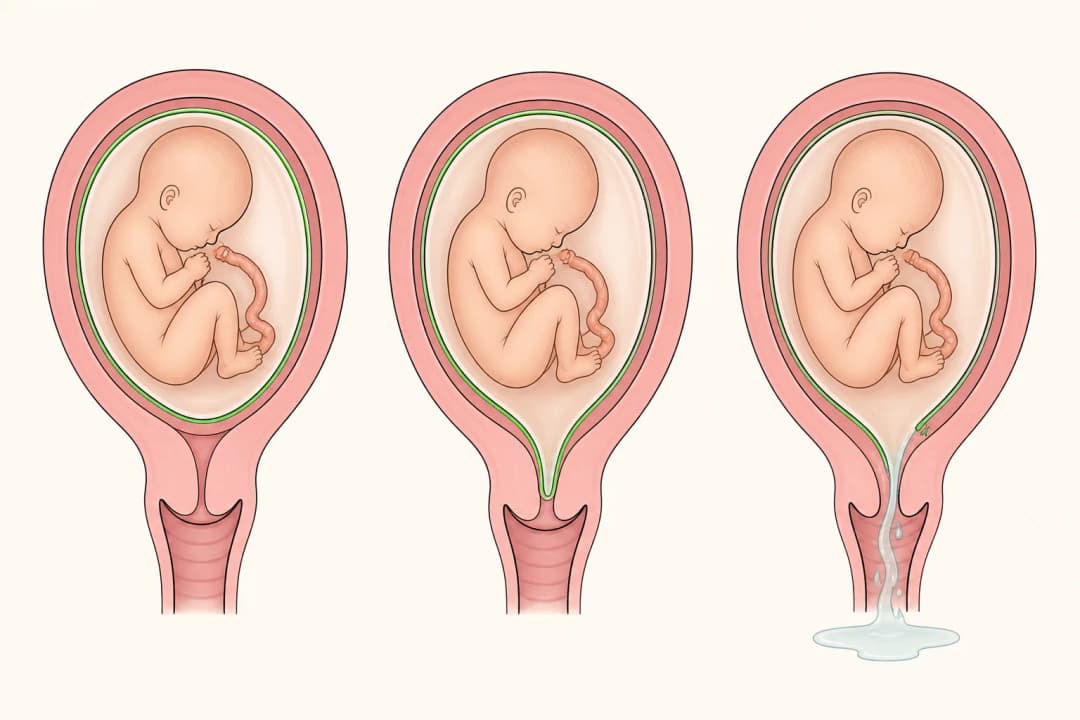
When the membranes break early, bacteria can travel upwards and cause infection of the membranes or womb. PPROM can also be followed by contractions and premature birth. Loss of fluid may affect cushioning around the baby and, when it happens early, may interfere with lung development or movement.
Bleeding, placental separation, cord compression and changes in the baby’s heartbeat are additional concerns the maternity team watches for. A complication is not inevitable, and symptoms may be subtle, which is why observations, examinations and fetal monitoring matter even when you feel well.
How complications are monitored
Contact your maternity unit as soon as fluid leakage is suspected. Clinicians may check your temperature, pulse, blood results, urine, abdominal tenderness, contractions, fluid appearance and the baby’s heartbeat. Treatment may include antibiotics, corticosteroids for fetal lung development, and other medicines or neonatal preparation based on gestation and findings. Information about an [Antenatal Steroid Injection](/treatments/pregnancy-and-birth-care/antenatal-corticosteroid-injection/) can help you discuss whether it fits your situation.
Get urgent help for these changes
Seek immediate maternity advice for fever, chills, feeling suddenly unwell, increasing abdominal or back pain, a tender womb, regular contractions, vaginal bleeding, foul-smelling or green fluid, or reduced fetal movement. These changes can signal infection, labour, bleeding or fetal distress and need assessment without delay.
Useful questions
Ask which complications are most relevant at your gestation, how often you will be assessed, which symptoms should trigger a call, and how the team would respond to infection or labour. Ask when delivery would be safer and whether [Induction of Labour](/treatments/pregnancy-and-birth-care/induction-of-labour/) might be considered.
Find care
General Clinics & Polyclinics in Abu Dhabi
That answer is general. If you want it applied to your own case, these are licensed general clinics & polyclinics listed in Abu Dhabi.
27 Ar Ruwwad St - Shakhbout City - MSH4 - Abu Dhabi - United Arab Emirates
Accepts: Daman, Thiqa, Cigna, MetLife +20 more
Al Ruwais, Al Dhafrah
Accepts: Daman, Thiqa, AXA, Cigna +16 more
Al Bahyah - Al Bahyah Old - Abu Dhabi - United Arab Emirates
Accepts: Daman, Thiqa, Cigna, Allianz Care +18 more
Abu Dhabi
Accepts: Daman, Thiqa, AXA, Cigna +27 more
Ordered by verification status and how complete each clinic's public record is, then alphabetically. This is a directory listing, not a ranking — Zavis does not rate or recommend providers.
A factual listing drawn from the DHA, DOH and MOHAP licence registers. It is not a referral, an endorsement, or advice that any of these providers is right for you.
Questions people ask
Does every person with PPROM develop complications?
No. The risk and type of complication vary, and careful monitoring helps the team identify changes early.
Can infection happen without obvious symptoms?
Yes. Infection may begin with limited symptoms, so scheduled hospital checks remain important even if leakage seems unchanged.
Related
Related reading
Keep reading
Medical disclaimer. This page is general health information, not medical advice, and it cannot diagnose you. Always consult a licensed healthcare provider about your own symptoms and treatment. In an emergency in the UAE, call 998 for an ambulance.