
PPROM at 34 weeks: what to know
Short answer
PPROM at 34 weeks requires prompt maternity assessment and a plan that considers infection, contractions, fetal wellbeing and the safest timing of birth.
This answers one question. It is not a diagnosis and does not replace an assessment by a licensed doctor.
At a glance
- Main checks
- Temperature, bleeding, contractions, fluid and fetal wellbeing
- Planning
- Observation and birth are weighed against infection and neonatal needs
What PPROM means at 34 weeks
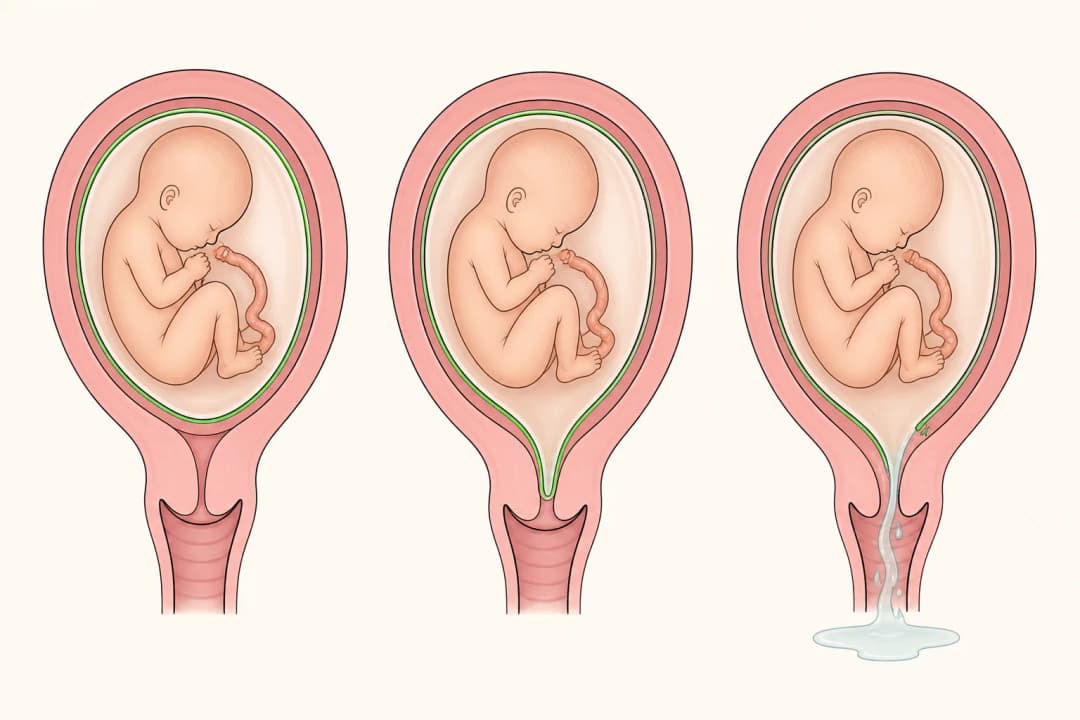
PPROM means the membranes have broken before labour. At 34 weeks, some babies may need extra breathing, feeding or temperature support after birth, so the team considers both pregnancy risks and neonatal care. Assessment includes your symptoms, temperature, bleeding, contractions and fetal heart pattern. The decision to wait or recommend birth depends on these findings, your history and the facilities available.
What to do
If fluid is leaking, contact your maternity unit now and follow its instructions. Use a clean pad, note the fluid colour and avoid sex, tampons or vaginal medicines unless prescribed. Keep track of your baby’s usual movements and report a clear change. Your clinicians may discuss an [Antenatal Steroid Injection](/treatments/pregnancy-and-birth-care/antenatal-corticosteroid-injection/) and explain whether observation or [Induction of Labour](/treatments/pregnancy-and-birth-care/induction-of-labour/) fits your situation.
When to seek urgent care
Return urgently for fever, chills, worsening abdominal pain, regular contractions, bleeding, green or foul-smelling fluid, or reduced fetal movement. A sudden change in how you feel can signal infection or another complication and should not wait for a planned review.
Questions for your doctor
What tests confirm PPROM? What signs would favour birth today? How will my baby be monitored? Would steroids help at this stage? Which neonatal services are available if birth happens soon?
Find care
General Clinics & Polyclinics in Abu Dhabi
That answer is general. If you want it applied to your own case, these are licensed general clinics & polyclinics listed in Abu Dhabi.
27 Ar Ruwwad St - Shakhbout City - MSH4 - Abu Dhabi - United Arab Emirates
Accepts: Daman, Thiqa, Cigna, MetLife +20 more
Al Ruwais, Al Dhafrah
Accepts: Daman, Thiqa, AXA, Cigna +16 more
Al Bahyah - Al Bahyah Old - Abu Dhabi - United Arab Emirates
Accepts: Daman, Thiqa, Cigna, Allianz Care +18 more
Abu Dhabi
Accepts: Daman, Thiqa, AXA, Cigna +27 more
Ordered by verification status and how complete each clinic's public record is, then alphabetically. This is a directory listing, not a ranking — Zavis does not rate or recommend providers.
A factual listing drawn from the DHA, DOH and MOHAP licence registers. It is not a referral, an endorsement, or advice that any of these providers is right for you.
Questions people ask
Can the membranes reseal at 34 weeks?
Fluid leakage can change, but you still need assessment because the membranes may remain open and infection risk can persist.
What happens if labour begins?
The maternity team assesses you and the baby, then provides birth and newborn support suited to the clinical situation.
Related
Related reading
Keep reading
Medical disclaimer. This page is general health information, not medical advice, and it cannot diagnose you. Always consult a licensed healthcare provider about your own symptoms and treatment. In an emergency in the UAE, call 998 for an ambulance.