
What should you know about polypropylene surgical mesh?
Short answer
Polypropylene surgical mesh is a synthetic material that may support weakened tissue, but its suitability depends on the procedure, your anatomy, and your informed discussion with a surgeon.
This answers one question. It is not a diagnosis and does not replace an assessment by a licensed doctor.
At a glance
- Material
- Synthetic polypropylene polymer.
- Decision
- Choice depends on the procedure and individual assessment.
What the material is
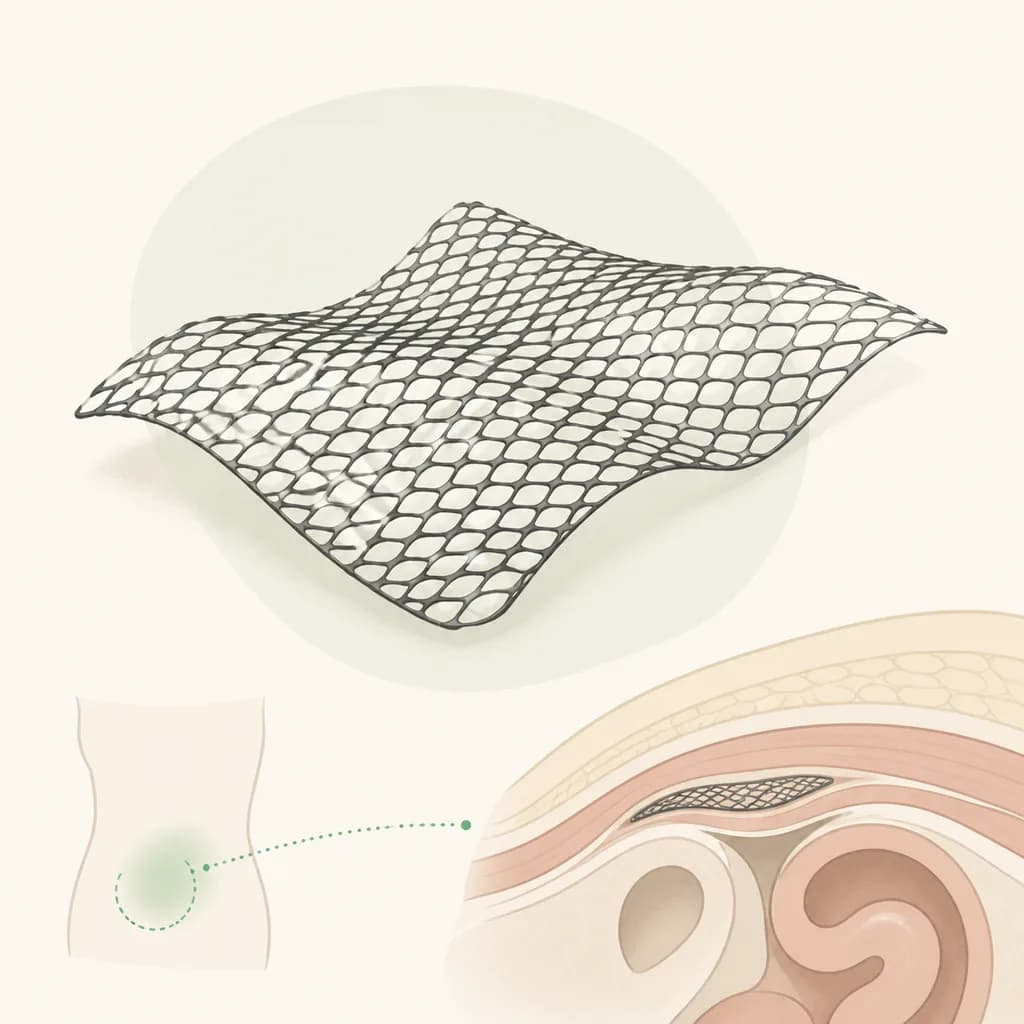
Polypropylene is a woven or knitted synthetic polymer used to create a flexible support structure. The body may form scar tissue around implanted mesh, helping reinforce an area that needs support. Mesh design, placement, and whether it is permanent or intended to change over time vary by product and operation.
Before and after a mesh procedure
Ask which material and product are proposed, where it will be placed, and why mesh is being considered instead of stitches or another approach. Discuss recovery restrictions, follow-up, and symptoms to report. After surgery, follow wound-care and activity instructions. Options that may involve mesh include a [Mid-Urethral Sling](/treatments/gynaecological-surgery/mid-urethral-sling/) and [Sacrocolpopexy](/treatments/gynaecological-surgery/sacrocolpopexy/). Read more about [Surgical Mesh](/materials/surgical-mesh/).
When to contact your care team
Call your surgical team about fever, worsening pain, spreading redness, pus, wound opening, difficulty passing urine, new bleeding, or a new bulge. Urgent help is needed for severe pain, heavy bleeding, fainting, or breathing difficulty. Persistent pelvic pain, painful sex, or repeated urinary symptoms also deserve review.
Questions to take along
Ask what problem the mesh is intended to address, what alternatives exist, how it will be fixed, and what complications can occur. Clarify who will provide follow-up and what happens if symptoms persist or the mesh needs further treatment.
Find care
General Clinics & Polyclinics in Abu Dhabi
That answer is general. If you want it applied to your own case, these are licensed general clinics & polyclinics listed in Abu Dhabi.
27 Ar Ruwwad St - Shakhbout City - MSH4 - Abu Dhabi - United Arab Emirates
Accepts: Daman, Thiqa, Cigna, MetLife +20 more
Al Ruwais, Al Dhafrah
Accepts: Daman, Thiqa, AXA, Cigna +16 more
Al Bahyah - Al Bahyah Old - Abu Dhabi - United Arab Emirates
Accepts: Daman, Thiqa, Cigna, Allianz Care +18 more
Abu Dhabi
Accepts: Daman, Thiqa, AXA, Cigna +27 more
Ordered by verification status and how complete each clinic's public record is, then alphabetically. This is a directory listing, not a ranking — Zavis does not rate or recommend providers.
A factual listing drawn from the DHA, DOH and MOHAP licence registers. It is not a referral, an endorsement, or advice that any of these providers is right for you.
Questions people ask
Is all polypropylene mesh used in the same way?
No. Product design, placement, and surgical purpose differ, so ask for the specific product and procedure details.
What should you report after surgery?
Report worsening pain, wound changes, urinary difficulty, bleeding, pelvic pain, or painful sex to your care team.
Related
Related reading
Keep reading
Medical disclaimer. This page is general health information, not medical advice, and it cannot diagnose you. Always consult a licensed healthcare provider about your own symptoms and treatment. In an emergency in the UAE, call 998 for an ambulance.