
What Should You Know About Pitted Keratolysis OTC Treatment?
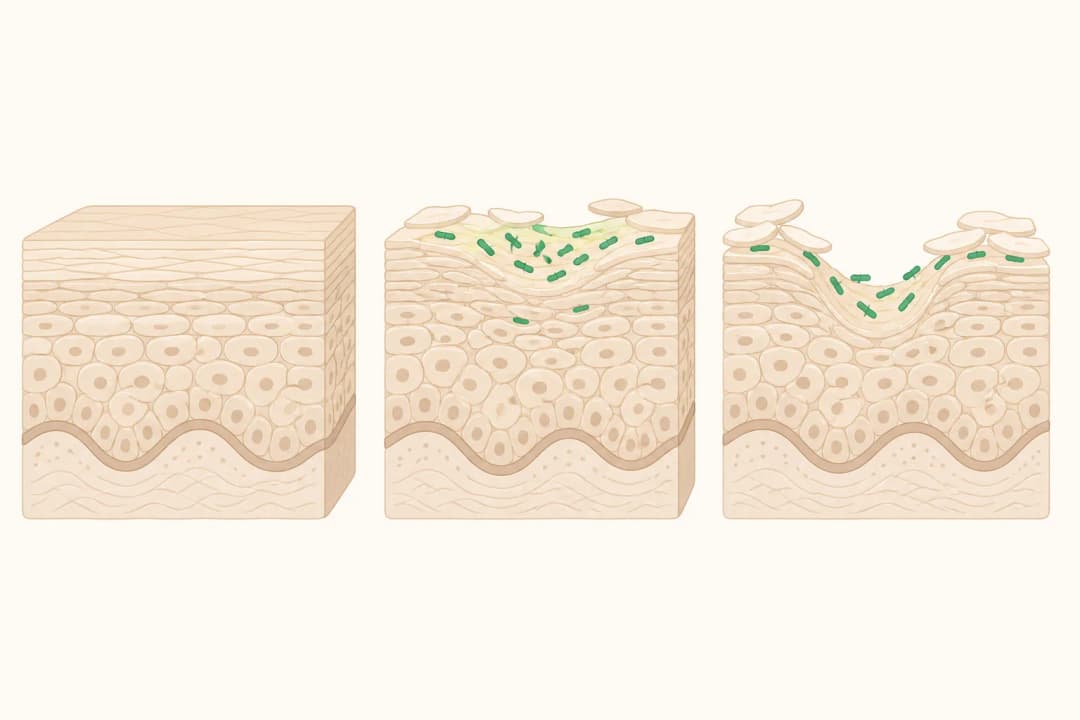
Short answer
Over-the-counter care for pitted keratolysis can reduce moisture and odour, but persistent pits often need a clinician to confirm the diagnosis and prescribe targeted treatment.
This answers one question. It is not a diagnosis and does not replace an assessment by a licensed doctor.
At a glance
- OTC priority
- Moisture control and gentle foot care
- Do not apply
- Strong products to cracked or inflamed skin
What OTC treatment can and cannot do
Pitted keratolysis is associated with bacteria in damp, softened skin on the toes or soles. Non-prescription care cannot reliably confirm that diagnosis, because fungal conditions, dermatitis, pressure damage, and other problems may also cause scaling, soreness, or odour. Moisture control is still a useful first step: it reduces the environment that allows the problem to persist, even when it does not remove the underlying bacteria on its own.
Practical non-prescription care
Clean the feet with a mild cleanser, rinse well, and dry between every toe. Replace socks after sweating and choose footwear that allows air movement. Let shoes dry fully before wearing them again, and consider washable or removable insoles that can be cleaned according to their instructions. A pharmacy antiperspirant may help with sweaty feet; follow its label and avoid applying it to cracked, raw, or inflamed skin. Do not pick at pits or layer several strong products together, as irritation can make the skin harder to assess.
When home care is not enough
Book an appointment when odour or pits continue after moisture-control measures, recur soon after improving, or are accompanied by tenderness. A clinician may need to examine the skin and select topical antibiotic therapy rather than relying on general foot products. Get prompt help for spreading redness, warmth, swelling, pus, severe pain, fever, or a new open area. If you have diabetes, reduced foot sensation, circulation problems, or immune suppression, arrange advice early for a persistent foot change.
Questions to bring to an appointment
Ask how confident the diagnosis is, whether a non-prescription antiperspirant is appropriate for your skin, and whether prescription antibacterial treatment is needed. Ask how to manage sweaty footwear, how soon the response should be checked, and what changes would mean you should stop a product or return sooner.
Find care
General Clinics & Polyclinics in Abu Dhabi
That answer is general. If you want it applied to your own case, these are licensed general clinics & polyclinics listed in Abu Dhabi.
27 Ar Ruwwad St - Shakhbout City - MSH4 - Abu Dhabi - United Arab Emirates
Accepts: Daman, Thiqa, Cigna, MetLife +20 more
Al Ruwais, Al Dhafrah
Accepts: Daman, Thiqa, AXA, Cigna +16 more
Al Bahyah - Al Bahyah Old - Abu Dhabi - United Arab Emirates
Accepts: Daman, Thiqa, Cigna, Allianz Care +18 more
Abu Dhabi
Accepts: Daman, Thiqa, AXA, Cigna +27 more
Ordered by verification status and how complete each clinic's public record is, then alphabetically. This is a directory listing, not a ranking — Zavis does not rate or recommend providers.
A factual listing drawn from the DHA, DOH and MOHAP licence registers. It is not a referral, an endorsement, or advice that any of these providers is right for you.
Questions people ask
Will an OTC foot deodorant treat pitted keratolysis?
It may mask odour, but deodorising does not necessarily address the bacteria or the skin pits. Persistent symptoms deserve a clinical assessment.
Can I use an OTC antiperspirant on my toes?
It may be suitable for sweaty, intact skin when the label allows it. Avoid damaged skin and stop if burning or a rash develops.
Related
Related reading
Keep reading
Medical disclaimer. This page is general health information, not medical advice, and it cannot diagnose you. Always consult a licensed healthcare provider about your own symptoms and treatment. In an emergency in the UAE, call 998 for an ambulance.