
What should you know about pitted keratolysis antibiotics?
Short answer
Antibiotics for pitted keratolysis are usually selected by a clinician, while moisture control helps the treated sole skin recover and reduces recurrence.
This answers one question. It is not a diagnosis and does not replace an assessment by a licensed doctor.
At a glance
- Treatment role
- Topical antibiotic therapy targets bacteria on affected sole skin.
- Supportive care
- Dry feet and footwear are central to recovery.
Why antibiotics may be used
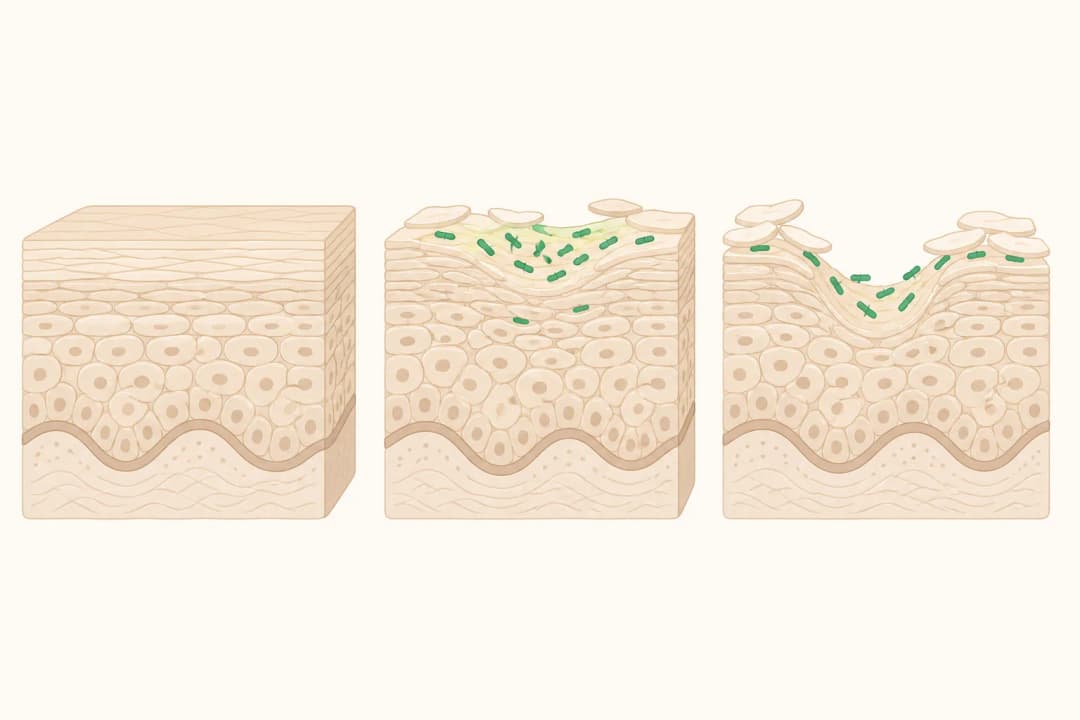
Pitted keratolysis is a bacterial infection of the thick skin on the soles. Bacteria can break down surface keratin, leaving small crater-like pits, softened areas, and a noticeable odour. A clinician may prescribe a topical antibiotic therapy to reduce the bacterial load. The choice depends on the examination and whether another condition, such as athlete’s foot, is also present. Antibiotics do not correct ongoing sweating or damp footwear by themselves.
Using treatment well
Use the prescribed product exactly as directed and complete the advised course unless the prescriber changes the plan. Keep feet clean and thoroughly dry, change socks when damp, and allow shoes to air out between uses. Avoid sharing footwear or towels. If sweating is a major contributor, ask about prescription antiperspirant. Do not apply someone else’s antibiotic or continue a leftover product, because the diagnosis may be wrong and irritation can complicate the picture.
When to seek care
Contact the prescriber if pits, odour, soreness, or softened skin are not improving as expected, or if treatment causes a new rash or marked irritation. Seek urgent care for rapidly spreading redness, severe pain, swelling, pus, fever, or red streaking. A foot problem deserves earlier review when diabetes, circulation problems, or reduced sensation make unnoticed injury more likely.
Questions for your doctor
Ask how the diagnosis was made, which antibiotic is being prescribed and for how long, how to apply it, and what improvement should look like. Discuss whether moisture control or prescription antiperspirant is needed and whether scaling suggests a second infection.
Find care
General Clinics & Polyclinics in Abu Dhabi
That answer is general. If you want it applied to your own case, these are licensed general clinics & polyclinics listed in Abu Dhabi.
27 Ar Ruwwad St - Shakhbout City - MSH4 - Abu Dhabi - United Arab Emirates
Accepts: Daman, Thiqa, Cigna, MetLife +20 more
Al Ruwais, Al Dhafrah
Accepts: Daman, Thiqa, AXA, Cigna +16 more
Al Bahyah - Al Bahyah Old - Abu Dhabi - United Arab Emirates
Accepts: Daman, Thiqa, Cigna, Allianz Care +18 more
Abu Dhabi
Accepts: Daman, Thiqa, AXA, Cigna +27 more
Ordered by verification status and how complete each clinic's public record is, then alphabetically. This is a directory listing, not a ranking — Zavis does not rate or recommend providers.
A factual listing drawn from the DHA, DOH and MOHAP licence registers. It is not a referral, an endorsement, or advice that any of these providers is right for you.
Questions people ask
Are oral antibiotics always needed?
No. A clinician may choose a topical treatment when the infection is limited to the surface skin.
Why can pitted keratolysis return?
Persistent sweating and damp shoes can recreate the conditions that allow bacteria to thrive.
Related
Related reading
Keep reading
Medical disclaimer. This page is general health information, not medical advice, and it cannot diagnose you. Always consult a licensed healthcare provider about your own symptoms and treatment. In an emergency in the UAE, call 998 for an ambulance.