
What should you know about a pheochromocytoma urine test?
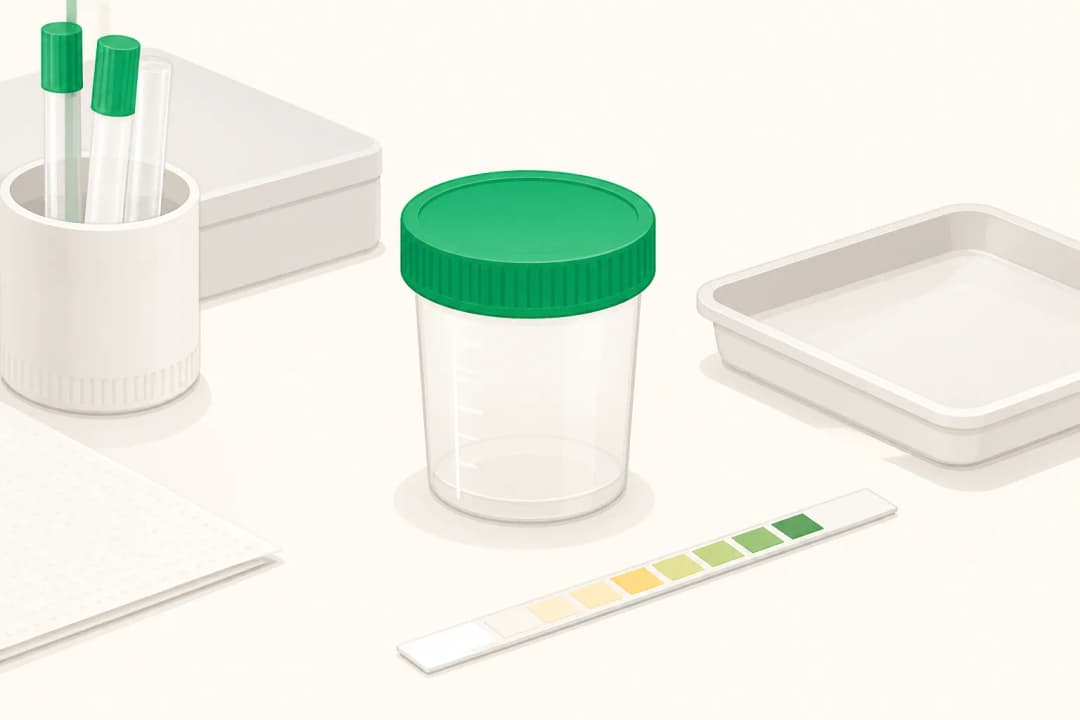
Short answer
A pheochromocytoma urine test checks a collected urine sample for hormone breakdown products released by an adrenal tumour.
This answers one question. It is not a diagnosis and does not replace an assessment by a licensed doctor.
At a glance
- Sample
- Urine collected according to the laboratory instructions
- Measures
- Hormone breakdown products
- Interpretation
- Combined with symptoms and other clinical tests
What the test checks
A pheochromocytoma urine test checks a collected urine sample for hormone breakdown products released by an adrenal tumour. Clinicians may request it when episodes such as pounding headaches, sweating, a racing heartbeat or raised blood pressure need investigation. The result is interpreted with your symptoms, medicines and other tests.
What the result can mean
The sample may be collected over a set period or provided as a spot sample, depending on the laboratory request. An abnormal result does not by itself prove pheochromocytoma. Stress, illness, strenuous activity, caffeine, nicotine and some medicines can affect hormone measurements. A clinician may repeat the test or arrange blood testing and imaging before making a diagnosis.
How to prepare
Follow the collection instructions closely, keep the container clean and return it as directed. Tell the clinician about every prescription, supplement and non-prescription medicine before changing anything; some treatments should not be stopped without supervision. Ask whether you need to avoid particular foods, drinks or activities before sampling. A general urine test is a different examination; learn more about a [Urine Test](/treatments/diagnostics-and-screening/urine-test/).
When to seek urgent care
Seek emergency help for severe chest pain, fainting, severe breathlessness, confusion, a sudden severe headache or very high blood pressure with neurological symptoms. These signs need prompt assessment regardless of whether a urine test has been arranged. For non-urgent questions about collection or results, contact the requesting clinic.
Questions for your doctor
Ask why this test is recommended, which medicines or supplements might interfere, how the sample should be stored, when results are expected and what follow-up test would be considered if the result is abnormal.
Find care
General Clinics & Polyclinics in Abu Dhabi
That answer is general. If you want it applied to your own case, these are licensed general clinics & polyclinics listed in Abu Dhabi.
27 Ar Ruwwad St - Shakhbout City - MSH4 - Abu Dhabi - United Arab Emirates
Accepts: Daman, Thiqa, Cigna, MetLife +20 more
Al Ruwais, Al Dhafrah
Accepts: Daman, Thiqa, AXA, Cigna +16 more
Al Bahyah - Al Bahyah Old - Abu Dhabi - United Arab Emirates
Accepts: Daman, Thiqa, Cigna, Allianz Care +18 more
Abu Dhabi
Accepts: Daman, Thiqa, AXA, Cigna +27 more
Ordered by verification status and how complete each clinic's public record is, then alphabetically. This is a directory listing, not a ranking — Zavis does not rate or recommend providers.
A factual listing drawn from the DHA, DOH and MOHAP licence registers. It is not a referral, an endorsement, or advice that any of these providers is right for you.
Questions people ask
Does an abnormal urine result confirm pheochromocytoma?
No. The result needs clinical interpretation and may be followed by repeat testing, blood testing or imaging.
Should medicines be stopped before the test?
Do not stop treatment on your own. Give the clinician a complete medicine and supplement list so preparation can be planned safely.
Related
Related reading
Keep reading
Medical disclaimer. This page is general health information, not medical advice, and it cannot diagnose you. Always consult a licensed healthcare provider about your own symptoms and treatment. In an emergency in the UAE, call 998 for an ambulance.