
What should you know about percutaneous vertebroplasty and kyphoplasty?
Short answer
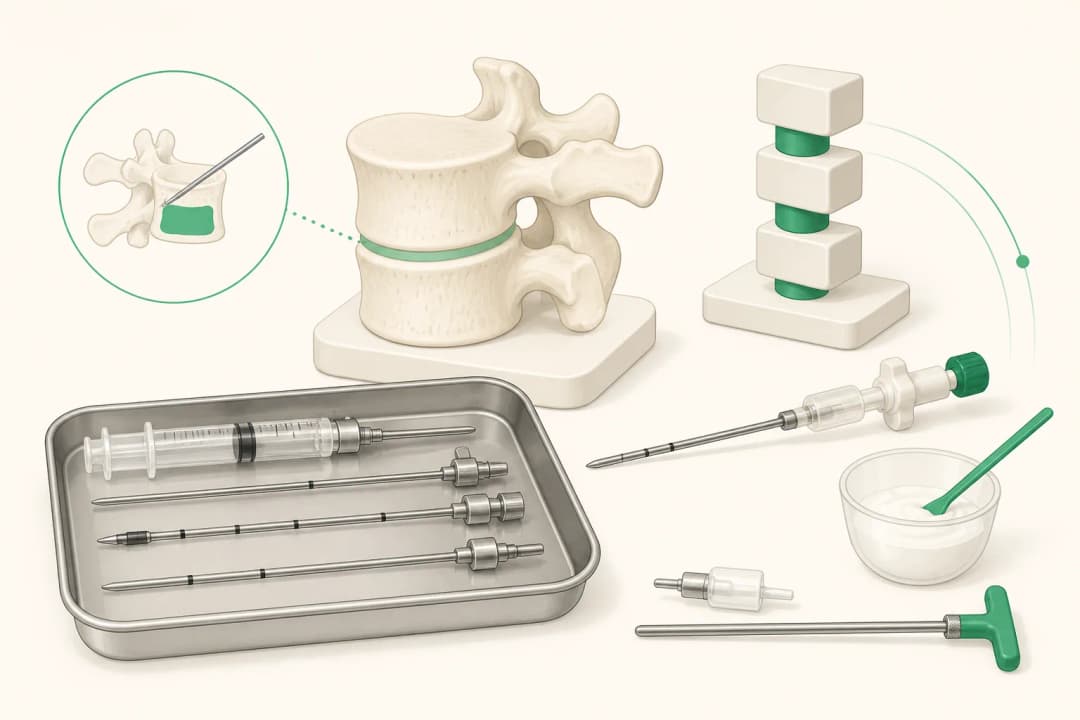
Percutaneous vertebroplasty and kyphoplasty are procedures that stabilise a selected spinal compression fracture using bone cement.
This answers one question. It is not a diagnosis and does not replace an assessment by a licensed doctor.
At a glance
- Target
- A selected vertebral compression fracture
- Material
- Bone cement placed under imaging guidance
- Difference
- Kyphoplasty creates a space before cement placement
How they differ
In vertebroplasty, cement is delivered through a needle into the affected vertebra. Kyphoplasty first uses a small expandable balloon to create a space before cement is placed; this can help address a collapsed vertebral shape in selected cases. Both procedures are performed through small skin openings and require imaging to guide placement. They are considered only after an assessment of the fracture, pain pattern, bone health, nerve status, and other treatment options.
What to do before and after
Tell the clinician about blood-thinning medicines, allergies, infection, pregnancy possibility, and trouble lying flat. Ask which medicines to pause and when to stop eating or drinking. After the procedure, follow instructions about walking, lifting, bathing, and medicines. A plan for osteoporosis or another cause of weak bone may be needed because cement supports one vertebra but does not strengthen the whole skeleton. Keep the scheduled review even if pain improves.
When to seek care
Call the treatment team for fever, increasing redness or drainage at the needle site, new pain that is not settling, or difficulty walking. Seek emergency help for new weakness or numbness, loss of bladder or bowel control, severe chest pain, or sudden breathing difficulty.
Questions for your doctor
Is my fracture suitable for cement treatment, and why would you choose vertebroplasty or kyphoplasty? What will happen to my medicines around the procedure? When can I resume walking, driving, and lifting? How will the underlying bone problem be treated?
Find care
General Clinics & Polyclinics in Abu Dhabi
That answer is general. If you want it applied to your own case, these are licensed general clinics & polyclinics listed in Abu Dhabi.
27 Ar Ruwwad St - Shakhbout City - MSH4 - Abu Dhabi - United Arab Emirates
Accepts: Daman, Thiqa, Cigna, MetLife +20 more
Al Ruwais, Al Dhafrah
Accepts: Daman, Thiqa, AXA, Cigna +16 more
Al Bahyah - Al Bahyah Old - Abu Dhabi - United Arab Emirates
Accepts: Daman, Thiqa, Cigna, Allianz Care +18 more
Abu Dhabi
Accepts: Daman, Thiqa, AXA, Cigna +27 more
Ordered by verification status and how complete each clinic's public record is, then alphabetically. This is a directory listing, not a ranking — Zavis does not rate or recommend providers.
A factual listing drawn from the DHA, DOH and MOHAP licence registers. It is not a referral, an endorsement, or advice that any of these providers is right for you.
Questions people ask
Will these procedures treat every cause of back pain?
No. They target selected painful vertebral fractures; pain from discs, muscles, nerves, or another condition may need a different plan.
Why is bone health still reviewed afterward?
A treated vertebra may be stabilised, but the condition that weakened the bone can remain and may need separate management.
Related
Related reading
Keep reading
Medical disclaimer. This page is general health information, not medical advice, and it cannot diagnose you. Always consult a licensed healthcare provider about your own symptoms and treatment. In an emergency in the UAE, call 998 for an ambulance.