
Pelvic MRI for women: what to know
Short answer
A pelvic MRI for a woman produces detailed images of the uterus, ovaries, cervix, vagina, bladder, and surrounding tissues without using x-rays.
This answers one question. It is not a diagnosis and does not replace an assessment by a licensed doctor.
At a glance
- Imaging method
- Uses magnetic fields and radio waves
- Areas shown
- Uterus, ovaries, cervix, vagina, bladder, and nearby tissues
- Tell the centre
- About pregnancy possibility, implants, kidney disease, or claustrophobia
What the scan can assess
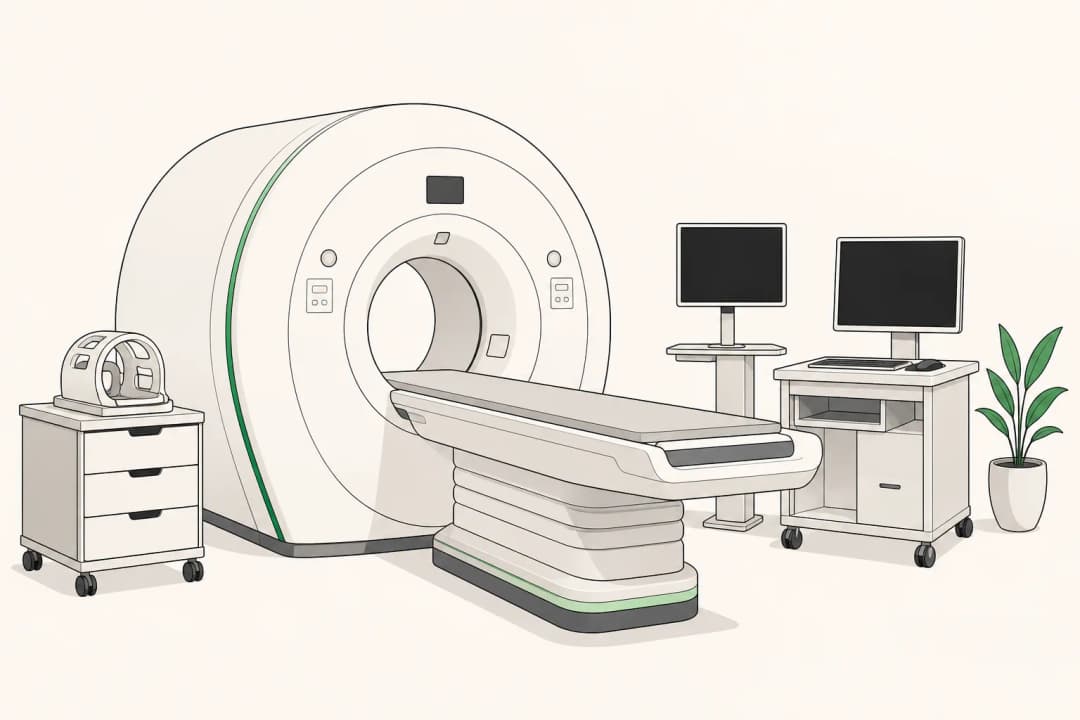
A clinician may request pelvic MRI to clarify findings from an examination or another scan, or to assess pain, bleeding, fibroids, endometriosis, a mass, or treatment planning. You lie on a table that moves into the scanner. The machine makes loud knocking sounds, and clear images require stillness. Some examinations use a coil near the pelvis, gel, or contrast through a vein; the team should explain what applies to you.
How to prepare
Tell the centre if you may be pregnant, have kidney disease, have metal or electronic implants, or experience claustrophobia. Ask which medicines and food instructions apply. Remove metal objects and wear suitable clothing. You can request an explanation of positioning, a chaperone where available, or a signal to alert staff if you need assistance. Plan enough time for changing, preparation, scanning, and post-scan instructions.
When to contact a clinician
The scan itself should not cause ongoing pain. Contact the imaging centre or your clinician if pain, bleeding, or skin irritation persists after an internal preparation. If contrast was used, urgent help is needed for breathing difficulty, throat or facial swelling, fainting, or widespread hives. The imaging team can also explain when and how your report will be shared.
Questions for your doctor
Ask what concern the MRI is investigating, whether contrast or gel is planned, how to manage claustrophobia, and when you should expect the report and follow-up discussion.
Find care
General Clinics & Polyclinics in Abu Dhabi
That answer is general. If you want it applied to your own case, these are licensed general clinics & polyclinics listed in Abu Dhabi.
27 Ar Ruwwad St - Shakhbout City - MSH4 - Abu Dhabi - United Arab Emirates
Accepts: Daman, Thiqa, Cigna, MetLife +20 more
Al Ruwais, Al Dhafrah
Accepts: Daman, Thiqa, AXA, Cigna +16 more
Al Bahyah - Al Bahyah Old - Abu Dhabi - United Arab Emirates
Accepts: Daman, Thiqa, Cigna, Allianz Care +18 more
Abu Dhabi
Accepts: Daman, Thiqa, AXA, Cigna +27 more
Ordered by verification status and how complete each clinic's public record is, then alphabetically. This is a directory listing, not a ranking — Zavis does not rate or recommend providers.
A factual listing drawn from the DHA, DOH and MOHAP licence registers. It is not a referral, an endorsement, or advice that any of these providers is right for you.
Questions people ask
Does a pelvic MRI use radiation?
MRI uses magnetic fields and radio waves rather than x-rays. Tell the centre about implants and possible pregnancy before attendance.
Can I ask for more privacy?
You can discuss gowning, positioning, a chaperone where available, and who will be present during any internal preparation.
Related
Related reading
Keep reading
Medical disclaimer. This page is general health information, not medical advice, and it cannot diagnose you. Always consult a licensed healthcare provider about your own symptoms and treatment. In an emergency in the UAE, call 998 for an ambulance.