
Pelvic MRI feet first: what to know
Short answer
A pelvic MRI may be performed feet first when this position helps you fit comfortably and keeps the area being examined in the scanner’s imaging range.
This answers one question. It is not a diagnosis and does not replace an assessment by a licensed doctor.
At a glance
- Position
- Usually lying on your back with feet toward the scanner opening
- Key preparation
- Report implants, metal fragments, and possible pregnancy
- During imaging
- Keep still and use the call button if needed
What feet first means
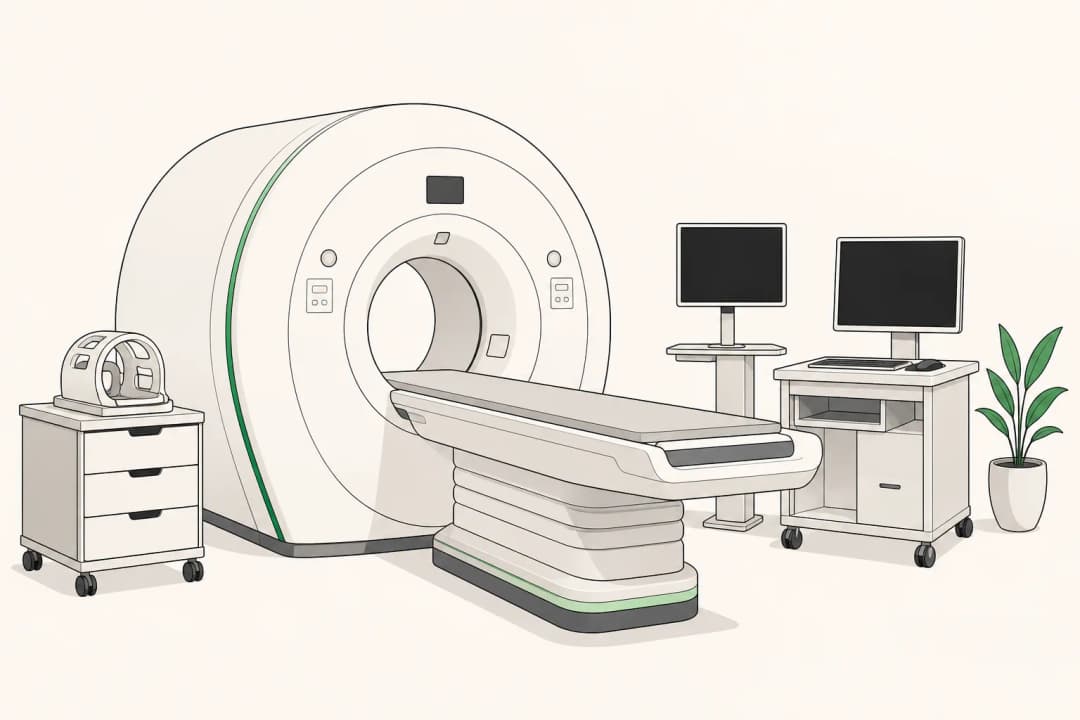
You lie on the padded table with your feet closer to the scanner opening. The table moves through the MRI system so the pelvis is positioned for detailed images. The scanner uses a strong magnetic field and radio waves; it does not use X-rays. You still need to remain as still as possible because movement can blur the pictures.
Feet-first positioning can feel less enclosed than entering head first, although the scanner may still surround the part of your body being examined. The technologist can usually communicate with you throughout the appointment.
How to prepare
Wear clothing without metal and remove jewellery, watches, piercings, cards, and other belongings as instructed. Tell the imaging team about a pacemaker, implanted device, metal fragments, medication pump, or possible pregnancy before entering the MRI room. Mention pain, limited movement, or anxiety so positioning and support can be discussed.
Follow any instructions about food, drink, medicines, or bladder preparation. During the scan, use the call button if you need help, and follow breathing or stillness instructions.
When to get help
Contact the imaging centre before the appointment if you are unsure whether an implant, metal fragment, or pregnancy could affect the scan. During or after the examination, tell staff promptly about marked discomfort, breathing trouble, a new rash, or other concerning symptoms.
Questions for your doctor
Ask why a pelvic MRI was requested, whether feet-first positioning is planned, whether contrast is needed, and when you should expect the report. You can also ask how your pain, mobility, or claustrophobia will be accommodated.
Find care
General Clinics & Polyclinics in Abu Dhabi
That answer is general. If you want it applied to your own case, these are licensed general clinics & polyclinics listed in Abu Dhabi.
27 Ar Ruwwad St - Shakhbout City - MSH4 - Abu Dhabi - United Arab Emirates
Accepts: Daman, Thiqa, Cigna, MetLife +20 more
Al Ruwais, Al Dhafrah
Accepts: Daman, Thiqa, AXA, Cigna +16 more
Al Bahyah - Al Bahyah Old - Abu Dhabi - United Arab Emirates
Accepts: Daman, Thiqa, Cigna, Allianz Care +18 more
Abu Dhabi
Accepts: Daman, Thiqa, AXA, Cigna +27 more
Ordered by verification status and how complete each clinic's public record is, then alphabetically. This is a directory listing, not a ranking — Zavis does not rate or recommend providers.
A factual listing drawn from the DHA, DOH and MOHAP licence registers. It is not a referral, an endorsement, or advice that any of these providers is right for you.
Questions people ask
Is a feet-first pelvic MRI unusual?
Feet-first positioning is one way an MRI team can place the pelvis correctly while supporting your comfort.
Can I ask for help if I feel anxious?
Yes. Tell the technologist before the scan so they can explain the process and discuss available support.
Related
Related reading
Keep reading
Medical disclaimer. This page is general health information, not medical advice, and it cannot diagnose you. Always consult a licensed healthcare provider about your own symptoms and treatment. In an emergency in the UAE, call 998 for an ambulance.