
What should you know about pediatric sickle cell disease?
Short answer
Pediatric sickle cell disease is an inherited blood condition that can cause anaemia, pain episodes, and serious complications, so children need an individual care plan and prompt assessment of warning signs.
This answers one question. It is not a diagnosis and does not replace an assessment by a licensed doctor.
At a glance
- Type
- Inherited blood condition
- Can involve
- Anaemia, pain, and vessel blockage
- Urgent symptom
- Fever or breathing difficulty
What it means
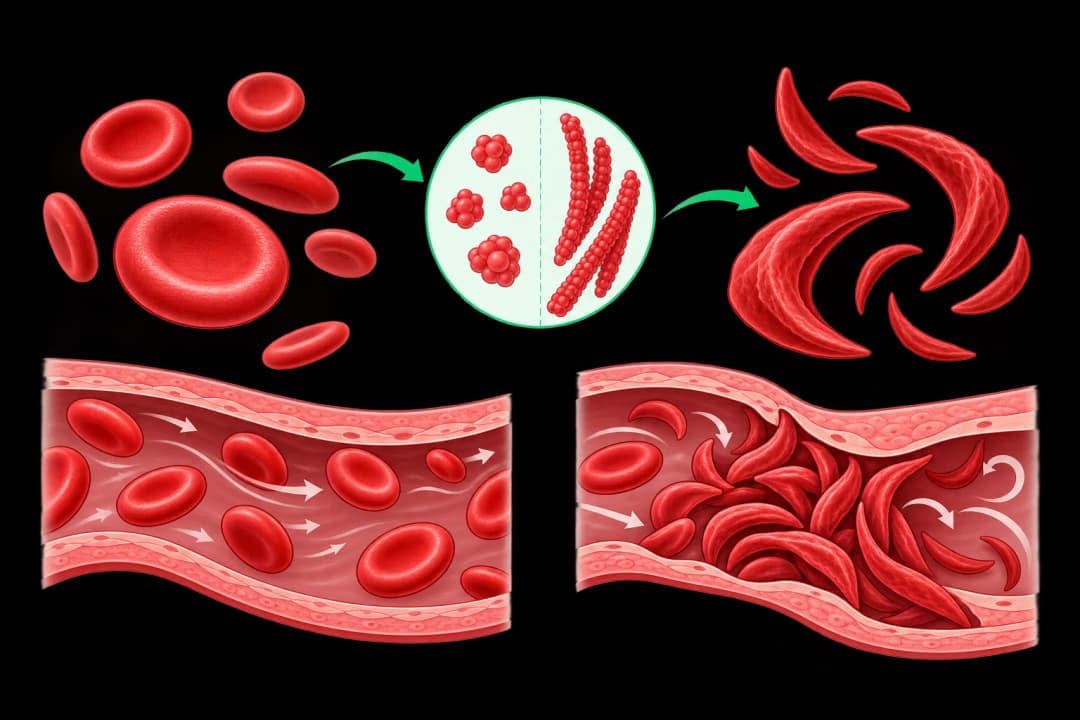
Sickle cell disease changes haemoglobin, the protein red blood cells use to carry oxygen. Some red cells become less flexible and can obstruct small blood vessels; they also break down sooner than typical red cells. This may leave a child tired or pale and can cause episodes of pain in the bones, chest, abdomen, or joints.
The condition is inherited rather than caused by something a child did. Symptoms and their severity vary between children. A paediatric haematology team may monitor blood counts, growth, organs, and development, while a personalised plan covers medicines, vaccinations, hydration, and fever instructions.
What families can do
Keep the child well hydrated, dress them for the weather, and avoid sudden exposure to very cold conditions or reduced oxygen environments unless their clinician has discussed precautions. Encourage rest during illness and follow the prescribed medicine schedule; do not stop a medicine because the child seems well.
Keep written instructions and the haematology team’s contact details available for school, caregivers, and travel. Record pain episodes, fever, breathing changes, and medicines given. A blood test can help clinicians assess anaemia and other blood changes; screening and family counselling may also be relevant when planning future pregnancies.
When to seek urgent care
Seek urgent medical advice for a fever, especially in a young child, because infection can become dangerous quickly in sickle cell disease. Go to emergency care for trouble breathing, chest pain, unusual sleepiness, confusion, weakness on one side, a seizure, severe or unusual pain, repeated vomiting, or a swollen abdomen.
Get immediate help if a child suddenly becomes very pale, collapses, cannot drink, or has much less urine than usual. Follow the child’s written emergency plan and tell clinicians that the child has sickle cell disease; do not wait for symptoms to settle on their own.
Questions for your doctor
Ask which symptoms require a same-day call, which medicines are safe during a pain episode, and how much fluid the child should usually drink. Clarify the fever threshold in the child’s plan, vaccination arrangements, travel advice, school accommodations, and which team should coordinate routine monitoring.
Find care
General Clinics & Polyclinics in Abu Dhabi
That answer is general. If you want it applied to your own case, these are licensed general clinics & polyclinics listed in Abu Dhabi.
27 Ar Ruwwad St - Shakhbout City - MSH4 - Abu Dhabi - United Arab Emirates
Accepts: Daman, Thiqa, Cigna, MetLife +20 more
Al Ruwais, Al Dhafrah
Accepts: Daman, Thiqa, AXA, Cigna +16 more
Al Bahyah - Al Bahyah Old - Abu Dhabi - United Arab Emirates
Accepts: Daman, Thiqa, Cigna, Allianz Care +18 more
Abu Dhabi
Accepts: Daman, Thiqa, AXA, Cigna +27 more
Ordered by verification status and how complete each clinic's public record is, then alphabetically. This is a directory listing, not a ranking — Zavis does not rate or recommend providers.
A factual listing drawn from the DHA, DOH and MOHAP licence registers. It is not a referral, an endorsement, or advice that any of these providers is right for you.
Questions people ask
Is sickle cell disease contagious?
No. It is inherited through haemoglobin genes and cannot spread from one person to another.
Can a child with sickle cell disease attend school?
Many children attend school, with an agreed plan for hydration, bathroom access, medication, activity, and rapid response to illness or pain.
What should I do during a pain episode?
Follow the child’s prescribed plan, offer fluids if they can drink, and contact the care team if pain is severe, unusual, persistent, or accompanied by fever or breathing changes.
Related
Related reading
Keep reading
Medical disclaimer. This page is general health information, not medical advice, and it cannot diagnose you. Always consult a licensed healthcare provider about your own symptoms and treatment. In an emergency in the UAE, call 998 for an ambulance.