
Pediatric alopecia areata treatment: what parents should know
Short answer
Pediatric alopecia areata treatment depends on the child’s age, affected areas, extent of hair loss, and whether regrowth is occurring.
This answers one question. It is not a diagnosis and does not replace an assessment by a licensed doctor.
At a glance
- Typical pattern
- Smooth patches of hair loss may affect the scalp, brows, or lashes.
- Assessment
- The diagnosis is clinical, with other causes considered when the pattern is unusual.
- Treatment goal
- Support regrowth while limiting inflammation and protecting the child’s wellbeing.
What alopecia areata means
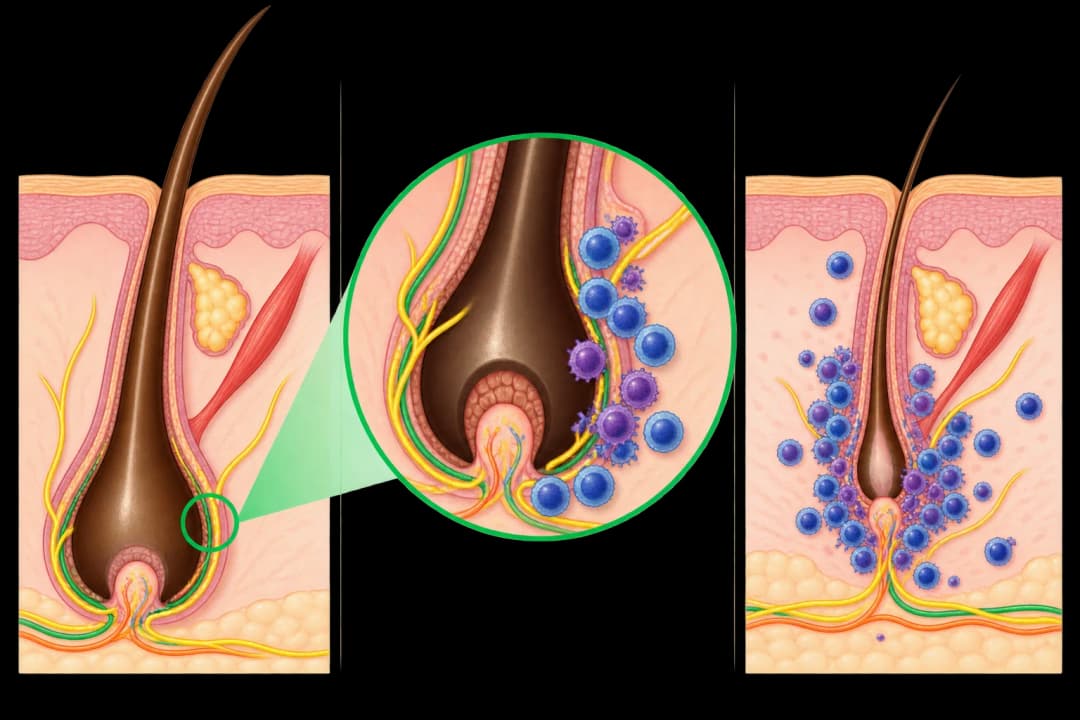
Alopecia areata is an immune-related condition that can cause smooth, clearly defined bald patches on the scalp, eyebrows, eyelashes, or other hair-bearing skin. Hair may regrow without treatment, while other children develop additional patches or more extensive loss. There is no reliable way to predict an individual course from the first patch alone. A clinician checks the scalp and nails and considers other causes of hair loss before suggesting a plan. See the overview of [Alopecia Areata](/conditions/alopecia-areata/), [Bald Patches](/symptoms/bald-patches/), and [Hair Loss](/symptoms/hair-loss/).
Treatment and everyday support
Arrange a dermatology assessment, especially when patches are spreading, eyebrows or eyelashes are involved, or the diagnosis is uncertain. Limited disease may be monitored or treated with a prescribed corticosteroid applied to the scalp; some children may be considered for a steroid injection into the skin when their age and circumstances make this appropriate. More extensive disease can prompt discussion of oral corticosteroid treatment or JAK inhibitor treatment, with careful review of age-related suitability, monitoring, and possible adverse effects. Do not use adult hair-loss medicines or share another person’s prescription. Gentle hair care, sun protection on exposed scalp, and emotional support at school can reduce practical and social stress.
When to seek care
Seek prompt medical review if hair loss is rapidly expanding, the scalp is inflamed or painful, the child has broken hairs or scaling, or eyelashes and eyebrows are thinning. These findings can point to another scalp problem or a need to adjust treatment. Arrange urgent help for sudden vision symptoms, severe eye irritation, or a child who is acutely unwell. A clinician should also assess distress, teasing, or withdrawal because support is part of care.
Questions for your doctor
Ask which findings support alopecia areata, whether testing is needed, how long to try the proposed treatment, and what changes should trigger a review. Ask how each option is used on a child, which side effects to watch for, and whether school or counselling support would help.
Find care
General Clinics & Polyclinics in Abu Dhabi
That answer is general. If you want it applied to your own case, these are licensed general clinics & polyclinics listed in Abu Dhabi.
27 Ar Ruwwad St - Shakhbout City - MSH4 - Abu Dhabi - United Arab Emirates
Accepts: Daman, Thiqa, Cigna, MetLife +20 more
Al Ruwais, Al Dhafrah
Accepts: Daman, Thiqa, AXA, Cigna +16 more
Al Bahyah - Al Bahyah Old - Abu Dhabi - United Arab Emirates
Accepts: Daman, Thiqa, Cigna, Allianz Care +18 more
Abu Dhabi
Accepts: Daman, Thiqa, AXA, Cigna +27 more
Ordered by verification status and how complete each clinic's public record is, then alphabetically. This is a directory listing, not a ranking — Zavis does not rate or recommend providers.
A factual listing drawn from the DHA, DOH and MOHAP licence registers. It is not a referral, an endorsement, or advice that any of these providers is right for you.
Questions people ask
Can a child’s hair regrow?
Hair can regrow, sometimes without treatment, but new patches or recurrence can occur and the course varies.
Should every child receive medicine?
No. Observation may suit limited, stable loss, while spreading or distressing disease may justify treatment discussion.
Related
Related reading
Keep reading
Medical disclaimer. This page is general health information, not medical advice, and it cannot diagnose you. Always consult a licensed healthcare provider about your own symptoms and treatment. In an emergency in the UAE, call 998 for an ambulance.