
Living with type 2 diabetes
Short answer
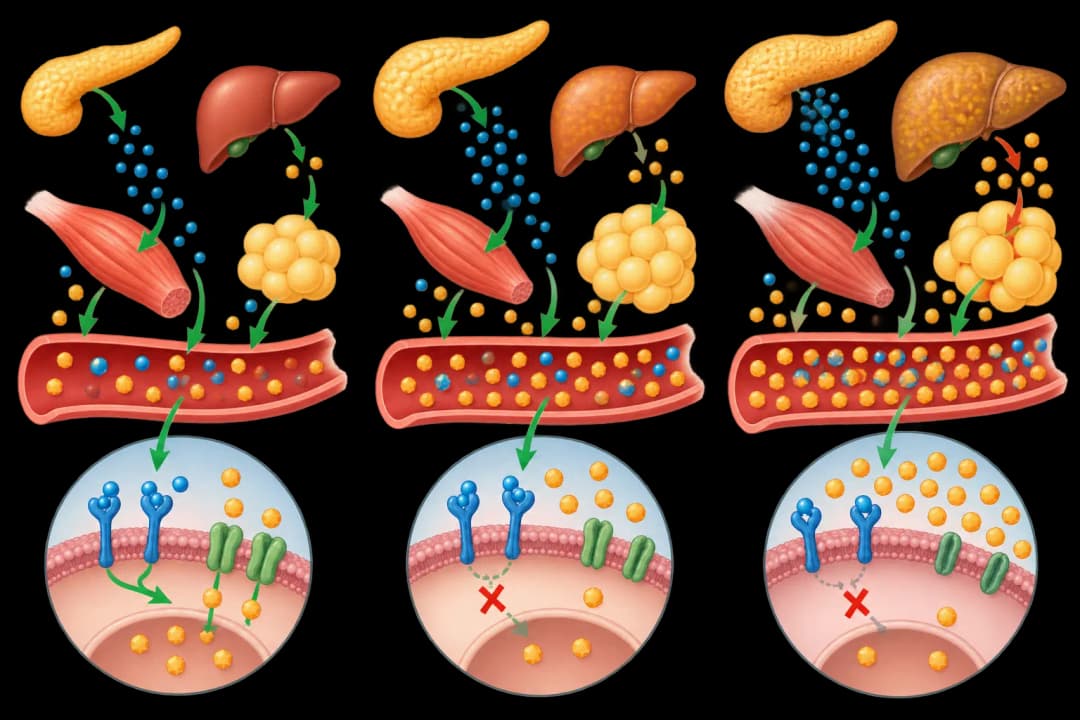
People with type 2 diabetes have insulin resistance or reduced insulin production, causing blood glucose to remain higher than the body can manage.
This answers one question. It is not a diagnosis and does not replace an assessment by a licensed doctor.
At a glance
- Main problem
- Insulin does not lower blood glucose effectively enough.
- Routine protection
- Foot, eye, kidney and cardiovascular checks help detect problems early.
What it means
Insulin normally helps glucose move from the bloodstream into cells for energy. In type 2 diabetes, cells respond less effectively and the pancreas may not produce enough insulin to compensate. Persistently high glucose can gradually affect blood vessels and nerves. This raises the risk of peripheral neuropathy, peripheral arterial disease, chronic kidney disease and stroke. Skin infections such as cellulitis may be harder to manage. Prediabetes and obesity can be associated with increased risk, but diabetes can occur across body sizes.
Daily management
Follow the plan agreed with your diabetes team, including medicines, glucose checks if advised, balanced meals and regular physical activity suited to your health. Check feet and skin for blisters, cuts, colour change or warmth, and report wounds that do not heal. Keep appointments for blood pressure, cholesterol, kidney, eye and foot checks. Learn how your medicines work and keep a plan for illness days. Never stop prescribed treatment without advice.
When to seek care
Seek urgent help for severe confusion, fainting, difficulty breathing, chest pressure, sudden weakness on one side, trouble speaking or a rapidly worsening foot infection. Shaking, sweating, unusual hunger or confusion may signal hypoglycaemia, especially when using insulin or certain glucose-lowering medicines; treat it according to your personal plan and seek help if it does not improve.
Questions for your doctor
Ask what glucose range is appropriate for you, how often monitoring is needed, which checks are due, how to manage exercise or illness, and what to do when a reading is unexpectedly high or low.
Find care
General Clinics & Polyclinics in Abu Dhabi
That answer is general. If you want it applied to your own case, these are licensed general clinics & polyclinics listed in Abu Dhabi.
27 Ar Ruwwad St - Shakhbout City - MSH4 - Abu Dhabi - United Arab Emirates
Accepts: Daman, Thiqa, Cigna, MetLife +20 more
Al Ruwais, Al Dhafrah
Accepts: Daman, Thiqa, AXA, Cigna +16 more
Al Bahyah - Al Bahyah Old - Abu Dhabi - United Arab Emirates
Accepts: Daman, Thiqa, Cigna, Allianz Care +18 more
Abu Dhabi
Accepts: Daman, Thiqa, AXA, Cigna +27 more
Ordered by verification status and how complete each clinic's public record is, then alphabetically. This is a directory listing, not a ranking — Zavis does not rate or recommend providers.
A factual listing drawn from the DHA, DOH and MOHAP licence registers. It is not a referral, an endorsement, or advice that any of these providers is right for you.
Questions people ask
Does type 2 diabetes always cause symptoms?
No. Some people have few symptoms, which is why planned monitoring and health checks matter.
Why are feet checked?
High glucose can affect sensation and circulation, making unnoticed injuries or infections more difficult to heal.
Related
Related reading
Keep reading
Medical disclaimer. This page is general health information, not medical advice, and it cannot diagnose you. Always consult a licensed healthcare provider about your own symptoms and treatment. In an emergency in the UAE, call 998 for an ambulance.