
Partial molar pregnancy
Short answer
A partial molar pregnancy is an abnormal pregnancy with extra genetic material, requiring medical assessment and follow-up after the pregnancy tissue is treated.
This answers one question. It is not a diagnosis and does not replace an assessment by a licensed doctor.
At a glance
- Assessment
- Ultrasound, hormone testing, and tissue examination may be used
- Follow-up
- Hormone monitoring continues until the specialist confirms resolution
What it means
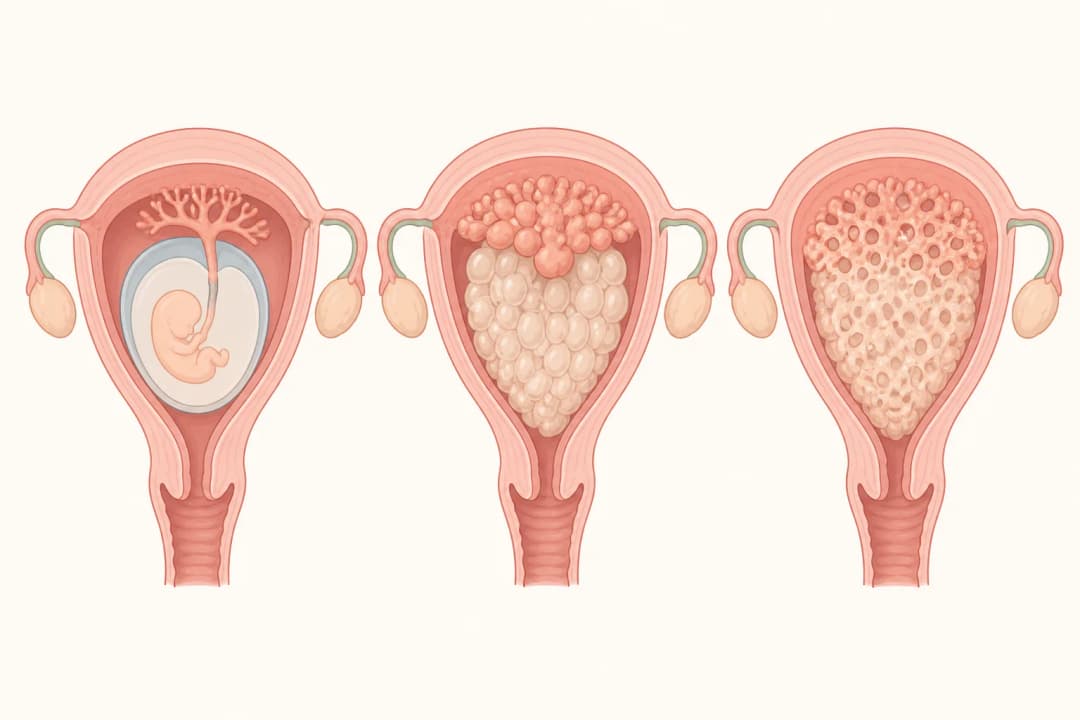
In a partial molar pregnancy, abnormal placental tissue develops alongside an embryo that cannot develop normally. Bleeding, pelvic discomfort, or pregnancy symptoms that change may occur, although symptoms alone cannot establish the diagnosis. Ultrasound, pregnancy-hormone testing, and examination of tissue help the specialist confirm what happened. Most care begins with removing the pregnancy tissue and then monitoring hormone levels until they return to the expected range.
What to do next
Attend every blood-test appointment and use contraception if your specialist recommends delaying another pregnancy during monitoring. Keep a record of bleeding, pain, fever, and medicines. Emotional support can be useful after pregnancy loss. If hormone levels remain abnormal, a specialist may discuss chemotherapy; this is treatment for persistent pregnancy-related tissue, not a sign that you caused the condition.
When to seek care
Seek urgent help for heavy bleeding, severe one-sided pain, fainting, chest pain, severe headache, or breathlessness. Contact your care team for fever, worsening cramps, foul-smelling discharge, or bleeding that becomes heavier instead of settling.
Questions for your doctor
Ask how tissue will be removed, how often hormone tests are needed, when pregnancy can be considered again, and which symptoms require same-day advice.
Questions people ask
Does bleeding prove a partial molar pregnancy?
No. Bleeding has many possible causes; testing is needed to identify a partial molar pregnancy.
Is chemotherapy always needed?
No. It may be discussed only if pregnancy-related tissue persists or hormone results follow a concerning pattern.
Related
Related reading
Keep reading
Cancer care in the UAE
Hospitals & Medical Centers in Abu Dhabi
Most UAE cancer care is delivered inside hospital services rather than by standalone oncology clinics, so these are licensed hospitals & medical centers listed in Abu Dhabi. Confirm the specific cancer service exists before you travel, and know that asking for a second opinion is routine.
Ahalia Hospital Musaffah Building - Musaffah - Musaffah Industrial - Abu Dhabi - United Arab Emirates
Accepts: Daman, Thiqa, AXA, Cigna +26 more
Al Ruwais Industrial City - Abu Dhabi - United Arab Emirates
Accepts: Daman, Thiqa, AXA, Cigna +30 more
Abu Dhabi, Abu Dhabi
Accepts: Daman, Thiqa, AXA, Cigna +30 more
Second opinions are routine in cancer care and asking for one does not affect your treatment. How to arrange a second opinion in the UAE.
Ordered by verification status and how complete each clinic's public record is, then alphabetically. This is a directory listing, not a ranking — Zavis does not rate or recommend providers.
A factual listing drawn from the DHA, DOH and MOHAP licence registers. It is not a referral, an endorsement, or advice that any of these providers is right for you.
Medical disclaimer. This page is general health information, not medical advice, and it cannot diagnose you. Always consult a licensed healthcare provider about your own symptoms and treatment. In an emergency in the UAE, call 998 for an ambulance.