
What should you know about paradoxical hypertrichosis?
Short answer
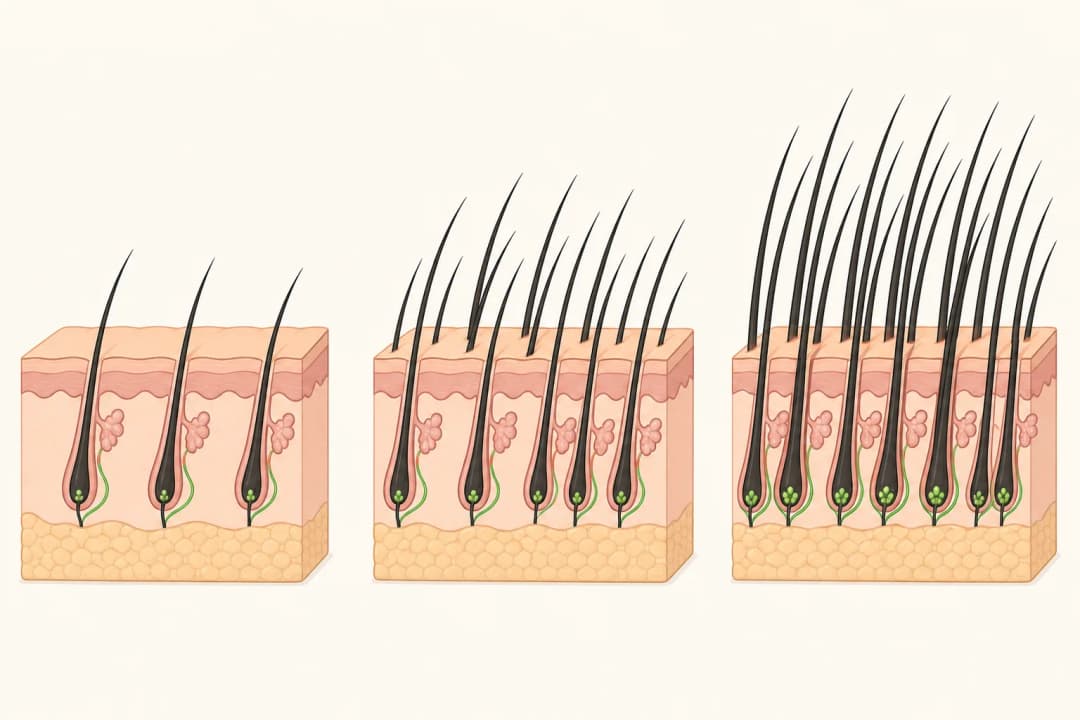
Paradoxical hypertrichosis is unexpected increased hair growth after a hair-reduction treatment, so the area should be reassessed before further sessions.
This answers one question. It is not a diagnosis and does not replace an assessment by a licensed doctor.
At a glance
- Main feature
- New or increased hair growth after hair-reduction treatment
- First step
- Pause treatment on the changed area and arrange an assessment
- Useful record
- Dated photographs and prior treatment details
What it means
Instead of becoming finer or less noticeable, hair may appear denser, darker, or coarser in the treated area or at its edges. This is described after some light-based hair treatments and is different from ordinary regrowth between appointments. It does not mean that a serious illness is present, but the pattern and timing deserve a clinical review.
A clinician will consider the device settings, treatment area, hair colour and thickness, skin tone, hormonal history, and whether the change is truly new. Do not judge the result from a single day: hair cycles are uneven, and recently treated hairs can shed at different times.
What you can do next
Pause additional treatment on the changed area until the treating clinician has examined it. Take dated photographs in similar lighting, record when the change began, and bring the device and session details if you have them. Avoid repeatedly changing methods while the pattern is being assessed, because shaving, plucking, waxing, and bleaching can make comparison harder.
Depending on the findings, a clinician may discuss adjusting the approach, treating only suitable hairs, or choosing another method. Options can include [Laser Hair Removal](/treatments/laser-and-energy/laser-hair-removal/) in selected situations or [Electrolysis Hair Removal](/treatments/laser-and-energy/electrolysis-hair-removal/) for individual hairs. The choice depends on the hair and skin characteristics, not on the label alone.
When to seek care
Arrange a review if new growth persists, spreads beyond the treated patch, or is accompanied by irritation, pigment change, blistering, or scarring. Seek prompt medical attention for rapidly worsening pain, marked swelling, pus, fever, or a spreading rash after treatment. Those findings may indicate a treatment reaction or infection rather than hair growth alone.
Questions for your doctor
Ask which findings support paradoxical hypertrichosis, whether treatment should be paused, and how the area will be photographed or monitored. You can also ask which hair-removal method fits the hair thickness and skin tone, what reactions to report, and when a follow-up examination should happen.
Find care
General Clinics & Polyclinics in Abu Dhabi
That answer is general. If you want it applied to your own case, these are licensed general clinics & polyclinics listed in Abu Dhabi.
27 Ar Ruwwad St - Shakhbout City - MSH4 - Abu Dhabi - United Arab Emirates
Accepts: Daman, Thiqa, Cigna, MetLife +20 more
Al Ruwais, Al Dhafrah
Accepts: Daman, Thiqa, AXA, Cigna +16 more
Al Bahyah - Al Bahyah Old - Abu Dhabi - United Arab Emirates
Accepts: Daman, Thiqa, Cigna, Allianz Care +18 more
Abu Dhabi
Accepts: Daman, Thiqa, AXA, Cigna +27 more
Ordered by verification status and how complete each clinic's public record is, then alphabetically. This is a directory listing, not a ranking — Zavis does not rate or recommend providers.
A factual listing drawn from the DHA, DOH and MOHAP licence registers. It is not a referral, an endorsement, or advice that any of these providers is right for you.
Questions people ask
Is paradoxical hypertrichosis the same as normal regrowth?
No. Normal regrowth follows the expected hair cycle; paradoxical hypertrichosis describes an unexpected increase in visible hair in or near a treated area.
Should I continue my next session?
Contact the treating clinician before continuing, because the settings or method may need review when hair growth has changed unexpectedly.
Related
Related reading
Keep reading
Medical disclaimer. This page is general health information, not medical advice, and it cannot diagnose you. Always consult a licensed healthcare provider about your own symptoms and treatment. In an emergency in the UAE, call 998 for an ambulance.