
Pain in the bridge of the foot: what to know
Short answer
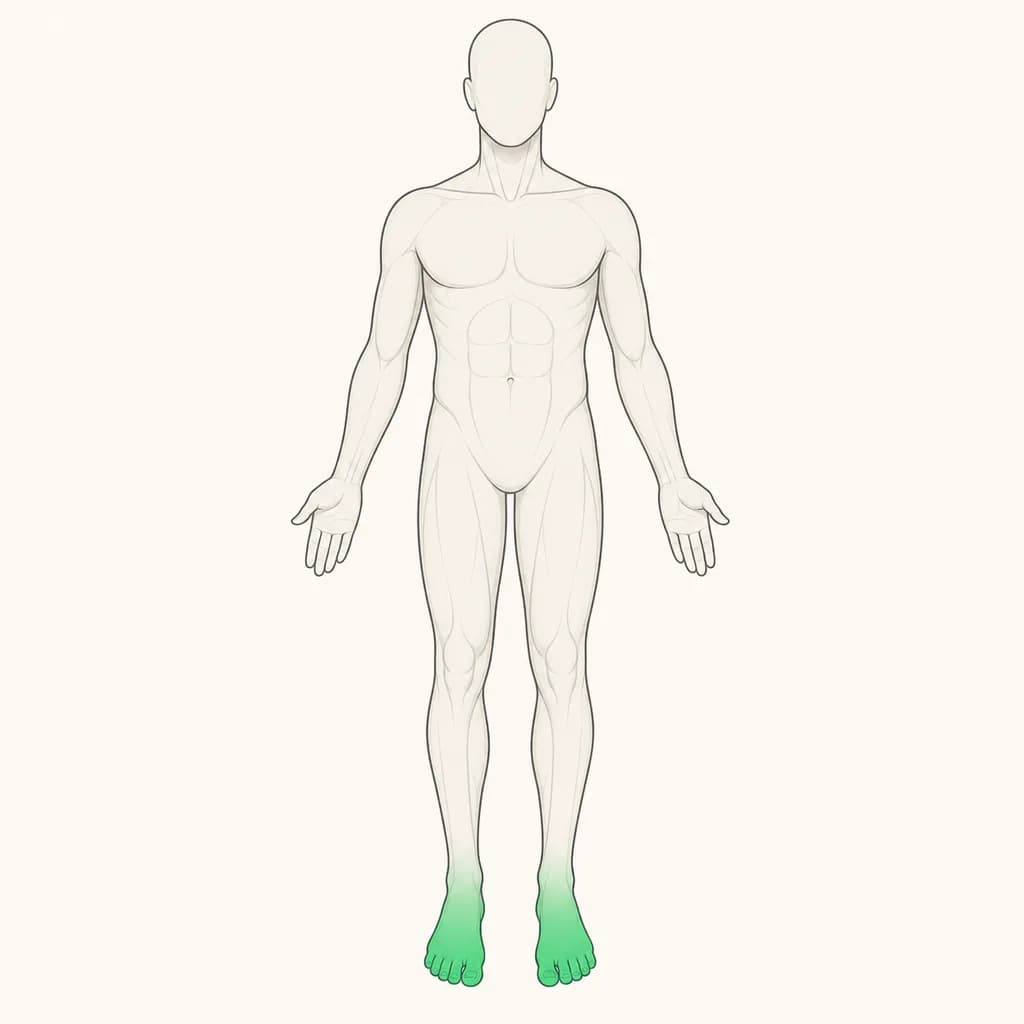
Pain in the bridge of the foot can come from irritated tendons, stiff joints, footwear pressure, altered mechanics, or a bone injury.
This answers one question. It is not a diagnosis and does not replace an assessment by a licensed doctor.
At a glance
- Common pressure source
- Tight shoes or laces over the top of the foot
- Useful clue
- Focal tenderness and swelling need closer assessment
- Activity advice
- Pause impact exercise that increases pain
Why the top of the foot may hurt
The bridge contains small joints, tendons that lift the toes, and the long bones leading toward the toes. Tight shoes or laces can press on these structures, while a change in walking, running, or training can overload them. Bunions, Hammer Toe, and Hallux Rigidus can alter how the front of the foot moves and where force is placed. Flat Feet may also change foot alignment. A Stress Fracture can present with focused tenderness and pain that increases with loading. The exact tender spot and any swelling help guide an examination.
Steps to try
Switch to a roomy shoe and loosen laces across the painful area. Temporarily avoid running, jumping, hills, and long walks if they increase symptoms. Keep the ankle and toes gently moving within a comfortable range, without forcing a painful joint. Cold wrapped in cloth can provide short-term comfort after activity. Do not use a tight support over a swollen area without advice. A clinician or physiotherapist can assess gait, joint motion, tendon strength, and whether Custom Orthotics could reduce repeated loading.
When to seek care
Arrange prompt care after an impact or twist if swelling, bruising, marked tenderness, or difficulty bearing weight develops. Urgent assessment is appropriate for a visibly deformed foot, an open injury, a cold or blue foot, numbness, or severe worsening pain. Book a routine appointment if symptoms remain after changing footwear and reducing aggravating activity, or if pain returns whenever you resume exercise. Imaging may be considered when a bone injury is suspected.
Questions for your doctor
Ask: Is this more consistent with a tendon, joint, or bone problem? Could my footwear or foot alignment be contributing? What activity is safe while it settles? Do I need imaging, physiotherapy, or Custom Orthotics?
Find care
General Clinics & Polyclinics in Abu Dhabi
That answer is general. If you want it applied to your own case, these are licensed general clinics & polyclinics listed in Abu Dhabi.
27 Ar Ruwwad St - Shakhbout City - MSH4 - Abu Dhabi - United Arab Emirates
Accepts: Daman, Thiqa, Cigna, MetLife +20 more
Al Ruwais, Al Dhafrah
Accepts: Daman, Thiqa, AXA, Cigna +16 more
Al Bahyah - Al Bahyah Old - Abu Dhabi - United Arab Emirates
Accepts: Daman, Thiqa, Cigna, Allianz Care +18 more
Abu Dhabi
Accepts: Daman, Thiqa, AXA, Cigna +27 more
Ordered by verification status and how complete each clinic's public record is, then alphabetically. This is a directory listing, not a ranking — Zavis does not rate or recommend providers.
A factual listing drawn from the DHA, DOH and MOHAP licence registers. It is not a referral, an endorsement, or advice that any of these providers is right for you.
Questions people ask
Can shoes cause pain on the bridge of the foot?
Yes. Tight uppers or laces can press on tendons and joints across the top of the foot, particularly when the foot is swollen or activity has increased.
When could a bone injury be a concern?
Focused tenderness, swelling, pain with weight-bearing, or symptoms after increased impact or an injury should be assessed for a possible bone problem.
Related
Related reading
Keep reading
Medical disclaimer. This page is general health information, not medical advice, and it cannot diagnose you. Always consult a licensed healthcare provider about your own symptoms and treatment. In an emergency in the UAE, call 998 for an ambulance.