
Pain in the instep of the right foot: what to know
Short answer
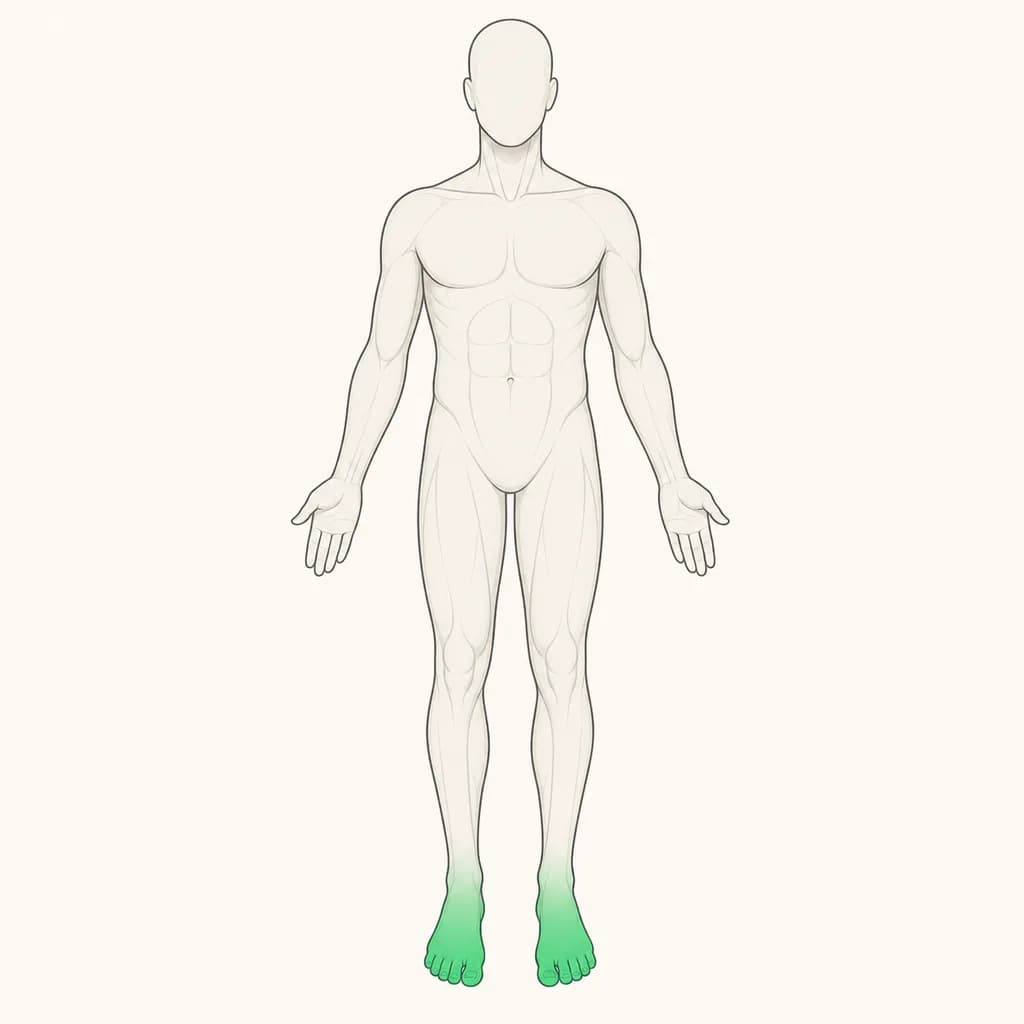
Pain in the instep of the right foot may reflect overloaded soft tissues, foot-shape changes, joint irritation, or a stress injury.
This answers one question. It is not a diagnosis and does not replace an assessment by a licensed doctor.
At a glance
- Area
- Upper-inner part of the right foot
- Common trigger
- A change in loading, footwear, or activity
- Watch for
- Inability to bear weight, rapid swelling, or numbness
Possible sources of right instep pain
The instep contains the inner arch and the joints, tendons, and bones that help the foot support your body. A recent increase in walking, sport, or standing can overload these structures. Flat Feet may place extra demand on the arch. Bunions, Hammer Toe, and Hallux Rigidus can change how the front and inner foot moves. Plantar Fasciitis can affect the arch, although heel pain is also common. A Stress Fracture can cause localised pain that becomes more noticeable with weight-bearing.
Right-foot pain is not diagnosed by side alone. Examination may include checking the sole and instep, comparing both feet, testing movement and strength, and reviewing footwear and recent activity. Imaging is sometimes used when a bone injury is possible.
Practical steps
Temporarily reduce running, jumping, and other movements that bring on the pain. Wear stable, comfortable shoes and avoid going barefoot on hard surfaces if that increases symptoms. A wrapped cold pack may ease irritation for brief periods. Keep the foot moving gently within a comfortable range, but do not force a stretch or massage a sharply tender spot. Record the timing, triggers, swelling, and any change in walking. Persistent symptoms may warrant advice about Custom Orthotics or physiotherapy.
When to seek medical help
Seek prompt care if you cannot walk normally, the foot is visibly misshapen, swelling appears after an injury, or pain is concentrated over a bone. Urgent help is needed for marked redness with fever, new numbness or weakness, or a foot that becomes unusually cold or pale. Arrange an appointment when pain persists, recurs with ordinary activity, or gradually restricts your walking.
Questions worth asking
Ask what structure is most likely irritated, whether your shoes or foot mechanics are contributing, and whether an X-ray or other assessment is needed. Clarify which exercises are suitable, how to increase activity safely, and when an orthotic might be useful.
Find care
General Clinics & Polyclinics in Abu Dhabi
That answer is general. If you want it applied to your own case, these are licensed general clinics & polyclinics listed in Abu Dhabi.
27 Ar Ruwwad St - Shakhbout City - MSH4 - Abu Dhabi - United Arab Emirates
Accepts: Daman, Thiqa, Cigna, MetLife +20 more
Al Ruwais, Al Dhafrah
Accepts: Daman, Thiqa, AXA, Cigna +16 more
Al Bahyah - Al Bahyah Old - Abu Dhabi - United Arab Emirates
Accepts: Daman, Thiqa, Cigna, Allianz Care +18 more
Abu Dhabi
Accepts: Daman, Thiqa, AXA, Cigna +27 more
Ordered by verification status and how complete each clinic's public record is, then alphabetically. This is a directory listing, not a ranking — Zavis does not rate or recommend providers.
A factual listing drawn from the DHA, DOH and MOHAP licence registers. It is not a referral, an endorsement, or advice that any of these providers is right for you.
Questions people ask
Is right instep pain always a serious injury?
No. It can follow overuse or altered mechanics, but persistent or sharply localised pain should be assessed.
What should I track before an appointment?
Note the trigger, exact tender area, walking tolerance, swelling, footwear, and whether rest changes the symptoms.
Related
Related reading
Keep reading
Medical disclaimer. This page is general health information, not medical advice, and it cannot diagnose you. Always consult a licensed healthcare provider about your own symptoms and treatment. In an emergency in the UAE, call 998 for an ambulance.