
What does Osgood-Schlatter disease mean in children?
Short answer
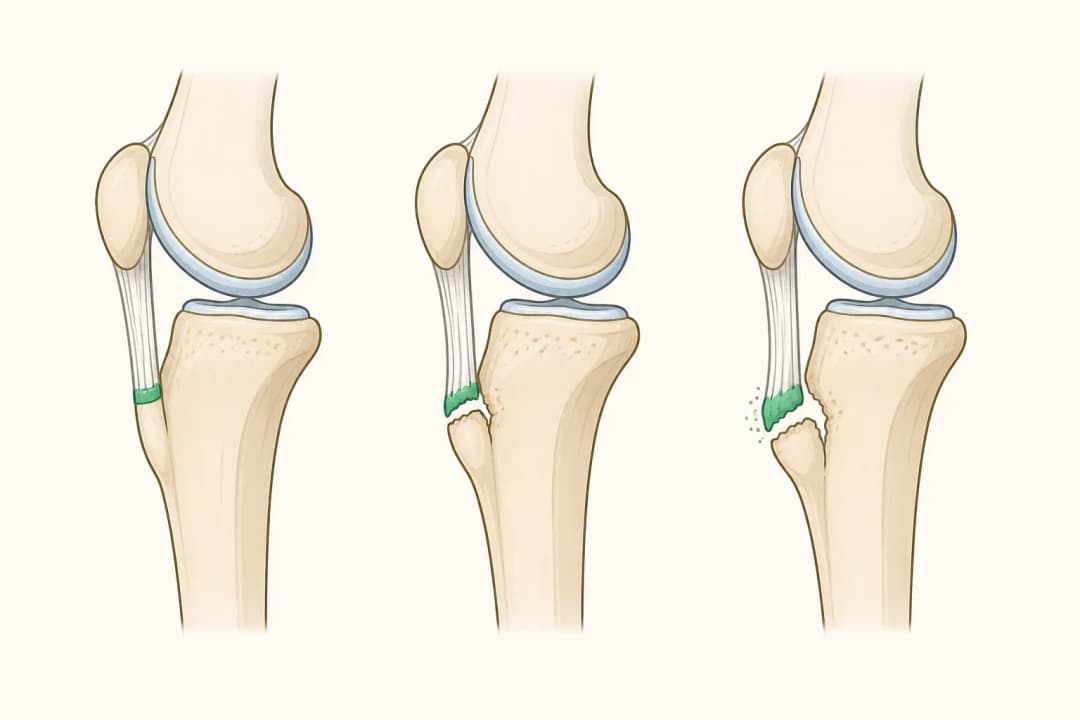
Osgood-Schlatter disease is a growth-related irritation where the tendon below the kneecap pulls on the shinbone during childhood.
This answers one question. It is not a diagnosis and does not replace an assessment by a licensed doctor.
At a glance
- Typical area
- The bony bump below the kneecap
- Common triggers
- Running, jumping, and kneeling
- Usual approach
- Activity adjustment and guided rehabilitation
What it means
A child may feel pain, tenderness, or swelling at the bony bump just below the kneecap. Running, jumping, climbing, and kneeling can make it more noticeable. It commonly appears while bones and muscles are changing quickly, especially in children who train or play sport regularly. One or both knees can be involved.
The condition is usually managed without an operation. A clinician may examine the knee and movement, then decide whether an X-ray or another test is needed. Pain below the kneecap can have other causes, so an assessment is useful when symptoms persist or interfere with school, sleep, or play.
What you can do
Reduce activities that clearly provoke pain for a while, while keeping comfortable movement such as gentle walking. Ice wrapped in a cloth after activity may ease soreness. A child should not push through sharp or increasing pain.
A physiotherapist can teach thigh and hip stretches, gradual strengthening, and a step-by-step return to sport. Supportive footwear and avoiding repeated kneeling may also help. Use pain medicine only as directed by a healthcare professional, with the child’s age, weight, allergies, and other medicines considered.
When to seek care
Arrange an assessment if pain lasts, keeps returning, causes limping, or limits normal activities. Seek prompt medical care after a significant injury, or if the knee becomes very swollen, hot, red, or difficult to move. Fever, feeling unwell, or inability to bear weight needs urgent attention because these features are not typical of simple activity-related irritation.
Questions for your doctor
Ask whether the symptoms fit Osgood-Schlatter disease, which activities should be paused, and how your child can stay active safely. You can also ask when strengthening should begin, how to return to sport, and which changes would require a follow-up visit.
Find care
General Clinics & Polyclinics in Abu Dhabi
That answer is general. If you want it applied to your own case, these are licensed general clinics & polyclinics listed in Abu Dhabi.
27 Ar Ruwwad St - Shakhbout City - MSH4 - Abu Dhabi - United Arab Emirates
Accepts: Daman, Thiqa, Cigna, MetLife +20 more
Al Ruwais, Al Dhafrah
Accepts: Daman, Thiqa, AXA, Cigna +16 more
Al Bahyah - Al Bahyah Old - Abu Dhabi - United Arab Emirates
Accepts: Daman, Thiqa, Cigna, Allianz Care +18 more
Abu Dhabi
Accepts: Daman, Thiqa, AXA, Cigna +27 more
Ordered by verification status and how complete each clinic's public record is, then alphabetically. This is a directory listing, not a ranking — Zavis does not rate or recommend providers.
A factual listing drawn from the DHA, DOH and MOHAP licence registers. It is not a referral, an endorsement, or advice that any of these providers is right for you.
Questions people ask
Can a child continue sports with Osgood-Schlatter disease?
Often, activity can be modified, but painful running and jumping should be reduced until movement is comfortable and a clinician or physiotherapist advises progression.
Does Osgood-Schlatter disease need surgery?
Most children improve with activity changes, symptom care, and rehabilitation; surgery is not the usual first approach.
Related
Related reading
Keep reading
Medical disclaimer. This page is general health information, not medical advice, and it cannot diagnose you. Always consult a licensed healthcare provider about your own symptoms and treatment. In an emergency in the UAE, call 998 for an ambulance.