
What should you know about ophthalmic melanoma?
Short answer
Ophthalmic melanoma is a serious melanoma involving the eye or nearby eye structures and needs assessment by an eye cancer specialist.
This answers one question. It is not a diagnosis and does not replace an assessment by a licensed doctor.
At a glance
- Specialist
- Ophthalmologist or ocular oncology team
- Possible signs
- Visual change, flashes, floaters, or a pigmented eye change
- Planning
- Location and spread guide treatment
What this means
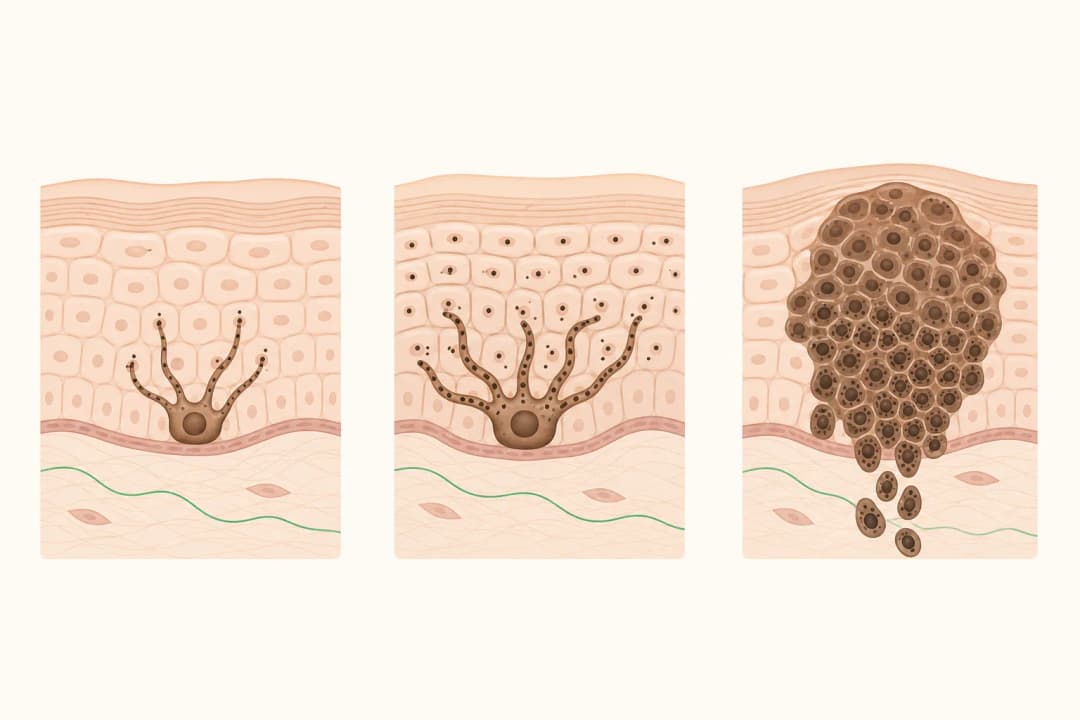
Melanoma can arise from pigment-producing cells in the eye. Some people notice blurred or reduced vision, flashes, floaters, a shadow in the field of view, a visible change in the iris, or eye discomfort; others have no early symptoms. These symptoms can also have non-cancerous causes, so they do not establish a diagnosis.
Assessment may include a dilated eye examination and imaging. The team considers the tumour’s site, size, involvement of nearby structures, and whether there is evidence of spread before recommending care.
What to do next
Arrange prompt review with an ophthalmologist if you have a new visual change or a changing pigmented area of the eye. Treatment may involve focused radiation, laser-based approaches, surgery, or systemic treatment, depending on the findings. Ask how each option may affect vision, appearance, and daily activities.
Keep copies of eye scans and pathology reports, and attend the follow-up schedule offered by the specialist. Monitoring can check the treated eye and look for recurrence or spread.
When to seek care
Seek urgent eye care for sudden vision loss, severe eye pain, a new curtain-like shadow, marked redness with headache, or vomiting. Contact the treating team promptly for worsening vision, new flashes or floaters, or symptoms after treatment.
Questions for your doctor
Where is the melanoma located? Which scans or biopsy are needed? What are the treatment choices and vision effects? How will follow-up check the eye and other organs?
Find care
General Clinics & Polyclinics in Abu Dhabi
That answer is general. If you want it applied to your own case, these are licensed general clinics & polyclinics listed in Abu Dhabi.
27 Ar Ruwwad St - Shakhbout City - MSH4 - Abu Dhabi - United Arab Emirates
Accepts: Daman, Thiqa, Cigna, MetLife +20 more
Al Ruwais, Al Dhafrah
Accepts: Daman, Thiqa, AXA, Cigna +16 more
Al Bahyah - Al Bahyah Old - Abu Dhabi - United Arab Emirates
Accepts: Daman, Thiqa, Cigna, Allianz Care +18 more
Abu Dhabi
Accepts: Daman, Thiqa, AXA, Cigna +27 more
Ordered by verification status and how complete each clinic's public record is, then alphabetically. This is a directory listing, not a ranking — Zavis does not rate or recommend providers.
A factual listing drawn from the DHA, DOH and MOHAP licence registers. It is not a referral, an endorsement, or advice that any of these providers is right for you.
Questions people ask
Does every dark spot in the eye mean melanoma?
No. Pigmented eye changes have several possible causes, and an eye specialist must examine the finding.
Why is follow-up needed?
Follow-up checks vision, the treated area, and possible recurrence or spread.
Related
Related reading
Keep reading
Medical disclaimer. This page is general health information, not medical advice, and it cannot diagnose you. Always consult a licensed healthcare provider about your own symptoms and treatment. In an emergency in the UAE, call 998 for an ambulance.