
Obesity and type 2 diabetes: what to know
Short answer
Obesity can make insulin less effective, increasing the chance of type 2 diabetes, although it does not determine an individual diagnosis.
This answers one question. It is not a diagnosis and does not replace an assessment by a licensed doctor.
At a glance
- Mechanism
- Insulin resistance can make blood glucose harder to control.
- Testing
- Blood glucose and HbA1c help assess glucose status.
The connection with blood glucose
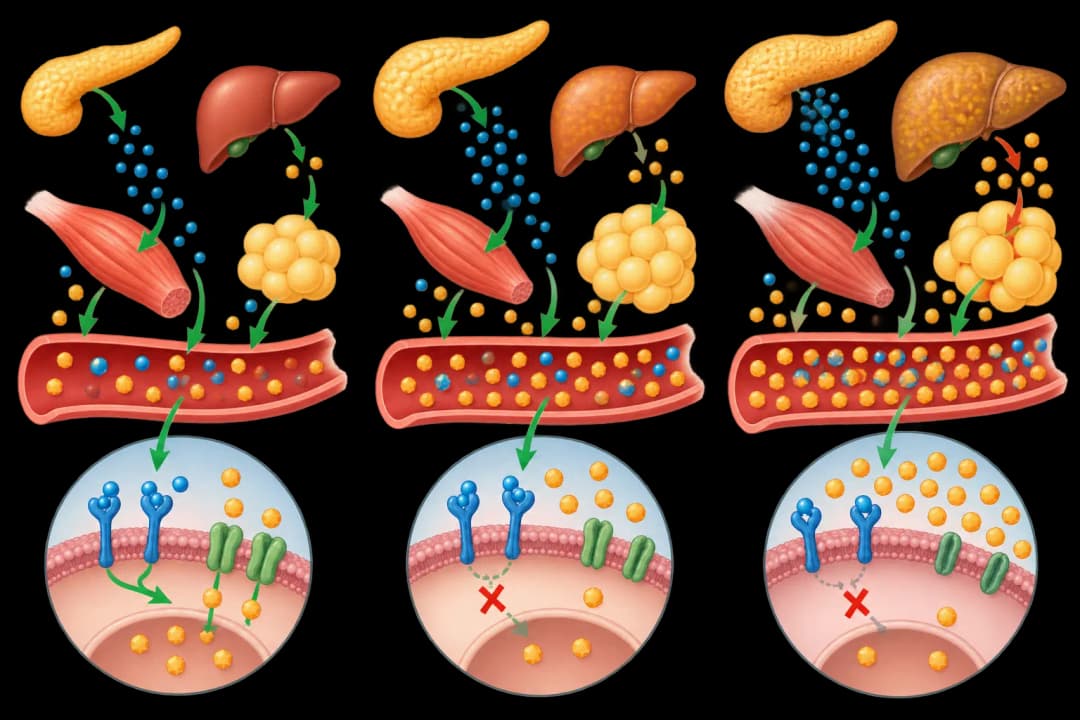
Insulin helps move glucose from the blood into cells. With insulin resistance, muscle and liver cells respond less effectively, so the pancreas may produce more insulin. Over time, glucose can rise into prediabetes or Type 2 Diabetes. Family history, age, sleep, medicines, pregnancy history, and activity also affect risk.
Type 2 Diabetes may develop gradually. Thirst, frequent urination, blurred vision, tiredness, recurrent infections, or slow-healing wounds deserve testing, but symptoms cannot confirm the condition. A blood glucose or HbA1c test is used with clinical context.
Practical ways to reduce harm
Arrange testing if you have risk factors or symptoms. A clinician can review glucose, blood pressure, cholesterol, kidney function, medicines, sleep, and family history. If diabetes is diagnosed, regular monitoring and a personalised treatment plan help protect nerves, blood vessels, eyes, and kidneys.
Choose manageable changes such as walking or other suitable activity, balanced meals with fibre and protein, fewer sweetened drinks, and consistent sleep. If you use glucose-lowering medicine, do not change doses without advice. Ask about foot checks and screening for Peripheral Neuropathy, Chronic Kidney Disease, and other complications.
When to seek care
Seek prompt advice for persistent thirst, frequent urination, vomiting, dehydration, or a wound that is red and slow to heal. Get urgent help for severe drowsiness or confusion, difficulty breathing, chest pain, sudden weakness, or a rapidly spreading skin infection. If taking glucose-lowering treatment, sweating, shaking, or confusion may indicate Hypoglycaemia and needs immediate attention.
Questions for your doctor
Which glucose test do I need, and when should it be repeated? What targets apply to me? How can I adjust meals and activity safely with my medicines, and which eye, foot, nerve, and kidney checks should I arrange?
Find care
General Clinics & Polyclinics in Abu Dhabi
That answer is general. If you want it applied to your own case, these are licensed general clinics & polyclinics listed in Abu Dhabi.
27 Ar Ruwwad St - Shakhbout City - MSH4 - Abu Dhabi - United Arab Emirates
Accepts: Daman, Thiqa, Cigna, MetLife +20 more
Al Ruwais, Al Dhafrah
Accepts: Daman, Thiqa, AXA, Cigna +16 more
Al Bahyah - Al Bahyah Old - Abu Dhabi - United Arab Emirates
Accepts: Daman, Thiqa, Cigna, Allianz Care +18 more
Abu Dhabi
Accepts: Daman, Thiqa, AXA, Cigna +27 more
Ordered by verification status and how complete each clinic's public record is, then alphabetically. This is a directory listing, not a ranking — Zavis does not rate or recommend providers.
A factual listing drawn from the DHA, DOH and MOHAP licence registers. It is not a referral, an endorsement, or advice that any of these providers is right for you.
Questions people ask
Does obesity mean a person has type 2 diabetes?
No. Obesity can raise risk, but diagnosis requires appropriate blood testing and clinical assessment.
Can type 2 diabetes be present without symptoms?
Yes. It can develop gradually, which is why testing may be useful when risk factors are present.
Related
Related reading
Keep reading
Medical disclaimer. This page is general health information, not medical advice, and it cannot diagnose you. Always consult a licensed healthcare provider about your own symptoms and treatment. In an emergency in the UAE, call 998 for an ambulance.