
Non-melanoma skin cancer treatment: what to know
Short answer
Non-melanoma skin cancer treatment is selected according to the tumour type, site, depth, and spread, with surgery often used for a local lesion.
This answers one question. It is not a diagnosis and does not replace an assessment by a licensed doctor.
At a glance
- Treatment driver
- Cancer type, depth, site, spread, and overall health
- Aftercare
- Wound review and surveillance for recurrence or new lesions
How treatment is chosen
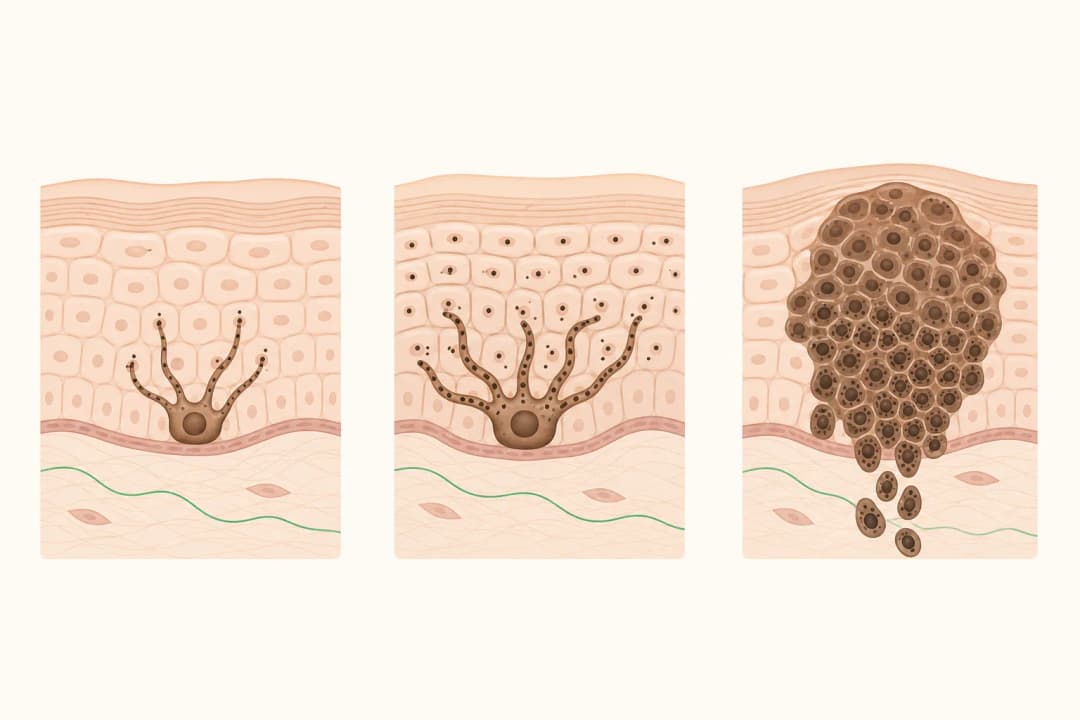
A specialist first confirms the diagnosis and reviews the lesion’s location, size, borders, depth, and microscopic features. Surgical excision removes the visible tumour with a planned margin; other skin cancer surgery techniques may be considered when preserving nearby tissue is especially important. A larger or deeper cancer may need wider tumour removal surgery. In selected advanced cases, immunotherapy may be discussed. A sentinel lymph node biopsy is relevant only for particular clinical situations, not for every skin cancer.
Preparing for treatment
Ask which procedure is recommended, whether the tissue will be examined after removal, and how the wound will be closed and cared for. Tell the team about medicines that affect bleeding, allergies, immune conditions, and previous operations in the area. Keep the wound clean as instructed, avoid picking at the dressing or scab, and attend appointments so healing and pathology results can be reviewed. Follow-up after cancer treatment also supports checks for recurrence and new lesions.
When to contact the care team
After treatment, seek advice for bleeding that does not settle with firm pressure, worsening pain, spreading redness, pus, fever, wound separation, or swelling affecting vision or movement. Before treatment, report rapid growth, new neurological symptoms, or a lesion that becomes markedly painful or ulcerated. Ask how quickly pathology results will be communicated and whom to contact outside clinic hours.
Questions for your doctor
What is the confirmed cancer type and stage? Why is this treatment appropriate for its location and depth? Will I need excision, another skin cancer operation, or systemic treatment? Is lymph-node assessment needed? How will reconstruction, wound care, and follow-up be managed?
Find care
General Clinics & Polyclinics in Abu Dhabi
That answer is general. If you want it applied to your own case, these are licensed general clinics & polyclinics listed in Abu Dhabi.
27 Ar Ruwwad St - Shakhbout City - MSH4 - Abu Dhabi - United Arab Emirates
Accepts: Daman, Thiqa, Cigna, MetLife +20 more
Al Ruwais, Al Dhafrah
Accepts: Daman, Thiqa, AXA, Cigna +16 more
Al Bahyah - Al Bahyah Old - Abu Dhabi - United Arab Emirates
Accepts: Daman, Thiqa, Cigna, Allianz Care +18 more
Abu Dhabi
Accepts: Daman, Thiqa, AXA, Cigna +27 more
Ordered by verification status and how complete each clinic's public record is, then alphabetically. This is a directory listing, not a ranking — Zavis does not rate or recommend providers.
A factual listing drawn from the DHA, DOH and MOHAP licence registers. It is not a referral, an endorsement, or advice that any of these providers is right for you.
Questions people ask
Is surgery always needed for non-melanoma skin cancer?
Surgery is common for a local lesion, but selected cases may be treated with other approaches depending on the cancer and the person’s circumstances.
Why might immunotherapy be discussed?
It may be considered when disease is advanced or cannot be managed adequately with local treatment, following specialist assessment.
Related
Related reading
Keep reading
Medical disclaimer. This page is general health information, not medical advice, and it cannot diagnose you. Always consult a licensed healthcare provider about your own symptoms and treatment. In an emergency in the UAE, call 998 for an ambulance.