
What should you know about nodular melanoma pathology outlines?
Short answer
A nodular melanoma pathology report confirms the diagnosis and describes features such as tumour depth, ulceration, and margins that guide next steps.
This answers one question. It is not a diagnosis and does not replace an assessment by a licensed doctor.
At a glance
- Sample
- Biopsy or surgically removed tissue
- Key details
- Depth, ulceration, margins and lymph nodes
- Purpose
- Guides staging and treatment planning
Reading the report
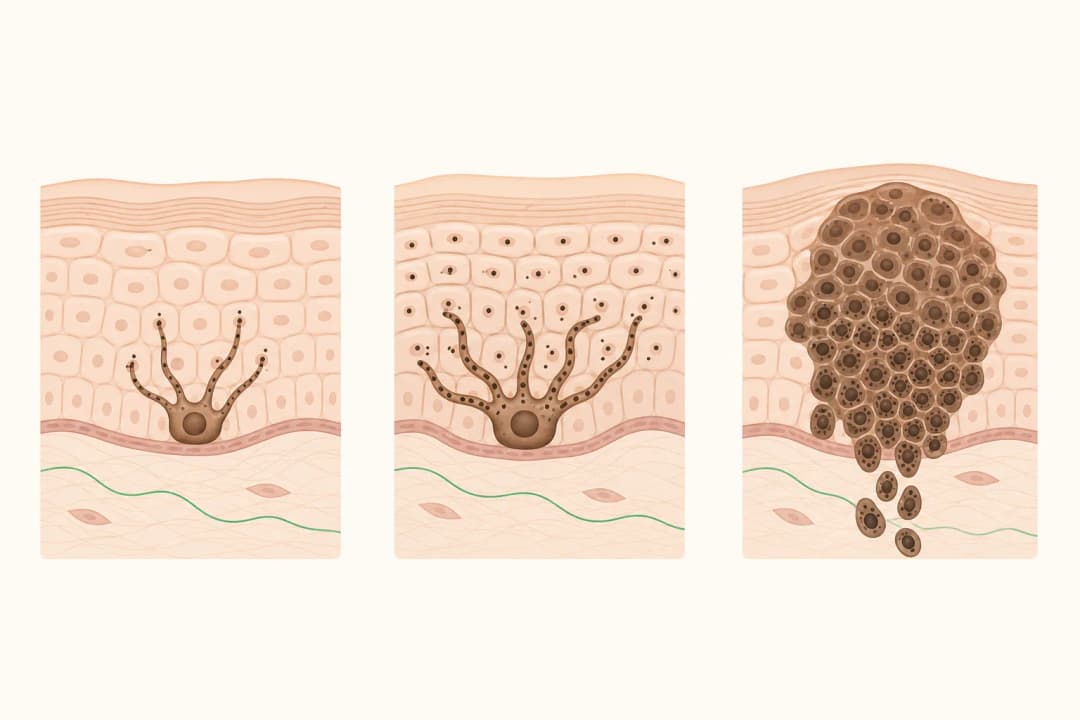
A pathologist examines tissue removed by biopsy or surgery. The report may identify melanoma type, thickness, ulceration, mitotic activity, whether the edges are clear, and whether nearby lymph-node tissue contains melanoma. These terms help the clinical team assign a stage and decide whether further skin surgery, lymph-node assessment, imaging, or medicines should be discussed. A report is not interpreted from one word alone: depth, margins, lymph-node findings, and the wider clinical picture work together.
What to do with the result
Keep a copy of the report and ask the treating team to explain every unfamiliar term in plain language. Confirm whether the initial removal was diagnostic or intended as the final surgery. Depending on the findings, the next step may be wider excision, sentinel lymph-node biopsy, tumour-removal surgery, or a treatment such as immunotherapy. Do not change treatment or assume the stage from a single line before the clinician has reviewed the complete report.
When to seek care
Contact the clinic if results have been issued but no follow-up plan has been arranged, or if the biopsy wound becomes increasingly red, swollen, painful, or produces pus. Seek urgent care for heavy bleeding, fever with worsening wound changes, or a rapidly spreading reaction. New neurological symptoms such as confusion, weakness, or seizures require emergency assessment and should never wait for a pathology appointment.
Questions for your doctor
Ask what the diagnosis says, how thick the tumour is, whether ulceration or involved margins are present, and what stage is being considered. Ask whether further surgery, lymph-node testing, scans, or systemic treatment is recommended and when surveillance begins.
Find care
General Clinics & Polyclinics in Abu Dhabi
That answer is general. If you want it applied to your own case, these are licensed general clinics & polyclinics listed in Abu Dhabi.
27 Ar Ruwwad St - Shakhbout City - MSH4 - Abu Dhabi - United Arab Emirates
Accepts: Daman, Thiqa, Cigna, MetLife +20 more
Al Ruwais, Al Dhafrah
Accepts: Daman, Thiqa, AXA, Cigna +16 more
Al Bahyah - Al Bahyah Old - Abu Dhabi - United Arab Emirates
Accepts: Daman, Thiqa, Cigna, Allianz Care +18 more
Abu Dhabi
Accepts: Daman, Thiqa, AXA, Cigna +27 more
Ordered by verification status and how complete each clinic's public record is, then alphabetically. This is a directory listing, not a ranking — Zavis does not rate or recommend providers.
A factual listing drawn from the DHA, DOH and MOHAP licence registers. It is not a referral, an endorsement, or advice that any of these providers is right for you.
Questions people ask
Does a pathology outline decide treatment by itself?
It supplies essential evidence, but treatment decisions also use the examination, stage, imaging when indicated, and your overall health.
What does an involved margin mean?
It means melanoma cells reach an examined edge of the sample, so the team may discuss additional surgery or another plan.
Related
Related reading
Keep reading
Medical disclaimer. This page is general health information, not medical advice, and it cannot diagnose you. Always consult a licensed healthcare provider about your own symptoms and treatment. In an emergency in the UAE, call 998 for an ambulance.