
What should you know about NICE COPD guidance?
Short answer
COPD is a long-term lung condition that needs individual assessment, symptom management and a plan for flare-ups.
This answers one question. It is not a diagnosis and does not replace an assessment by a licensed doctor.
At a glance
- Main symptoms
- Cough, phlegm, wheezing, chest tightness and breathlessness
- Assessment tool
- Spirometry measures airflow and supports diagnosis
Understanding COPD
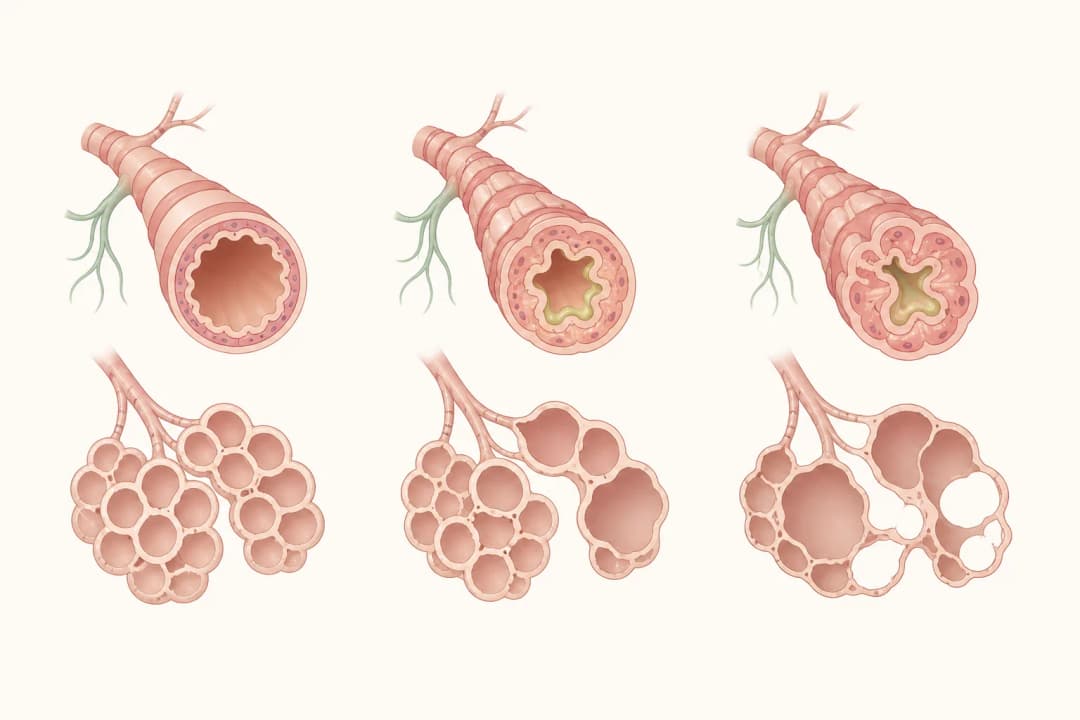
COPD can narrow or damage the airways, making it harder to move air in and out. Cough, wheezing, chest tightness and coughing up phlegm are common presentations of COPD, but symptoms vary and may change over time. Breathlessness can limit activity, while an exacerbation is a noticeable worsening that needs prompt attention. Spirometry helps clinicians assess airflow and distinguish COPD from other causes of breathing difficulty.
Building a care plan
Arrange an assessment for ongoing cough, phlegm, wheeze or breathlessness, especially if these symptoms affect walking or sleep. Ask whether spirometry is suitable and learn how to use each inhaler correctly. A chronic disease review can check symptoms, inhaler technique, activity, vaccinations and the written plan for worsening symptoms. If you smoke, a smoking cessation programme can provide structured support. Pace activity, keep medicines available as prescribed and record changes in breathing or sputum.
When breathing needs urgent help
Seek emergency help for severe breathlessness, blue or grey lips, confusion, fainting, or difficulty speaking because of breathing. Get prompt medical advice when breathlessness or wheeze suddenly worsens, phlegm changes markedly, or usual reliever treatment is not helping. Follow your clinician's flare-up plan and do not wait if you feel unsafe.
Useful appointment questions
Ask whether your symptoms need spirometry, which inhaler does what, how to recognise an exacerbation, and when to use your action plan. Ask about pulmonary rehabilitation, smoking support, exercise limits and the timing of your next chronic disease review.
Find care
General Clinics & Polyclinics in Abu Dhabi
That answer is general. If you want it applied to your own case, these are licensed general clinics & polyclinics listed in Abu Dhabi.
27 Ar Ruwwad St - Shakhbout City - MSH4 - Abu Dhabi - United Arab Emirates
Accepts: Daman, Thiqa, Cigna, MetLife +20 more
Al Ruwais, Al Dhafrah
Accepts: Daman, Thiqa, AXA, Cigna +16 more
Al Bahyah - Al Bahyah Old - Abu Dhabi - United Arab Emirates
Accepts: Daman, Thiqa, Cigna, Allianz Care +18 more
Abu Dhabi
Accepts: Daman, Thiqa, AXA, Cigna +27 more
Ordered by verification status and how complete each clinic's public record is, then alphabetically. This is a directory listing, not a ranking — Zavis does not rate or recommend providers.
A factual listing drawn from the DHA, DOH and MOHAP licence registers. It is not a referral, an endorsement, or advice that any of these providers is right for you.
Questions people ask
Can COPD symptoms suddenly worsen?
Yes. A flare-up can cause a noticeable increase in breathlessness, cough or sputum and needs action according to your care plan.
Why is inhaler technique checked?
A correct technique helps the medicine reach the lungs; technique can be reviewed at routine appointments.
Related
Related reading
Keep reading
Medical disclaimer. This page is general health information, not medical advice, and it cannot diagnose you. Always consult a licensed healthcare provider about your own symptoms and treatment. In an emergency in the UAE, call 998 for an ambulance.