
What should you know about skin crack care?
Short answer
Skin crack care focuses on gentle cleansing, frequent moisturising, protection from irritants and assessment when fissures are painful, recurrent or infected.
This answers one question. It is not a diagnosis and does not replace an assessment by a licensed doctor.
At a glance
- First measure
- Protect and moisturise the skin barrier
- Avoid
- Picking, harsh cleansers and repeated wet exposure
- Review needed
- Painful, infected or recurrent fissures
Why skin splits
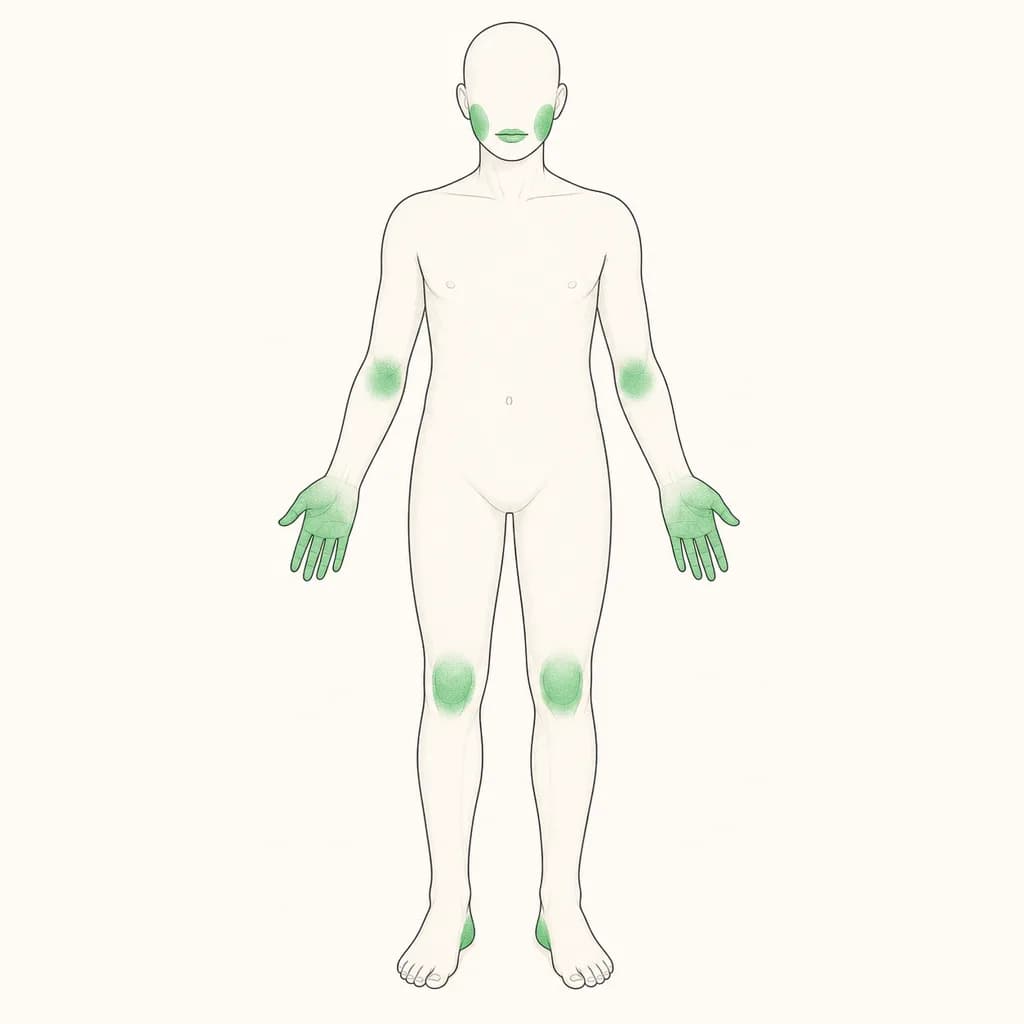
A crack or fissure forms when the skin barrier becomes dry, inflamed, thickened or repeatedly stretched. Hands, feet, lips and areas over joints are common sites, especially after frequent washing, cold dry air or contact with detergents. Atopic dermatitis can cause itchy inflamed skin that breaks, while psoriasis can produce thick scale and fissures. A crack is a symptom, so its pattern, itch, scale and location help a clinician identify the cause.
Steps that protect the area
Rinse with lukewarm water and a mild fragrance-free cleanser, then pat dry. Apply a thick emollient soon afterward and repeat whenever the skin feels tight. Cover a painful fissure with a clean dressing if friction is making it reopen. Wear protective gloves for wet work and avoid picking scale or using harsh antiseptics unless prescribed. If cracks keep returning, a clinician may recommend targeted treatment for inflammation, infection or an underlying skin condition rather than moisturiser alone.
When to seek care
Seek prompt medical advice if the area becomes increasingly red, hot, swollen, draining or painful, or if you develop fever. Arrange an appointment when cracks bleed repeatedly, interfere with walking or hand use, spread to new areas, or do not improve with careful barrier care. Sudden extensive cracking or symptoms around the eyes, mouth or genitals also deserve assessment.
Questions for your doctor
Could atopic dermatitis, psoriasis, allergy or infection be contributing? Which emollient texture suits this body area? Should I use a prescription anti-inflammatory or protective dressing? How can I prevent the same fissure from reopening?
Find care
General Clinics & Polyclinics in Abu Dhabi
That answer is general. If you want it applied to your own case, these are licensed general clinics & polyclinics listed in Abu Dhabi.
27 Ar Ruwwad St - Shakhbout City - MSH4 - Abu Dhabi - United Arab Emirates
Accepts: Daman, Thiqa, Cigna, MetLife +20 more
Al Ruwais, Al Dhafrah
Accepts: Daman, Thiqa, AXA, Cigna +16 more
Al Bahyah - Al Bahyah Old - Abu Dhabi - United Arab Emirates
Accepts: Daman, Thiqa, Cigna, Allianz Care +18 more
Abu Dhabi
Accepts: Daman, Thiqa, AXA, Cigna +27 more
Ordered by verification status and how complete each clinic's public record is, then alphabetically. This is a directory listing, not a ranking — Zavis does not rate or recommend providers.
A factual listing drawn from the DHA, DOH and MOHAP licence registers. It is not a referral, an endorsement, or advice that any of these providers is right for you.
Questions people ask
Should I put moisturiser on a skin crack?
A thick, fragrance-free emollient can protect dry surrounding skin and may support healing, but do not use a product that stings persistently or hides signs of infection.
Can cracked skin be caused by psoriasis?
Yes. Psoriasis may produce thick scale and painful fissures, but a clinician should assess the pattern rather than relying on the crack alone.
Related
Related reading
Keep reading
Medical disclaimer. This page is general health information, not medical advice, and it cannot diagnose you. Always consult a licensed healthcare provider about your own symptoms and treatment. In an emergency in the UAE, call 998 for an ambulance.