
Muscle pain in the sole of the foot: what to know
Short answer
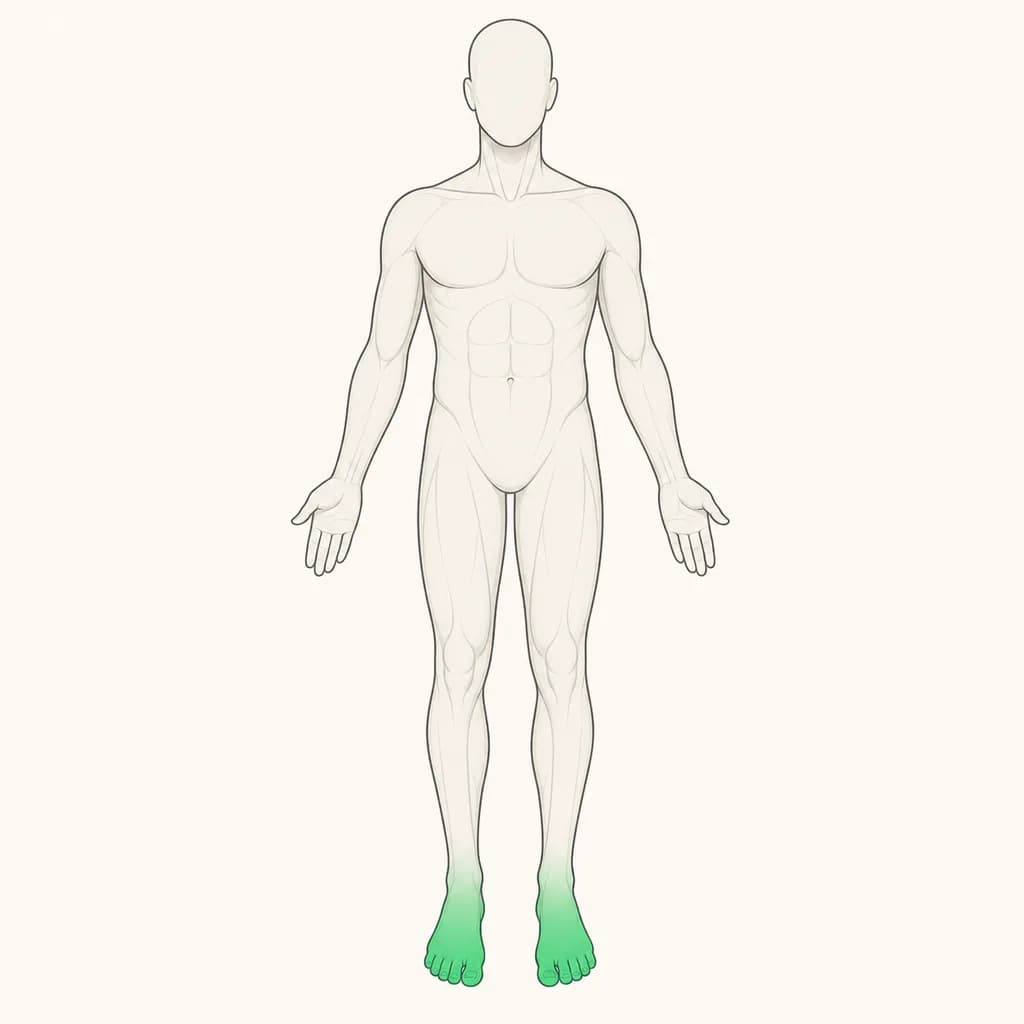
Muscle pain in the sole of the foot can follow overuse or altered pressure, while persistent, focal, or severe pain needs assessment.
This answers one question. It is not a diagnosis and does not replace an assessment by a licensed doctor.
At a glance
- Pressure clue
- Pain can reflect how load is distributed across the heel, arch, and forefoot.
- Foot protection
- Roomy, supportive footwear can reduce irritation during recovery.
Possible sources
The sole contains small muscles, the plantar fascia, joints, nerves, and cushioning tissue. Long standing, a new sport, hard surfaces, or unsupportive shoes can increase load. Heel pain that is worse with the first steps may fit [Plantar Fasciitis](/conditions/plantar-fasciitis/). A changed arch or toe position can shift pressure: [Flat Feet](/conditions/flat-feet/), [Bunions](/conditions/bunions/), [Hammer Toe](/conditions/hammer-toe/), and [Hallux Rigidus](/conditions/hallux-rigidus/) are examples. A small area of pain after repeated impact may need review for bone stress.
Steps that may help
Reduce running, jumping, and long standing while pain is active. Wear comfortable shoes with adequate room and cushioning; avoid walking barefoot on hard floors if that worsens symptoms. Gentle calf and foot movement can be useful when it does not increase pain. Do not aggressively roll or stretch a sharply tender area. A clinician may assess footwear, walking pattern, strength, and pressure distribution. [Custom Orthotics](/treatments/non-surgical-orthopedics/custom-orthotics/) may be considered when an individual assessment shows they could redistribute load.
When to seek care
Seek prompt care for inability to bear weight, sudden swelling, deformity, spreading redness, fever, numbness, or a wound that is not healing. Arrange assessment for focal pain after impact, pain at rest or at night, or symptoms that do not improve after reducing the load. People with diabetes or reduced sensation should seek advice early for new foot pain or skin changes.
Questions for your doctor
Which structure is most likely painful? Do my shoes or foot shape change pressure? Should I temporarily avoid impact? Would exercises, imaging, or orthotic support help?
Find care
General Clinics & Polyclinics in Abu Dhabi
That answer is general. If you want it applied to your own case, these are licensed general clinics & polyclinics listed in Abu Dhabi.
27 Ar Ruwwad St - Shakhbout City - MSH4 - Abu Dhabi - United Arab Emirates
Accepts: Daman, Thiqa, Cigna, MetLife +20 more
Al Ruwais, Al Dhafrah
Accepts: Daman, Thiqa, AXA, Cigna +16 more
Al Bahyah - Al Bahyah Old - Abu Dhabi - United Arab Emirates
Accepts: Daman, Thiqa, Cigna, Allianz Care +18 more
Abu Dhabi
Accepts: Daman, Thiqa, AXA, Cigna +27 more
Ordered by verification status and how complete each clinic's public record is, then alphabetically. This is a directory listing, not a ranking — Zavis does not rate or recommend providers.
A factual listing drawn from the DHA, DOH and MOHAP licence registers. It is not a referral, an endorsement, or advice that any of these providers is right for you.
Questions people ask
Can sole pain come from the plantar fascia rather than muscle?
Yes. The fascia, joints, bones, nerves, and muscles can all contribute to pain under the foot.
When should I stop exercising?
Stop activities that cause sharp pain, change your walking pattern, or leave symptoms worse afterwards.
Related
Related reading
Keep reading
Medical disclaimer. This page is general health information, not medical advice, and it cannot diagnose you. Always consult a licensed healthcare provider about your own symptoms and treatment. In an emergency in the UAE, call 998 for an ambulance.