
What should you know about MRI of the pelvic area?
Short answer
A pelvic MRI uses a strong magnetic field and radio waves to create detailed images of pelvic organs and tissues, helping clinicians investigate symptoms or monitor a known condition.
This answers one question. It is not a diagnosis and does not replace an assessment by a licensed doctor.
At a glance
- Imaging method
- Magnetic field and radio waves
- Radiation
- Does not use ionising radiation
- During the scan
- Remain still while the scanner takes images
- Tell the team
- Mention implants, metal, pregnancy, and kidney problems
What the scan can show
The scan can provide images of the uterus, cervix, ovaries, vagina, bladder, rectum, pelvic bones, muscles, and nearby soft tissues. It may help assess a mass, pain, bleeding, inflammation, endometriosis, fibroids, or the extent of a condition already identified. MRI does not use ionising radiation.
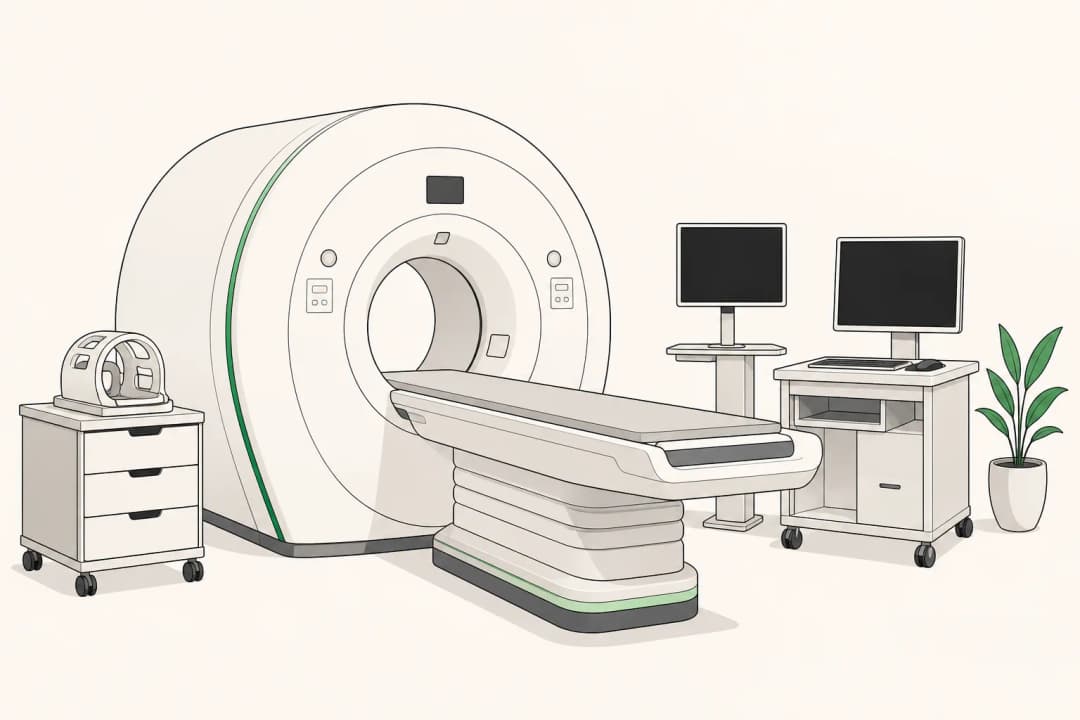
You lie on a movable table that slides into a short, tunnel-shaped scanner. The technologist may ask you to remain still and briefly hold your breath while the machine makes loud knocking sounds. The appointment may include an injected contrast agent when more detail is needed. Your clinician will interpret the images and explain what they mean alongside your symptoms and other test results.
How to prepare
Tell the imaging team about pregnancy or possible pregnancy, kidney problems, allergies, implanted devices, metal fragments, surgical clips, and medicines. Bring details of any pacemaker, cochlear implant, infusion pump, or other device so its MRI compatibility can be checked. Remove jewellery, watches, hair accessories, cards, and clothing containing metal before entering the scan room.
Follow the centre's instructions about eating, drinking, or arriving with a comfortably full bladder. If enclosed spaces make you anxious, mention this when booking; the team can discuss practical support. Wear simple clothing and allow time for safety screening and changing.
When to seek care
Contact your clinician promptly for new or worsening pelvic pain, heavy vaginal bleeding, fever, fainting, repeated vomiting, or difficulty passing urine. Seek emergency help for severe pain with collapse, or for breathing difficulty, facial swelling, or widespread hives after contrast, because these may signal a serious reaction.
An MRI is usually planned rather than an emergency test. Do not wait for the scan if symptoms become severe or rapidly worsen; use local emergency services or the nearest emergency department.
Questions for your doctor
Ask why the MRI is recommended, whether contrast is planned, what preparation applies to you, and when you should expect the report. You can also ask what other tests may be considered and how the result could change your treatment plan.
Find care
General Clinics & Polyclinics in Abu Dhabi
That answer is general. If you want it applied to your own case, these are licensed general clinics & polyclinics listed in Abu Dhabi.
27 Ar Ruwwad St - Shakhbout City - MSH4 - Abu Dhabi - United Arab Emirates
Accepts: Daman, Thiqa, Cigna, MetLife +20 more
Al Ruwais, Al Dhafrah
Accepts: Daman, Thiqa, AXA, Cigna +16 more
Al Bahyah - Al Bahyah Old - Abu Dhabi - United Arab Emirates
Accepts: Daman, Thiqa, Cigna, Allianz Care +18 more
Abu Dhabi
Accepts: Daman, Thiqa, AXA, Cigna +27 more
Ordered by verification status and how complete each clinic's public record is, then alphabetically. This is a directory listing, not a ranking — Zavis does not rate or recommend providers.
A factual listing drawn from the DHA, DOH and MOHAP licence registers. It is not a referral, an endorsement, or advice that any of these providers is right for you.
Questions people ask
Does a pelvic MRI hurt?
The scan itself should not cause pain, but lying still may feel uncomfortable and the machine is noisy. Tell the technologist if you feel distressed or need a change of position.
Can I have a pelvic MRI if I am pregnant?
Tell your clinician and the imaging team if you are pregnant or might be pregnant. They will weigh the reason for imaging and decide whether MRI, with or without contrast, is appropriate.
Why might contrast be used?
An injected contrast agent can make certain tissues or areas of concern easier to distinguish. Report kidney problems or a previous contrast reaction before the scan.
Related
Related reading
Keep reading
Medical disclaimer. This page is general health information, not medical advice, and it cannot diagnose you. Always consult a licensed healthcare provider about your own symptoms and treatment. In an emergency in the UAE, call 998 for an ambulance.