
What should you know about modified natural cycle frozen embryo transfer?
Short answer
A modified natural cycle frozen embryo transfer tracks your own follicle development and ovulation, may use a trigger injection, and schedules a thawed embryo transfer around the resulting hormonal timing.
This answers one question. It is not a diagnosis and does not replace an assessment by a licensed doctor.
At a glance
- Cycle basis
- Your own follicle growth and ovulation
- Monitoring
- Ultrasound and hormone testing
- Possible medicine
- Micronised progesterone after ovulation
What this treatment involves
The clinic follows follicle growth and the uterine lining with ultrasound and hormone tests. When the timing is suitable, an injection may help predict ovulation. The embryo transfer is then planned according to the ovulation date and the embryo’s developmental stage. Unlike a fully medicated cycle, this approach relies on ovarian activity and a functioning ovulatory cycle.
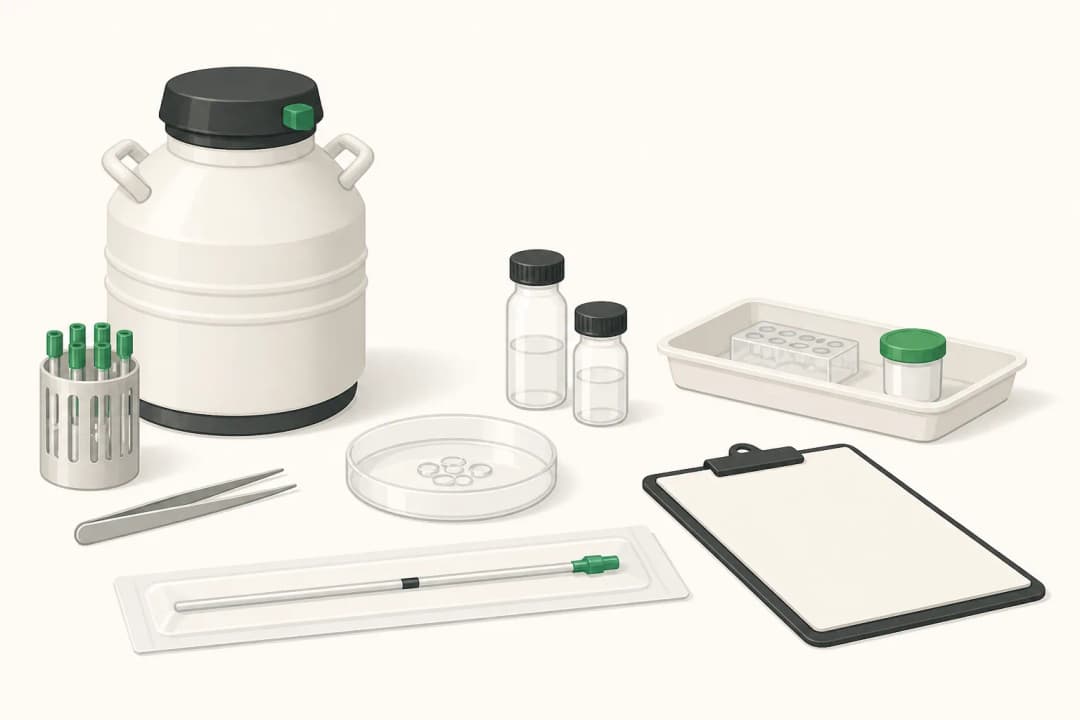
The transfer itself places the thawed embryo through the cervix using a thin catheter. It is usually a brief clinic procedure, but the exact timing, preparation and need for sedation vary by clinic and individual circumstances.
How to prepare and follow the plan
Attend monitoring visits and take the trigger injection or progesterone exactly when instructed. Micronised progesterone may be prescribed to support the uterine lining after ovulation. Do not change, stop or add medicines without speaking with the fertility team. Ask how to handle a missed dose, illness or a positive ovulation test.
On transfer day, follow the clinic’s instructions about medication, arrival time and bladder preparation. After transfer, ordinary gentle activity is generally discussed with the team; avoid making major changes based on symptoms, because cramping, discharge or no symptoms cannot confirm the outcome.
When to seek care
Contact the fertility clinic for heavy bleeding, increasing pelvic pain, fever, faintness, breathing difficulty or marked abdominal swelling. Seek urgent care for severe one-sided pain, collapse or heavy bleeding. Follow the clinic’s pregnancy-test date and tell them promptly about the result, as medicines may need review.
Questions for your doctor
Ask: How will ovulation be confirmed? Will I need a trigger injection or progesterone? Which embryo stage is being transferred? What should I do if monitoring falls on a difficult day? When should I test, and who should I contact with pain or bleeding?
Find care
General Clinics & Polyclinics in Abu Dhabi
That answer is general. If you want it applied to your own case, these are licensed general clinics & polyclinics listed in Abu Dhabi.
27 Ar Ruwwad St - Shakhbout City - MSH4 - Abu Dhabi - United Arab Emirates
Accepts: Daman, Thiqa, Cigna, MetLife +20 more
Al Ruwais, Al Dhafrah
Accepts: Daman, Thiqa, AXA, Cigna +16 more
Al Bahyah - Al Bahyah Old - Abu Dhabi - United Arab Emirates
Accepts: Daman, Thiqa, Cigna, Allianz Care +18 more
Abu Dhabi
Accepts: Daman, Thiqa, AXA, Cigna +27 more
Ordered by verification status and how complete each clinic's public record is, then alphabetically. This is a directory listing, not a ranking — Zavis does not rate or recommend providers.
A factual listing drawn from the DHA, DOH and MOHAP licence registers. It is not a referral, an endorsement, or advice that any of these providers is right for you.
Questions people ask
Is this the same as a fully medicated frozen embryo transfer?
No. A modified natural cycle uses your own ovulation, while a fully medicated cycle prepares the lining with prescribed hormones without relying on spontaneous ovulation.
Why might progesterone be prescribed?
It may support the uterine lining after ovulation; use it only as directed by your fertility clinic.
Related
Related reading
Keep reading
Medical disclaimer. This page is general health information, not medical advice, and it cannot diagnose you. Always consult a licensed healthcare provider about your own symptoms and treatment. In an emergency in the UAE, call 998 for an ambulance.