
What should you know about mild polyhydramnios range?
Short answer
Mild polyhydramnios means amniotic fluid is above the expected range and should be reviewed with pregnancy monitoring and follow-up.
This answers one question. It is not a diagnosis and does not replace an assessment by a licensed doctor.
At a glance
- Detection
- Ultrasound measurements assess the fluid around the baby
- Course
- The fluid level may remain stable, rise or improve
- Follow-up
- Monitoring is guided by fluid, growth and maternal symptoms
What the range means
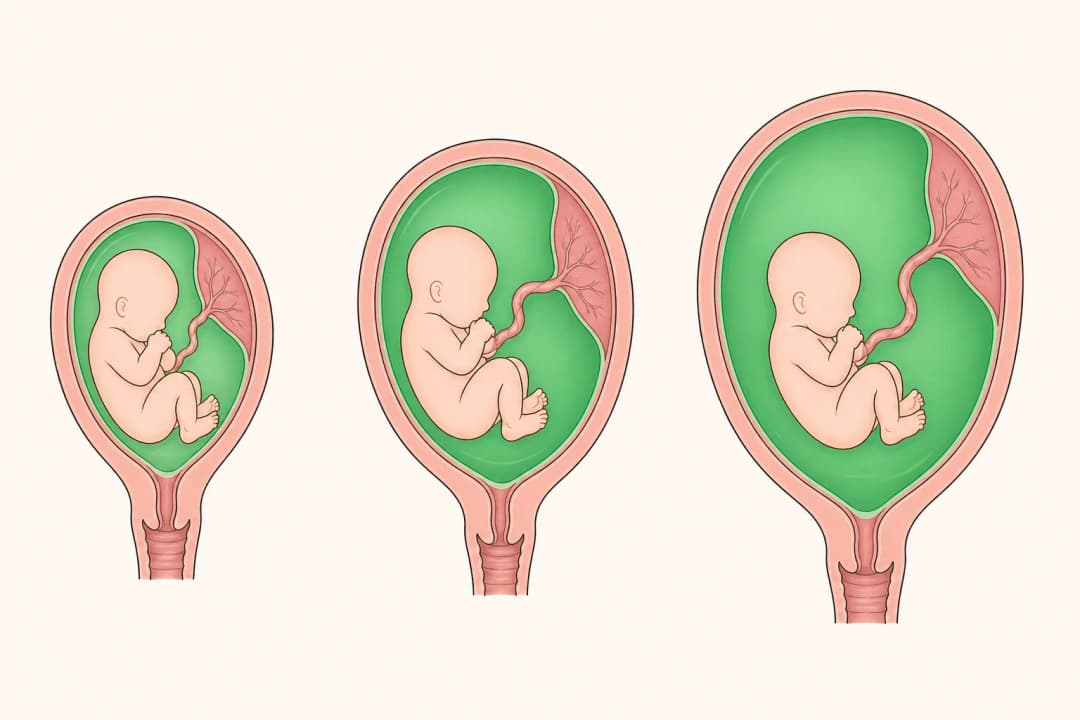
Amniotic fluid cushions the baby and allows movement. Polyhydramnios is identified on ultrasound using measurements of the fluid around the baby. The word mild describes the degree found on the scan, not a promise that the finding will stay unchanged. Fluid levels can remain stable, increase or return towards the expected range.
Possible contributors include diabetes in pregnancy, problems affecting the baby's swallowing or urination, multiple pregnancy, or no clear cause. The scan also lets the team review growth, movement, anatomy and presentation. A finding of mild polyhydramnios does not by itself explain the cause.
What to do now
Attend the recommended antenatal appointments and scans. Your clinician may review glucose testing, medical history and the baby's growth, then repeat fluid measurements. A Growth Scan can help assess growth and the surrounding fluid when your maternity team recommends it. Keep track of movements using the advice given by your maternity unit, and do not try to reduce fluid levels yourself.
Ask what symptoms should prompt a call, how often monitoring is needed, and whether the finding changes plans for birth. Most decisions are based on the whole clinical picture rather than one measurement.
When to seek care
Contact your maternity unit urgently for reduced or changed baby movements, vaginal bleeding, leaking fluid, painful regular contractions, sudden breathlessness, or rapidly increasing abdominal size or discomfort. Seek emergency help for severe breathlessness, fainting or severe pain. These symptoms can have causes that need prompt assessment during pregnancy.
Questions for your doctor
Ask which ultrasound measurement was high, whether the baby's growth and anatomy look reassuring, and whether glucose testing or another review is needed. Confirm the next scan date, movement advice, warning signs, and how polyhydramnios might affect labour or delivery planning.
Find care
General Clinics & Polyclinics in Abu Dhabi
That answer is general. If you want it applied to your own case, these are licensed general clinics & polyclinics listed in Abu Dhabi.
27 Ar Ruwwad St - Shakhbout City - MSH4 - Abu Dhabi - United Arab Emirates
Accepts: Daman, Thiqa, Cigna, MetLife +20 more
Al Ruwais, Al Dhafrah
Accepts: Daman, Thiqa, AXA, Cigna +16 more
Al Bahyah - Al Bahyah Old - Abu Dhabi - United Arab Emirates
Accepts: Daman, Thiqa, Cigna, Allianz Care +18 more
Abu Dhabi
Accepts: Daman, Thiqa, AXA, Cigna +27 more
Ordered by verification status and how complete each clinic's public record is, then alphabetically. This is a directory listing, not a ranking — Zavis does not rate or recommend providers.
A factual listing drawn from the DHA, DOH and MOHAP licence registers. It is not a referral, an endorsement, or advice that any of these providers is right for you.
Questions people ask
Does mild polyhydramnios always have an identifiable cause?
No. Sometimes review finds a contributor, but a clear cause is not always identified, especially when the finding is mild.
Can mild polyhydramnios affect birth planning?
It can influence monitoring and discussion of labour, but the plan depends on fluid levels, the baby's growth, symptoms and other pregnancy findings.
Related
Related reading
Keep reading
Medical disclaimer. This page is general health information, not medical advice, and it cannot diagnose you. Always consult a licensed healthcare provider about your own symptoms and treatment. In an emergency in the UAE, call 998 for an ambulance.