
What should you know about Mia melanoma cancer?
Short answer
Mia melanoma cancer refers to melanoma, a skin cancer that needs prompt specialist assessment and a plan based on its depth and spread.
This answers one question. It is not a diagnosis and does not replace an assessment by a licensed doctor.
At a glance
- Cancer type
- Skin cancer arising from melanocytes
- Assessment
- Skin examination and, when needed, tissue diagnosis
- Planning
- Treatment depends on depth, margins, lymph nodes, and spread
What melanoma means
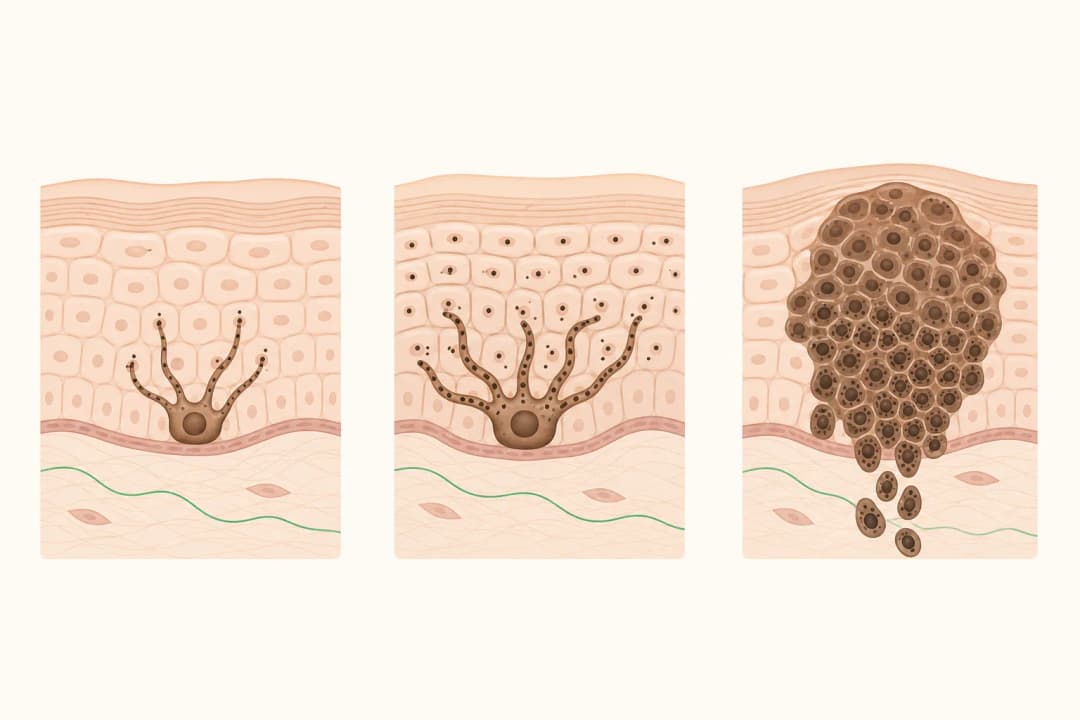
Melanoma starts in melanocytes, the cells that make skin pigment. It may appear in an existing mole or as a new mark, and it can occur on skin that receives little sun as well as sun-exposed areas. Warning features include a changing shape, uneven colour, an irregular edge, growth, itching, bleeding, or a sore that does not settle. These signs do not confirm cancer; a clinician needs to examine the area and may remove tissue for laboratory diagnosis.
If melanoma is confirmed, clinicians assess the tumour and nearby lymph nodes to understand its stage. The result guides whether treatment focuses on removing the lesion alone or also includes lymph-node assessment or medicine that acts throughout the body. A melanoma diagnosis does not describe one identical illness for every person.
What to do next
Arrange a prompt appointment with a dermatologist or skin-cancer team for any changing or suspicious mark. Bring a list of medicines and note when you first noticed the change. Do not pick, burn, or attempt to remove the lesion yourself. Examination may be followed by surgical excision, with the removed tissue examined to guide further decisions. Some people are offered a sentinel lymph node biopsy or immunotherapy, depending on the assessment. Ask how to protect the area from sun while waiting and how to check the rest of your skin.
When to seek care urgently
Seek urgent medical advice for a rapidly changing lesion, repeated bleeding, a spreading dark area, a painful open sore, or a new lump near the affected skin. Seek emergency care for severe symptoms such as new weakness, confusion, a seizure, or a sudden severe headache; these symptoms require immediate assessment and are not a measure of how likely a skin mark is to be melanoma.
Questions for your doctor
Ask whether the lesion needs a biopsy, what the pathology report says about depth and margins, whether nearby lymph nodes need assessment, and which treatment options fit the stage. You can also ask how often follow-up is needed, which skin changes should prompt a call, and whether a family member should learn skin-check habits.
Find care
General Clinics & Polyclinics in Abu Dhabi
That answer is general. If you want it applied to your own case, these are licensed general clinics & polyclinics listed in Abu Dhabi.
27 Ar Ruwwad St - Shakhbout City - MSH4 - Abu Dhabi - United Arab Emirates
Accepts: Daman, Thiqa, Cigna, MetLife +20 more
Al Ruwais, Al Dhafrah
Accepts: Daman, Thiqa, AXA, Cigna +16 more
Al Bahyah - Al Bahyah Old - Abu Dhabi - United Arab Emirates
Accepts: Daman, Thiqa, Cigna, Allianz Care +18 more
Abu Dhabi
Accepts: Daman, Thiqa, AXA, Cigna +27 more
Ordered by verification status and how complete each clinic's public record is, then alphabetically. This is a directory listing, not a ranking — Zavis does not rate or recommend providers.
A factual listing drawn from the DHA, DOH and MOHAP licence registers. It is not a referral, an endorsement, or advice that any of these providers is right for you.
Questions people ask
Can a changing mole be melanoma?
It can be, but a changing mole may have other explanations. A dermatologist should examine it rather than relying on appearance alone.
How is melanoma treated?
Treatment may include removal of the lesion and, for selected cases, lymph-node assessment or systemic medicine based on the stage.
Related
Related reading
Keep reading
Medical disclaimer. This page is general health information, not medical advice, and it cannot diagnose you. Always consult a licensed healthcare provider about your own symptoms and treatment. In an emergency in the UAE, call 998 for an ambulance.