
What should you know about meningeal melanoma?
Short answer
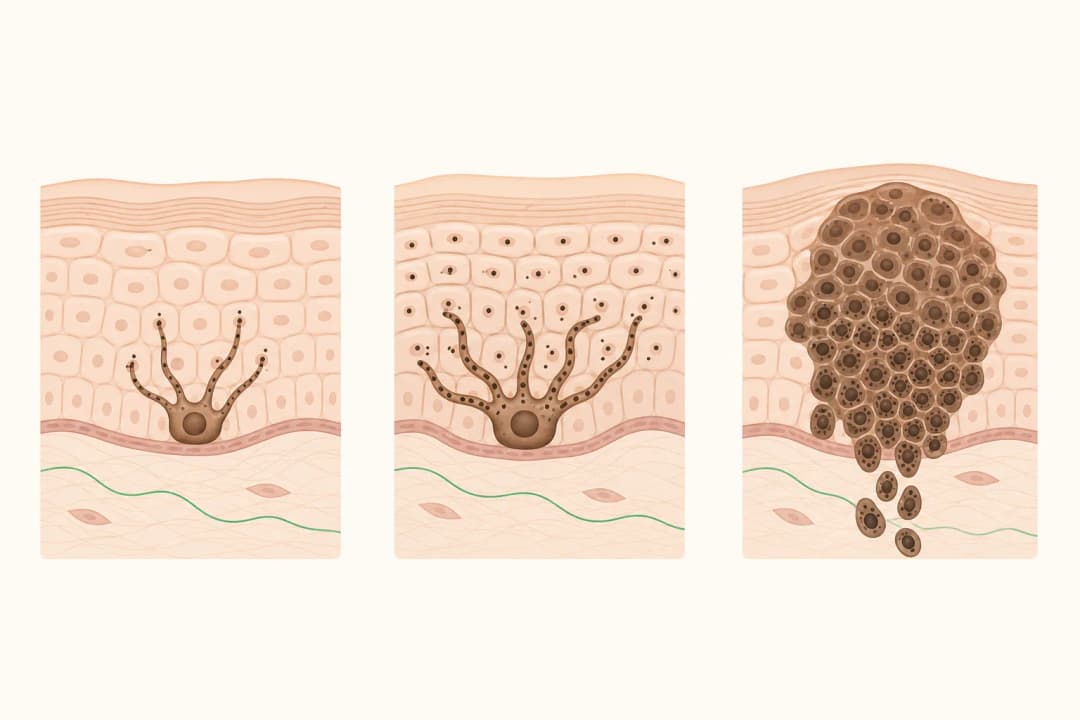
Meningeal melanoma is a serious tumour involving pigment-producing cells in the membranes around the brain or spinal cord.
This answers one question. It is not a diagnosis and does not replace an assessment by a licensed doctor.
At a glance
- Location
- Membranes around the brain or spinal cord
- Assessment
- Specialist examination, imaging, and tissue or fluid analysis when appropriate
Understanding the diagnosis
The meninges are protective membranes surrounding the brain and spinal cord. Melanoma in this location may begin there or may represent melanoma that has travelled from another site, so specialists need to establish the origin. Symptoms vary with the area involved and can include persistent headache, vomiting, seizures, weakness, altered sensation, balance problems, confusion, or changes in vision or speech. These symptoms have many possible causes, but a new or progressive neurological change needs medical assessment.
Diagnosis may involve neurological examination, brain or spine imaging, and laboratory analysis of tissue or fluid when appropriate. The care team may include neurology, neurosurgery, oncology, radiology, and pathology specialists. Treatment depends on the tumour’s location, extent, molecular features, symptoms, and overall health.
Next steps after concern or diagnosis
Arrange prompt specialist review if imaging or a clinician has raised concern about meningeal melanoma. Bring scan reports, pathology results, medication details, and a timeline of symptoms. Ask whether the team is investigating a primary meningeal tumour or spread from melanoma elsewhere, and whether additional imaging or tissue testing is needed.
Possible management may include surgery when safely feasible, radiotherapy, immunotherapy, or other systemic treatment. Surgery can sometimes obtain tissue or remove accessible tumour, but the plan must account for nearby brain and spinal structures. Follow-up imaging and examinations help the team assess response and detect change.
Emergency symptoms
Seek emergency care for a seizure, sudden weakness or numbness, new difficulty speaking, severe confusion, collapse, a rapidly worsening headache, repeated vomiting, or a sudden change in vision. Do not drive yourself if neurological symptoms are severe or sudden. A known diagnosis with new symptoms also warrants urgent contact with the treating team.
Questions for the specialist team
Where is the tumour located, and how was it identified? Do the findings suggest a primary meningeal melanoma or spread from another melanoma? What are the goals and risks of each treatment option? How will symptoms and treatment response be monitored?
Find care
General Clinics & Polyclinics in Abu Dhabi
That answer is general. If you want it applied to your own case, these are licensed general clinics & polyclinics listed in Abu Dhabi.
27 Ar Ruwwad St - Shakhbout City - MSH4 - Abu Dhabi - United Arab Emirates
Accepts: Daman, Thiqa, Cigna, MetLife +20 more
Al Ruwais, Al Dhafrah
Accepts: Daman, Thiqa, AXA, Cigna +16 more
Al Bahyah - Al Bahyah Old - Abu Dhabi - United Arab Emirates
Accepts: Daman, Thiqa, Cigna, Allianz Care +18 more
Abu Dhabi
Accepts: Daman, Thiqa, AXA, Cigna +27 more
Ordered by verification status and how complete each clinic's public record is, then alphabetically. This is a directory listing, not a ranking — Zavis does not rate or recommend providers.
A factual listing drawn from the DHA, DOH and MOHAP licence registers. It is not a referral, an endorsement, or advice that any of these providers is right for you.
Questions people ask
Is meningeal melanoma the same as skin melanoma?
It is the same broad tumour family but occurs in a different location, so specialists must determine where it began.
What symptoms need urgent attention?
Seizures, sudden neurological changes, severe worsening headache, repeated vomiting, or sudden vision change require emergency assessment.
Related
Related reading
Keep reading
Medical disclaimer. This page is general health information, not medical advice, and it cannot diagnose you. Always consult a licensed healthcare provider about your own symptoms and treatment. In an emergency in the UAE, call 998 for an ambulance.