
What should you know about melatonin and melanoma?
Short answer
Melatonin is a hormone involved in sleep timing, while melanoma is a cancer of pigment-producing cells; the similar names describe different subjects.
This answers one question. It is not a diagnosis and does not replace an assessment by a licensed doctor.
At a glance
- Melatonin
- A hormone linked with sleep timing
- Melanoma
- Cancer arising from pigment-producing cells
- Key action
- Have changing lesions examined
Separating the two terms
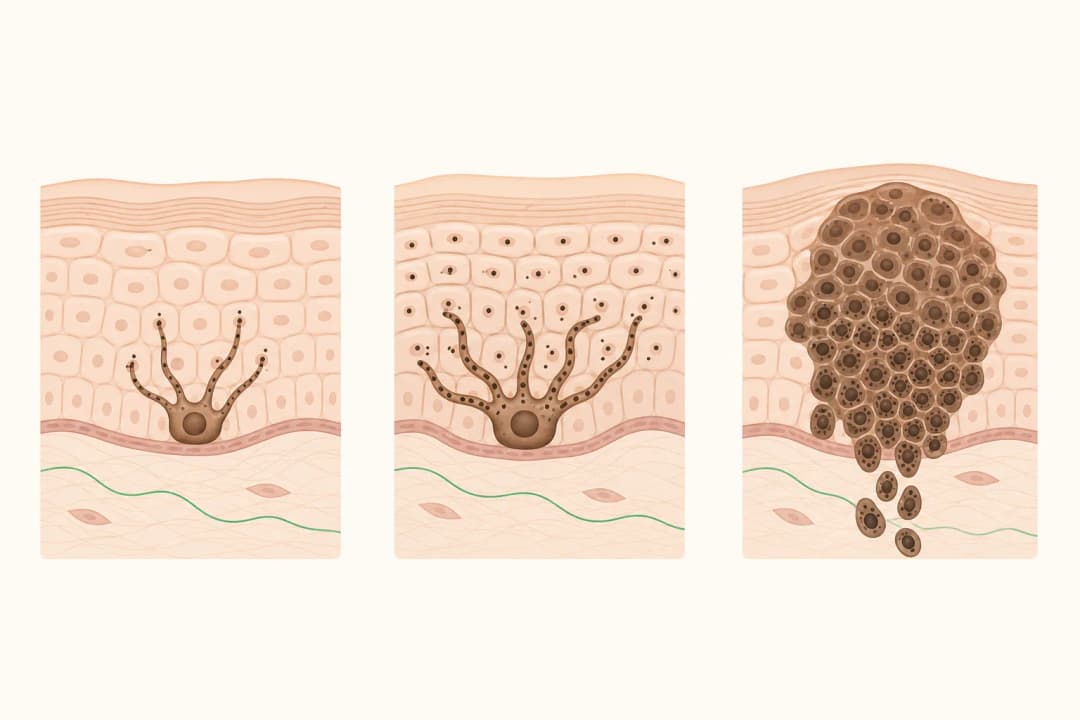
Melatonin is made mainly by the body in response to darkness and is also sold as a supplement in some settings. Melanoma begins in melanocytes, the cells that produce pigment, and may arise in an existing mole or on previously normal skin. Melatonin itself should not be treated as a diagnosis or as a substitute for examination of a changing mark.
A concerning skin lesion may show evolving colour, shape, size or surface, but appearance cannot confirm cancer. A clinician may use dermoscopy and arrange a biopsy when needed. Do not delay review because a supplement seems relevant.
What to do next
Check any changing mole or new persistent pigmented spot with a dermatologist. Take a clear record of when the change began and bring a list of medicines and supplements, including melatonin, to the appointment. Avoid picking or attempting to remove a lesion at home.
If melanoma is diagnosed, care may include Surgical Excision and, when clinically indicated, Sentinel Lymph Node Biopsy. More advanced disease can involve treatments such as Immunotherapy, with follow-up tailored to the pathology and stage.
When to seek care
Arrange prompt dermatology review for a lesion that changes noticeably, bleeds, crusts, itches persistently or develops an irregular edge or multiple colours. Seek urgent medical help for severe symptoms such as new neurological problems in a person already being treated for melanoma. A skin change should be assessed on its own features, not explained by the similar wording of melatonin.
Questions for your doctor
Ask whether a lesion needs dermoscopy or biopsy, whether any supplement should be paused, and what the pathology shows. If melanoma is confirmed, ask about the purpose of surgery, staging tests, Immunotherapy and the follow-up schedule.
Find care
General Clinics & Polyclinics in Abu Dhabi
That answer is general. If you want it applied to your own case, these are licensed general clinics & polyclinics listed in Abu Dhabi.
27 Ar Ruwwad St - Shakhbout City - MSH4 - Abu Dhabi - United Arab Emirates
Accepts: Daman, Thiqa, Cigna, MetLife +20 more
Al Ruwais, Al Dhafrah
Accepts: Daman, Thiqa, AXA, Cigna +16 more
Al Bahyah - Al Bahyah Old - Abu Dhabi - United Arab Emirates
Accepts: Daman, Thiqa, Cigna, Allianz Care +18 more
Abu Dhabi
Accepts: Daman, Thiqa, AXA, Cigna +27 more
Ordered by verification status and how complete each clinic's public record is, then alphabetically. This is a directory listing, not a ranking — Zavis does not rate or recommend providers.
A factual listing drawn from the DHA, DOH and MOHAP licence registers. It is not a referral, an endorsement, or advice that any of these providers is right for you.
Questions people ask
Does melatonin cause melanoma?
The similar names do not establish a connection. Discuss supplement use with a clinician and have suspicious skin changes assessed directly.
What happens if melanoma is suspected?
A dermatologist may examine the lesion and arrange tissue testing; treatment depends on the confirmed findings.
Related
Related reading
Keep reading
Medical disclaimer. This page is general health information, not medical advice, and it cannot diagnose you. Always consult a licensed healthcare provider about your own symptoms and treatment. In an emergency in the UAE, call 998 for an ambulance.