
What should you know about melanoma under foot?
Short answer
Melanoma under the foot may hide among normal pressure marks or callus, so a changing dark area warrants prompt assessment by a skin specialist.
This answers one question. It is not a diagnosis and does not replace an assessment by a licensed doctor.
At a glance
- Easy to miss
- The sole and spaces between toes can be overlooked during routine skin checks.
- Avoid
- Do not cut, freeze, or file a suspicious mark at home.
- Useful clue
- A spot unlike the other marks on your feet deserves closer attention.
What a sole lesion may represent
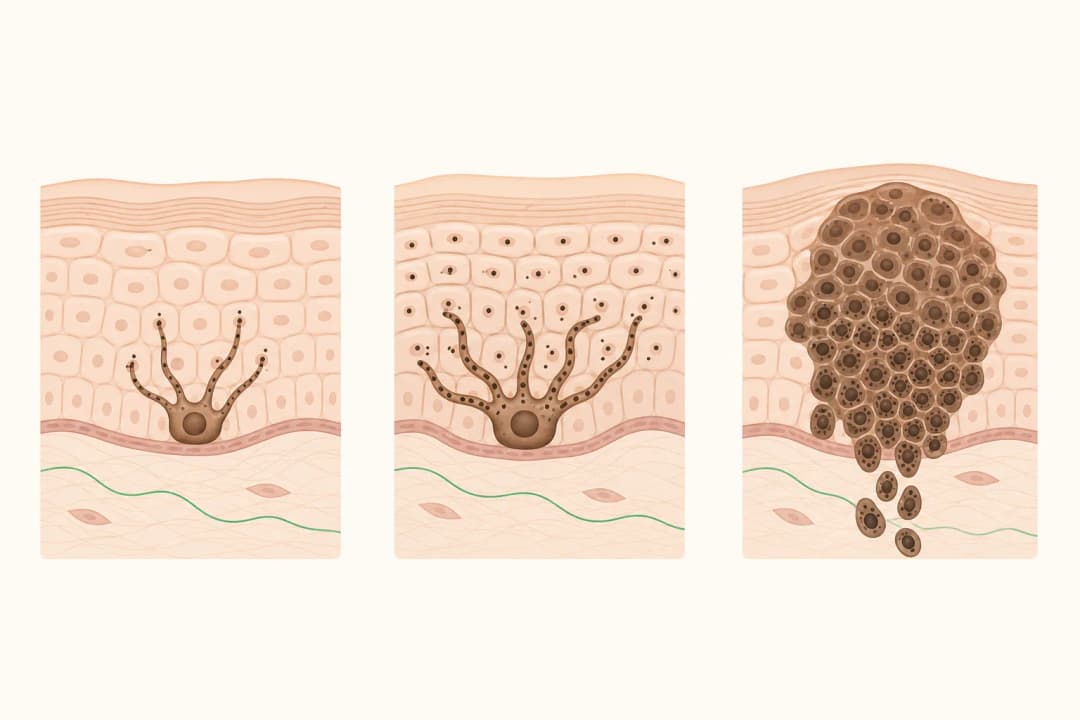
A mark on the sole can be a bruise, wart, callus-related bleeding, fungal change, or benign mole. Melanoma may appear as an irregular brown, black, grey, or pink patch, sometimes with several shades. Warning changes include spreading, an uneven border, increasing thickness, bleeding, ulceration, or a mark unlike the others on your feet.
Foot pressure and friction can obscure the edges and make self-checking difficult. A clinician may inspect the sole and between the toes with magnification. If needed, a biopsy identifies the cause and helps plan treatment.
What to do next
Arrange a prompt dermatology visit for a new or changing sole mark. Do not file, cut, freeze, or peel it as though it were a wart or callus. Photograph the area, record whether it hurts or bleeds, and wear comfortable footwear that reduces rubbing until it is assessed.
If melanoma is diagnosed, treatment can include surgical excision. Further surgery, sentinel lymph node biopsy, imaging, or immunotherapy depends on the pathology and whether the disease has spread.
When to seek care
Seek prompt review for a sole spot that enlarges, changes colour, develops an irregular outline, bleeds, forms an ulcer, or does not settle as a bruise would. Seek urgent care for rapidly spreading redness, pus, fever, severe swelling, or inability to bear weight, which may indicate infection or another acute foot problem.
Questions for your doctor
Ask whether the area could be a callus, bruise, wart, or melanoma; whether a biopsy is needed; how to protect the sole while it heals; and when results will be available. If melanoma is found, ask about excision margins, lymph-node assessment, mobility during recovery, and follow-up.
Find care
General Clinics & Polyclinics in Abu Dhabi
That answer is general. If you want it applied to your own case, these are licensed general clinics & polyclinics listed in Abu Dhabi.
27 Ar Ruwwad St - Shakhbout City - MSH4 - Abu Dhabi - United Arab Emirates
Accepts: Daman, Thiqa, Cigna, MetLife +20 more
Al Ruwais, Al Dhafrah
Accepts: Daman, Thiqa, AXA, Cigna +16 more
Al Bahyah - Al Bahyah Old - Abu Dhabi - United Arab Emirates
Accepts: Daman, Thiqa, Cigna, Allianz Care +18 more
Abu Dhabi
Accepts: Daman, Thiqa, AXA, Cigna +27 more
Ordered by verification status and how complete each clinic's public record is, then alphabetically. This is a directory listing, not a ranking — Zavis does not rate or recommend providers.
A factual listing drawn from the DHA, DOH and MOHAP licence registers. It is not a referral, an endorsement, or advice that any of these providers is right for you.
Questions people ask
Can a bruise under the foot be melanoma?
A bruise usually fades, but a persistent or changing dark area needs assessment because several conditions can look alike.
Can a podiatrist assess it?
A podiatrist may notice the lesion, but a dermatologist is often needed for skin-focused examination and biopsy planning.
Related
Related reading
Keep reading
Medical disclaimer. This page is general health information, not medical advice, and it cannot diagnose you. Always consult a licensed healthcare provider about your own symptoms and treatment. In an emergency in the UAE, call 998 for an ambulance.