
What should you know about melanoma scar?
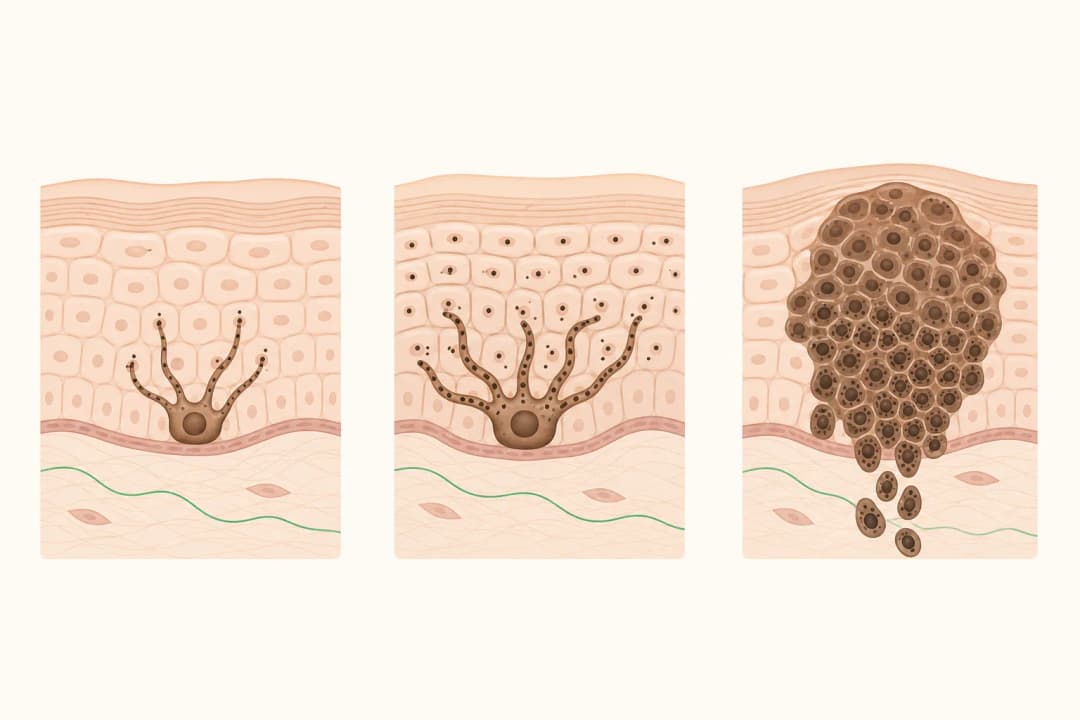
Short answer
A melanoma scar may mature and change, but new growth, bleeding, or persistent symptoms need clinical review.
This answers one question. It is not a diagnosis and does not replace an assessment by a licensed doctor.
At a glance
- Expected possibilities
- Colour, firmness, itching, tightness, or numbness during healing.
- Concerning change
- New growth, pigment, bleeding, crusting, or progressive symptoms.
- Useful habit
- Photograph the scar consistently after healing.
Scar changes and recurrence
After melanoma is removed, the scar can be pink, darker or lighter than nearby skin, firm, itchy, tight, or numb. Texture and colour may gradually settle as healing continues. A raised edge can also reflect scar tissue, but appearance alone cannot reliably separate healing from recurrent melanoma.
A new lump, pigment returning within the scar, a spot beside it, persistent crusting, bleeding, increasing pain, or a change in firmness deserves review. The clinician may compare photographs, examine nearby lymph nodes, and decide whether a biopsy or further treatment is needed.
What to do next
Keep the area clean and protected while it heals, follow the wound-care instructions you were given, and avoid scratching or applying unapproved creams. Use regular photographs to track change once the wound is closed. Arrange review with your treating team for any new or progressive feature.
Assessment may lead to surgical excision, skin cancer surgery, or another procedure. A sentinel lymph node biopsy may be relevant in selected melanoma cases. Follow-up after cancer treatment helps monitor the scar and other skin areas.
When to seek care
Get prompt advice for a wound that opens, pus, spreading redness, fever, uncontrolled bleeding, or rapidly increasing swelling. Seek urgent care for severe pain, new weakness, confusion, seizures, or a severe new headache. These symptoms need attention even when the scar itself looks familiar.
Questions for your doctor
Ask how your scar should look during healing, which changes are expected for your procedure, whether a new lump needs sampling, and how often the scar and lymph-node areas should be checked. Ask how to protect the scar and whom to contact between appointments.
Find care
General Clinics & Polyclinics in Abu Dhabi
That answer is general. If you want it applied to your own case, these are licensed general clinics & polyclinics listed in Abu Dhabi.
27 Ar Ruwwad St - Shakhbout City - MSH4 - Abu Dhabi - United Arab Emirates
Accepts: Daman, Thiqa, Cigna, MetLife +20 more
Al Ruwais, Al Dhafrah
Accepts: Daman, Thiqa, AXA, Cigna +16 more
Al Bahyah - Al Bahyah Old - Abu Dhabi - United Arab Emirates
Accepts: Daman, Thiqa, Cigna, Allianz Care +18 more
Abu Dhabi
Accepts: Daman, Thiqa, AXA, Cigna +27 more
Ordered by verification status and how complete each clinic's public record is, then alphabetically. This is a directory listing, not a ranking — Zavis does not rate or recommend providers.
A factual listing drawn from the DHA, DOH and MOHAP licence registers. It is not a referral, an endorsement, or advice that any of these providers is right for you.
Questions people ask
Does a raised melanoma scar always mean the cancer has returned?
No. Raised scar tissue can occur during healing, but a new or growing area should be examined.
Can melanoma return in a scar?
It can recur near the treated area, which is why changing pigment, lumps, bleeding, or persistent symptoms need review.
Related
Related reading
Keep reading
Medical disclaimer. This page is general health information, not medical advice, and it cannot diagnose you. Always consult a licensed healthcare provider about your own symptoms and treatment. In an emergency in the UAE, call 998 for an ambulance.