
What should you know about melanoma removal surgery?
Short answer
Melanoma removal surgery removes the tumour with a planned margin, while pathology guides whether further treatment is needed.
This answers one question. It is not a diagnosis and does not replace an assessment by a licensed doctor.
At a glance
- Purpose
- Remove melanoma and a planned surrounding margin
- Next information
- Pathology guides further decisions
- Recovery
- Wound care and follow-up are part of treatment
What the operation involves
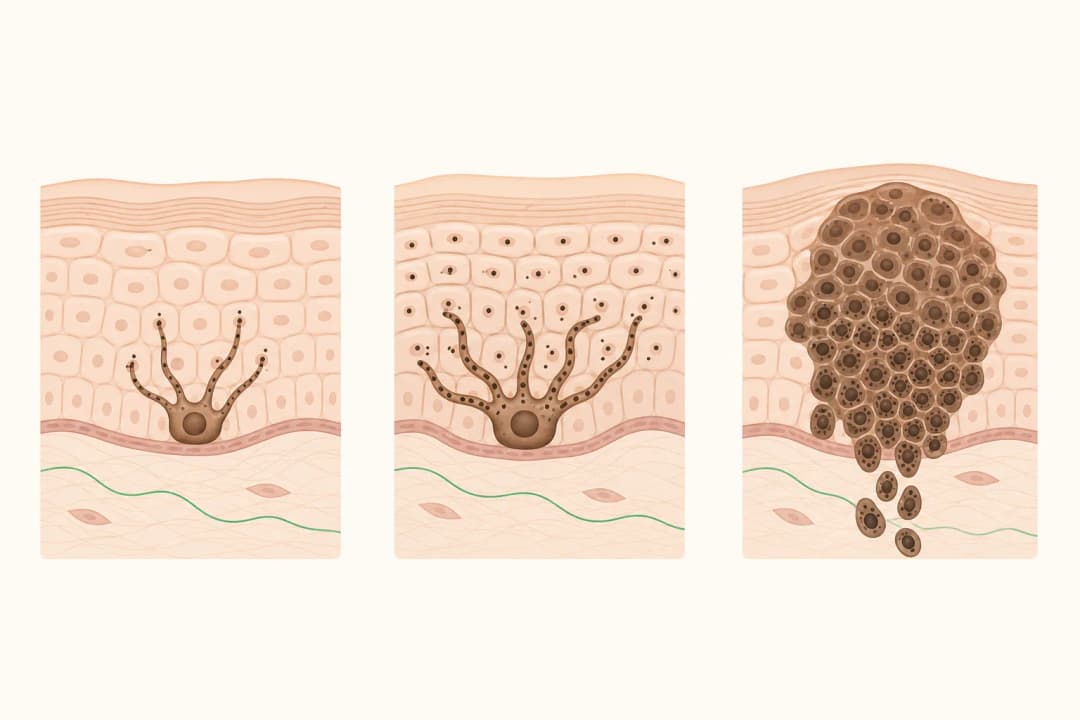
The surgeon removes the visible melanoma and a surrounding area of skin to address cells that may extend beyond what can be seen. The wound may be closed directly or require a more involved repair depending on its size and location. The removed tissue is examined by a laboratory.
The pathology report helps show whether melanoma is present, how deeply it extends, and whether the edges are clear. Some people need a second procedure if the margin is not adequate. Sentinel lymph-node biopsy may be discussed for selected melanomas as part of staging, not as a replacement for removing the primary lesion.
Preparing and recovering
Tell the surgical team about medicines, allergies, bleeding problems, and previous reactions to anaesthesia. Follow instructions about cleaning, dressing, activity, and keeping the wound dry. Mild soreness, bruising, swelling, or tightness can occur; use only the pain relief advised for you.
Attend the wound check and pathology discussion. Once healed, protect the scar from strong sun and continue skin surveillance. If melanoma has spread or has features that raise concern, your team may discuss immunotherapy or other oncology care in addition to surgery.
When to seek care
Contact the surgical team for increasing pain, spreading redness, warmth, pus, wound separation, fever, or bleeding that continues despite firm pressure. Seek urgent help for heavy bleeding, fainting, breathing difficulty, or a rapidly worsening allergic reaction. Do not wait for a routine appointment when these occur.
Questions for your doctor
Ask how much skin is expected to be removed, how the wound will be closed, what the pathology report will assess, and when results will be available. Ask whether lymph-node staging is relevant, how to care for the scar, and which symptoms need an urgent call.
Find care
General Clinics & Polyclinics in Abu Dhabi
That answer is general. If you want it applied to your own case, these are licensed general clinics & polyclinics listed in Abu Dhabi.
27 Ar Ruwwad St - Shakhbout City - MSH4 - Abu Dhabi - United Arab Emirates
Accepts: Daman, Thiqa, Cigna, MetLife +20 more
Al Ruwais, Al Dhafrah
Accepts: Daman, Thiqa, AXA, Cigna +16 more
Al Bahyah - Al Bahyah Old - Abu Dhabi - United Arab Emirates
Accepts: Daman, Thiqa, Cigna, Allianz Care +18 more
Abu Dhabi
Accepts: Daman, Thiqa, AXA, Cigna +27 more
Ordered by verification status and how complete each clinic's public record is, then alphabetically. This is a directory listing, not a ranking — Zavis does not rate or recommend providers.
A factual listing drawn from the DHA, DOH and MOHAP licence registers. It is not a referral, an endorsement, or advice that any of these providers is right for you.
Questions people ask
Will surgery always be the only treatment?
Not always. The pathology and staging findings may lead to surveillance, additional surgery, immunotherapy, or other specialist care.
Will the removed skin be tested?
Yes. Laboratory examination helps confirm the diagnosis and assess the tumour and surgical edges.
Related
Related reading
Keep reading
Medical disclaimer. This page is general health information, not medical advice, and it cannot diagnose you. Always consult a licensed healthcare provider about your own symptoms and treatment. In an emergency in the UAE, call 998 for an ambulance.