
What should you know about melanoma on the labia?
Short answer
Melanoma on the labia needs prompt, sensitive medical assessment when a pigmented area changes, bleeds, itches, or does not heal.
This answers one question. It is not a diagnosis and does not replace an assessment by a licensed doctor.
At a glance
- Area involved
- Pigmented skin of the labia or nearby vulval skin
- Confirmation
- Clinical assessment followed by biopsy when indicated
- Support
- A chaperone can be requested for examination
Understanding a vulval pigment change
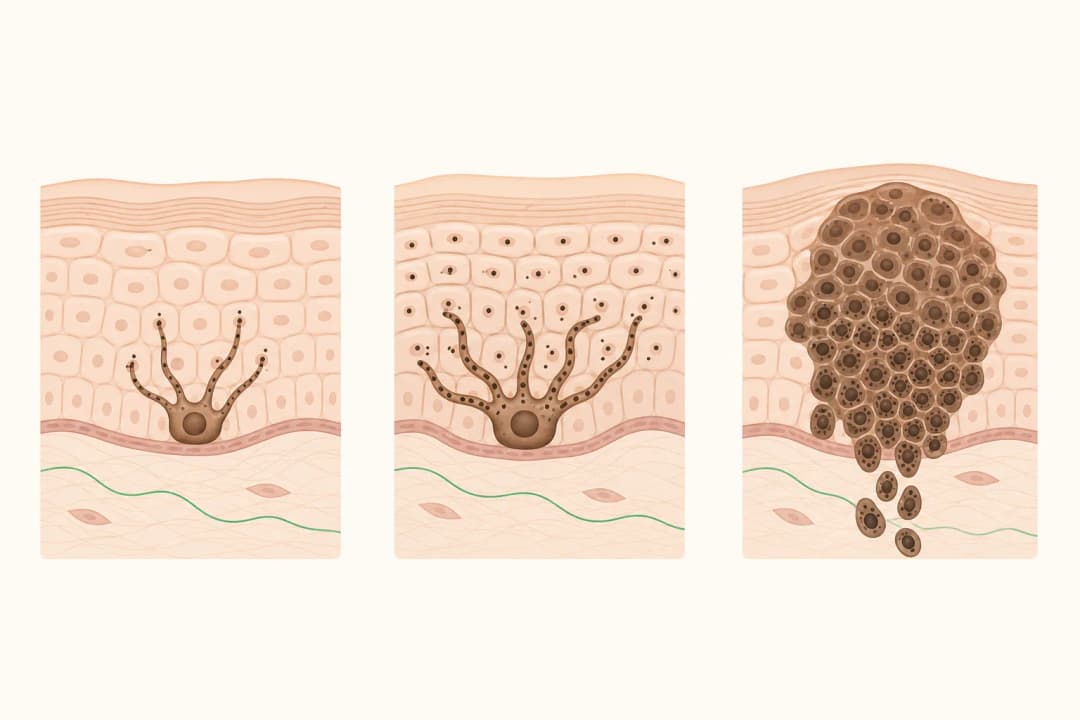
Melanoma can arise in pigment-producing cells on the vulval skin, including the labia. It may appear as a new or changing brown, black, grey, or uneven patch, a raised lesion, or a sore that bleeds, crusts, itches, or remains open. Colour variation and asymmetry deserve a professional look, particularly when the area is different from nearby skin.
Many vulval conditions are not melanoma, including irritation, benign pigmentation, infection, and other skin disorders. A clinician may examine the area carefully and recommend a biopsy. Pathology is needed to identify the cause and to guide the extent of removal and any staging discussion.
Arranging assessment
Book an appointment with a dermatologist, gynaecologist, or qualified clinician familiar with vulval skin. You can request a chaperone and explain any privacy concerns before the examination. Avoid bleaching products, steroid creams unless prescribed, shaving over the mark, or trying to remove it. Note bleeding, discharge, pain, itching, and when the change began.
If melanoma is diagnosed, care may involve Surgical Excision or Skin Cancer Surgery, with planning to preserve comfort and function. The team may discuss Sentinel Lymph Node Biopsy and, when appropriate, Immunotherapy. The pathology findings determine which options apply.
When to seek prompt help
Seek prompt review for a labial mark that grows, changes colour or border, repeatedly bleeds, becomes ulcerated, or causes persistent itching or pain. Urgent care is appropriate for heavy bleeding, rapidly increasing swelling, fever with a worsening wound, inability to pass urine, or severe pain. These symptoms should be assessed even when the cause is uncertain.
Questions for your appointment
Ask who will examine the lesion, whether a biopsy is needed, how privacy and pain relief will be handled, and when results are expected. Ask what the pathology means, whether further excision or lymph-node assessment is recommended, how to care for the area afterward, and what follow-up will involve.
Find care
General Clinics & Polyclinics in Abu Dhabi
That answer is general. If you want it applied to your own case, these are licensed general clinics & polyclinics listed in Abu Dhabi.
27 Ar Ruwwad St - Shakhbout City - MSH4 - Abu Dhabi - United Arab Emirates
Accepts: Daman, Thiqa, Cigna, MetLife +20 more
Al Ruwais, Al Dhafrah
Accepts: Daman, Thiqa, AXA, Cigna +16 more
Al Bahyah - Al Bahyah Old - Abu Dhabi - United Arab Emirates
Accepts: Daman, Thiqa, Cigna, Allianz Care +18 more
Abu Dhabi
Accepts: Daman, Thiqa, AXA, Cigna +27 more
Ordered by verification status and how complete each clinic's public record is, then alphabetically. This is a directory listing, not a ranking — Zavis does not rate or recommend providers.
A factual listing drawn from the DHA, DOH and MOHAP licence registers. It is not a referral, an endorsement, or advice that any of these providers is right for you.
Questions people ask
Is every dark labial patch melanoma?
No. Benign pigmentation and irritation can look similar, but a new or changing patch should be professionally assessed.
Who can assess a suspicious labial lesion?
A dermatologist or gynaecologist with experience in vulval skin can assess it and arrange biopsy when needed.
Related
Related reading
Keep reading
Medical disclaimer. This page is general health information, not medical advice, and it cannot diagnose you. Always consult a licensed healthcare provider about your own symptoms and treatment. In an emergency in the UAE, call 998 for an ambulance.