
What should you know about melanoma on areola?
Short answer
Melanoma on the areola is an uncommon cancer of pigment-producing cells, and a new or changing mark needs clinical examination rather than self-diagnosis.
This answers one question. It is not a diagnosis and does not replace an assessment by a licensed doctor.
At a glance
- Location
- Areolar or nearby breast skin
- Warning changes
- New, growing, uneven, crusted or bleeding mark
- Diagnosis
- Clinical examination and sometimes biopsy
Understanding an areolar mark
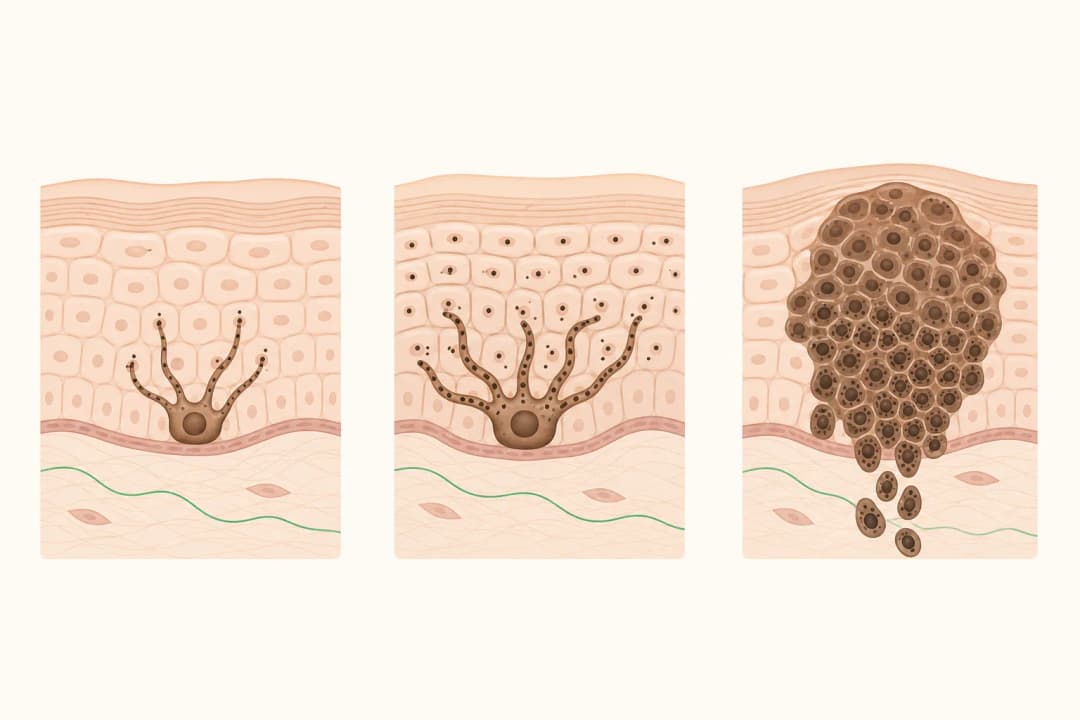
The areola contains naturally pigmented skin and can change with hormones, pregnancy, breastfeeding, friction or inflammation. A melanoma may appear as a new dark spot or as a mark with uneven colour, irregular edges, growth, crusting or bleeding. These features are warning signs, not a diagnosis; eczema, infection, benign moles and normal variation can look similar.
A clinician may inspect the areola and nipple, examine nearby skin and lymph nodes, and use dermoscopy. If the finding remains concerning, a biopsy can identify whether abnormal pigment-producing cells are present and how they are arranged.
What to do next
Make a prompt appointment with a dermatologist or breast clinician for a mark that is new, changing, itchy, bleeding, crusted or unlike your other marks. Photographing the area for your own comparison can help you describe change, but it cannot replace examination. If melanoma is confirmed, treatment may involve [Skin Cancer Surgery](/treatments/surgical-dermatology/skin-cancer-surgery/), wider surgery or other care based on the biopsy and staging results.
When to seek care
Seek prompt medical review for a sore or pigmented area that does not settle, a new lump, spontaneous nipple bleeding or discharge, skin pulling, persistent pain or a rapidly changing mark. Seek urgent help for heavy bleeding, rapidly spreading redness with fever or severe swelling. These symptoms have several possible causes, but assessment should not be delayed because of uncertainty.
Questions for your doctor
Ask whether the change is in the areolar skin, nipple or deeper breast tissue, whether dermoscopy or biopsy is needed, and how to protect the area while it heals. If melanoma is diagnosed, ask about margins, lymph-node assessment, treatment choices, breastfeeding considerations and the plan for [Follow-Up After Cancer Treatment](/treatments/survivorship-and-rehabilitation/post-treatment-surveillance/).
Find care
General Clinics & Polyclinics in Abu Dhabi
That answer is general. If you want it applied to your own case, these are licensed general clinics & polyclinics listed in Abu Dhabi.
27 Ar Ruwwad St - Shakhbout City - MSH4 - Abu Dhabi - United Arab Emirates
Accepts: Daman, Thiqa, Cigna, MetLife +20 more
Al Ruwais, Al Dhafrah
Accepts: Daman, Thiqa, AXA, Cigna +16 more
Al Bahyah - Al Bahyah Old - Abu Dhabi - United Arab Emirates
Accepts: Daman, Thiqa, Cigna, Allianz Care +18 more
Abu Dhabi
Accepts: Daman, Thiqa, AXA, Cigna +27 more
Ordered by verification status and how complete each clinic's public record is, then alphabetically. This is a directory listing, not a ranking — Zavis does not rate or recommend providers.
A factual listing drawn from the DHA, DOH and MOHAP licence registers. It is not a referral, an endorsement, or advice that any of these providers is right for you.
Questions people ask
Does every dark areolar spot mean melanoma?
No. Areolar skin is naturally pigmented, and benign moles, irritation and hormonal changes can cause colour differences.
Should breastfeeding-related change be checked?
A change that persists, grows, bleeds or looks unusual should be examined, whether or not breastfeeding is occurring.
Related
Related reading
Keep reading
Medical disclaimer. This page is general health information, not medical advice, and it cannot diagnose you. Always consult a licensed healthcare provider about your own symptoms and treatment. In an emergency in the UAE, call 998 for an ambulance.