
What should you know about melanoma mets?
Short answer
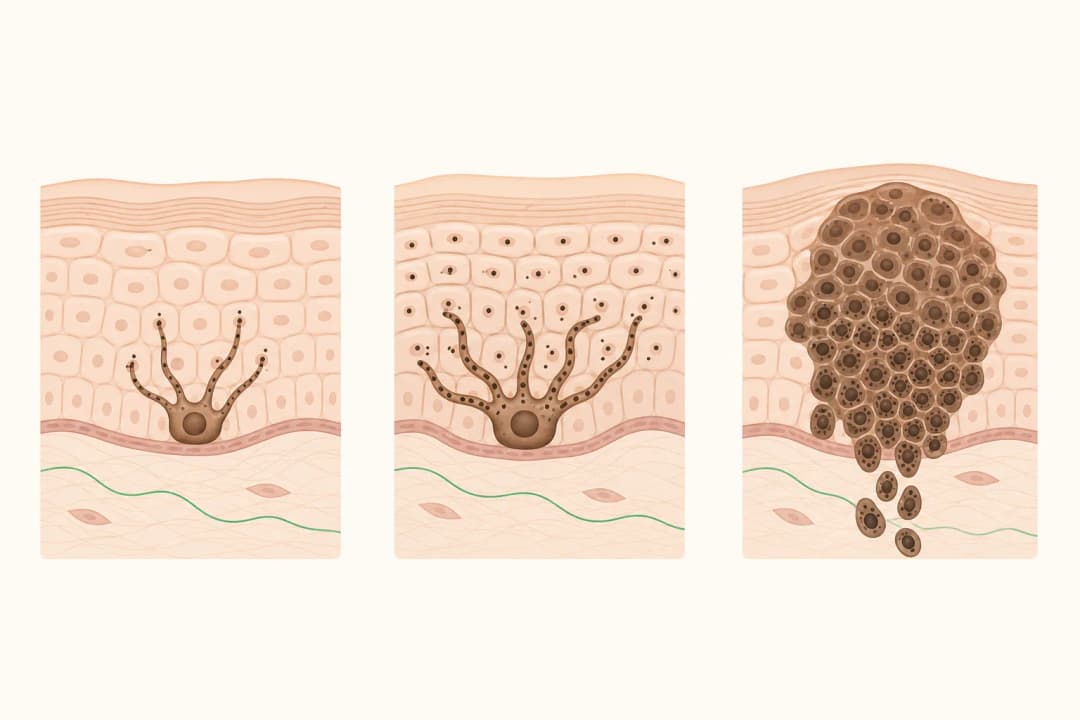
Melanoma mets means melanoma cells have spread from the original skin site to nearby tissue, lymph nodes, or another organ, so care focuses on staging and controlling disease.
This answers one question. It is not a diagnosis and does not replace an assessment by a licensed doctor.
At a glance
- Mets
- A short form of metastases, meaning spread of cancer cells.
- Assessment
- Examination, imaging, and pathology may be combined.
- Care
- Treatment depends on location, extent, and previous treatment.
How spread is assessed
Metastatic melanoma may involve lymph nodes, skin or soft tissue near the original lesion, or distant organs. The word mets is short for metastases. Doctors combine examination, imaging when appropriate, and tissue findings to understand where melanoma is located and how it behaves. A sentinel lymph node biopsy can help assess whether cells have reached the first draining lymph node. Findings guide the stage and treatment discussion; a skin change alone cannot establish spread.
Practical next steps
Arrange review with a dermatologist or oncology team familiar with melanoma. Bring pathology reports, scans, medication details, and a list of new symptoms. Treatment may include surgery for a removable focus, immunotherapy that helps the immune system recognise cancer cells, or a combination chosen for the location and extent of disease. Keep scheduled examinations and follow-up visits, and protect treated skin from irritation while wounds heal.
When to seek care promptly
Contact your care team promptly for a new enlarging lump, persistent unexplained pain, worsening headache, weakness, confusion, seizures, repeated vomiting, breathlessness, or a sudden change in vision. Severe or rapidly developing neurological symptoms need emergency assessment. These symptoms have many possible causes, but they should not wait for a routine appointment when melanoma spread is known or suspected.
Questions for your doctor
Ask where melanoma has been found, which tests are still needed, what the pathology shows, and whether surgery or immunotherapy is suitable. Clarify the purpose and timing of each treatment, likely effects on daily life, wound care, symptom contacts, and the follow-up plan.
Find care
General Clinics & Polyclinics in Abu Dhabi
That answer is general. If you want it applied to your own case, these are licensed general clinics & polyclinics listed in Abu Dhabi.
27 Ar Ruwwad St - Shakhbout City - MSH4 - Abu Dhabi - United Arab Emirates
Accepts: Daman, Thiqa, Cigna, MetLife +20 more
Al Ruwais, Al Dhafrah
Accepts: Daman, Thiqa, AXA, Cigna +16 more
Al Bahyah - Al Bahyah Old - Abu Dhabi - United Arab Emirates
Accepts: Daman, Thiqa, Cigna, Allianz Care +18 more
Abu Dhabi
Accepts: Daman, Thiqa, AXA, Cigna +27 more
Ordered by verification status and how complete each clinic's public record is, then alphabetically. This is a directory listing, not a ranking — Zavis does not rate or recommend providers.
A factual listing drawn from the DHA, DOH and MOHAP licence registers. It is not a referral, an endorsement, or advice that any of these providers is right for you.
Questions people ask
Does a new lump prove melanoma has spread?
No. A lump can have several causes, so examination and appropriate testing are needed.
Can metastatic melanoma be treated?
Treatment options may include surgery, immunotherapy, or both, depending on the individual findings.
Related
Related reading
Keep reading
Medical disclaimer. This page is general health information, not medical advice, and it cannot diagnose you. Always consult a licensed healthcare provider about your own symptoms and treatment. In an emergency in the UAE, call 998 for an ambulance.