
Melanoma march: what the term may describe
Short answer
Melanoma march is a term used for melanoma deposits appearing along lymphatic pathways between a primary lesion and nearby lymph nodes, requiring specialist assessment.
This answers one question. It is not a diagnosis and does not replace an assessment by a licensed doctor.
At a glance
- Meaning
- Possible melanoma deposits along the route toward regional lymph nodes.
- Look-alikes
- Cysts, scars, blocked follicles and infection can appear similar.
- Assessment
- Mapping, node examination, imaging or biopsy may be used.
What the term describes
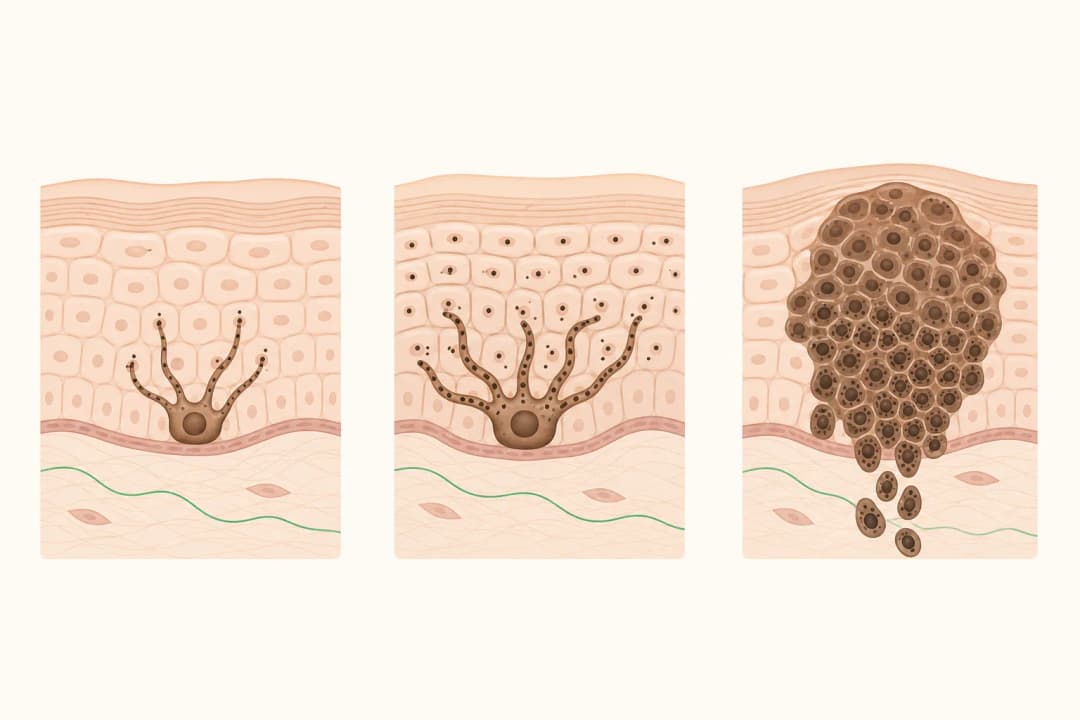
A melanoma march can refer to small nodules developing in the skin or tissue between the original melanoma and its regional lymph-node basin. Clinicians may call these in-transit deposits. They can be skin-coloured, brown, blue-black or red, and may feel firm; some cause no discomfort. Similar-looking bumps can arise from scars, cysts, blocked follicles or infection, so the appearance does not establish the cause. Examination maps the lesions, checks nearby nodes and considers the original tumour history.
How doctors investigate it
Arrange a review with the melanoma team for new clustered bumps, a firm cord-like area or changes along the path from a previous lesion toward a lymph-node region. Photographing the area and noting changes can help. The team may use ultrasound, imaging or a biopsy to confirm what is present. Depending on the number, location and stage, options can include surgical excision, skin cancer surgery, tumour removal surgery or immunotherapy. The plan is individual and may combine local and whole-body treatment.
When to seek care
Seek prompt advice for rapidly appearing or enlarging nodules, bleeding, ulceration, marked redness, fever or painful swelling. Emergency care is needed for breathing difficulty, severe weakness, confusion, seizure or a sudden severe headache. These symptoms can signal an urgent complication and should not be attributed to a skin change without assessment.
Questions for your appointment
Ask whether the lesions follow a lymphatic drainage route, which test will confirm their nature, whether lymph nodes or other areas need imaging, and how the result changes the treatment plan. Ask how to check the skin between visits and what follow-up after cancer treatment will include.
Find care
General Clinics & Polyclinics in Abu Dhabi
That answer is general. If you want it applied to your own case, these are licensed general clinics & polyclinics listed in Abu Dhabi.
27 Ar Ruwwad St - Shakhbout City - MSH4 - Abu Dhabi - United Arab Emirates
Accepts: Daman, Thiqa, Cigna, MetLife +20 more
Al Ruwais, Al Dhafrah
Accepts: Daman, Thiqa, AXA, Cigna +16 more
Al Bahyah - Al Bahyah Old - Abu Dhabi - United Arab Emirates
Accepts: Daman, Thiqa, Cigna, Allianz Care +18 more
Abu Dhabi
Accepts: Daman, Thiqa, AXA, Cigna +27 more
Ordered by verification status and how complete each clinic's public record is, then alphabetically. This is a directory listing, not a ranking — Zavis does not rate or recommend providers.
A factual listing drawn from the DHA, DOH and MOHAP licence registers. It is not a referral, an endorsement, or advice that any of these providers is right for you.
Questions people ask
Is melanoma march a diagnosis by itself?
No. It is a descriptive term; examination and testing are needed to determine whether nodules contain melanoma.
Can the bumps be removed?
Surgical removal may be considered for selected lesions, alongside other treatment when appropriate.
Related
Related reading
Keep reading
Medical disclaimer. This page is general health information, not medical advice, and it cannot diagnose you. Always consult a licensed healthcare provider about your own symptoms and treatment. In an emergency in the UAE, call 998 for an ambulance.