
What should you know about melanoma longitudinal?
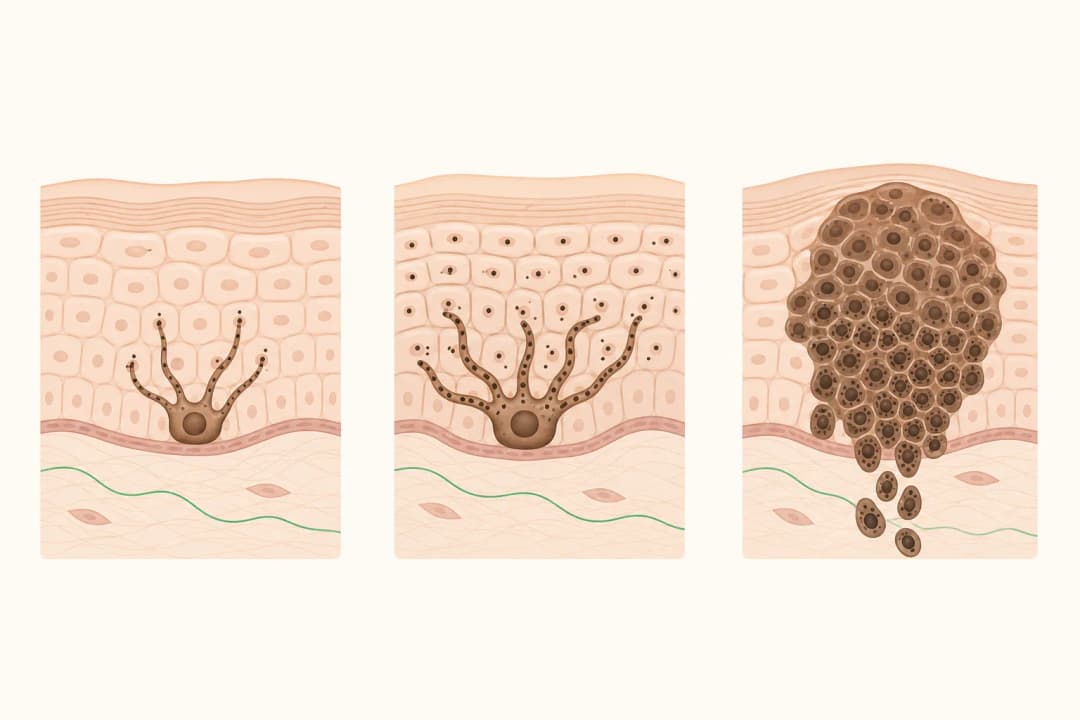
Short answer
Longitudinal melanoma care means tracking the skin and overall health over time so new lesions, recurrence, treatment effects, and changing risks can be assessed early.
This answers one question. It is not a diagnosis and does not replace an assessment by a licensed doctor.
At a glance
- Purpose
- Compare findings across time
- What to track
- New lesions, scars, lumps, symptoms, and treatment effects
- Helpful record
- Dates, locations, photographs, and symptom patterns
Why time matters
A single examination is a snapshot. Follow-up builds a sequence of observations: how a mole looks, whether a scar changes, how lymph nodes feel, and whether symptoms appear after treatment. Clinicians may use photographs, dermoscopy, examinations, scans, and pathology results when needed. Monitoring is relevant both after melanoma treatment and when a changing lesion is being watched while a decision is made.
A new melanoma can develop separately from an earlier one, and treatment effects can resemble illness symptoms. Sharing the timing and pattern of each change helps the team separate these possibilities.
Build a useful follow-up routine
Attend the schedule your clinician recommends and learn how to inspect your skin without causing irritation. Check surgical scars, nearby skin, the scalp, nails, and less visible areas. Keep appointments even when you feel well. Record new lumps, persistent cough, unexplained weight change, ongoing pain, headaches, or visual changes, including when they began. Follow-Up After Cancer Treatment can include skin review, lymph-node examination, imaging, and discussion of emotional or practical needs.
Changes that should not wait
Contact your care team for a new or changing pigmented spot, a firm lump near a scar, persistent unexplained pain, or symptoms that steadily worsen. Get urgent medical help for a seizure, sudden weakness, confusion, severe breathlessness, chest pain, or loss of consciousness. Do not wait for a routine review when a symptom is severe or rapidly progressing.
Questions for your doctor
How often should I have skin and lymph-node checks? Which symptoms should trigger a call? Do I need photographs or scans? How should I examine my scar and nearby skin? When should surveillance change after a new finding?
Find care
General Clinics & Polyclinics in Abu Dhabi
That answer is general. If you want it applied to your own case, these are licensed general clinics & polyclinics listed in Abu Dhabi.
27 Ar Ruwwad St - Shakhbout City - MSH4 - Abu Dhabi - United Arab Emirates
Accepts: Daman, Thiqa, Cigna, MetLife +20 more
Al Ruwais, Al Dhafrah
Accepts: Daman, Thiqa, AXA, Cigna +16 more
Al Bahyah - Al Bahyah Old - Abu Dhabi - United Arab Emirates
Accepts: Daman, Thiqa, Cigna, Allianz Care +18 more
Abu Dhabi
Accepts: Daman, Thiqa, AXA, Cigna +27 more
Ordered by verification status and how complete each clinic's public record is, then alphabetically. This is a directory listing, not a ranking — Zavis does not rate or recommend providers.
A factual listing drawn from the DHA, DOH and MOHAP licence registers. It is not a referral, an endorsement, or advice that any of these providers is right for you.
Questions people ask
Why are follow-up visits needed if melanoma was removed?
Follow-up can identify a new melanoma, a local change, recurrence, or treatment effect and allows timely evaluation.
Should I monitor only the original site?
No. Examine the whole skin surface and report new lumps or persistent symptoms elsewhere.
Related
Related reading
Keep reading
Medical disclaimer. This page is general health information, not medical advice, and it cannot diagnose you. Always consult a licensed healthcare provider about your own symptoms and treatment. In an emergency in the UAE, call 998 for an ambulance.