
What should you know about melanoma in teens?
Short answer
Melanoma in teens is uncommon but should be assessed promptly when a mole changes, because early examination can guide effective treatment.
This answers one question. It is not a diagnosis and does not replace an assessment by a licensed doctor.
At a glance
- Who can assess it
- A dermatologist or primary-care clinician can begin the evaluation.
- Testing
- A biopsy or complete removal may be needed for diagnosis.
- Skin checks
- Notice new, changing or unusual marks and report them.
What melanoma in a teenager means
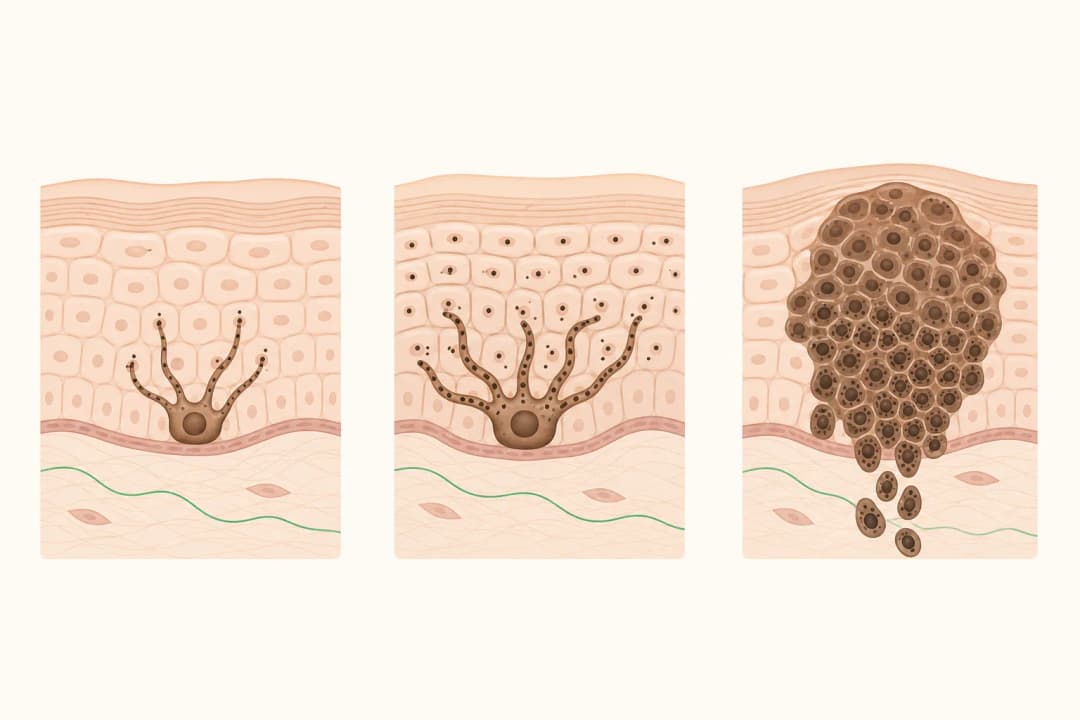
Melanoma is a cancer of pigment-producing cells. A changing mole, a new unusual mark, bleeding, crusting, itching, or a spot that looks different from the others deserves a clinician’s attention. These signs can have harmless causes, so a visual change does not establish melanoma. Examination and, when needed, removal of the suspicious area for laboratory testing provide the answer. Family history, many moles, and intense sun exposure are useful details to share.
Practical next steps
Tell a parent, guardian, school nurse, or trusted adult and book an appointment with a dermatologist or primary-care clinician. Do not pick, scratch, or attempt to remove the mark at home. Photographing it beside a ruler can help show change, but it does not replace examination. If melanoma is confirmed, care may include surgical excision, lymph-node assessment, scans, or immunotherapy, chosen by the specialist team.
When to seek care
Arrange prompt assessment for a mole that is rapidly changing, bleeding without clear injury, repeatedly crusting, or becoming painful. Seek urgent help for uncontrolled bleeding, severe pain, fever after a procedure, or swelling that affects breathing or swallowing. A worrying-looking mole is not proof of cancer; urgency comes from the change or symptom and the need for a proper examination.
Questions for your doctor
Ask what changes were seen, whether the lesion should be removed for testing, how the result will be explained, and whether family members need skin checks. Ask how to protect the skin during outdoor activities and when the next review should occur.
Find care
General Clinics & Polyclinics in Abu Dhabi
That answer is general. If you want it applied to your own case, these are licensed general clinics & polyclinics listed in Abu Dhabi.
27 Ar Ruwwad St - Shakhbout City - MSH4 - Abu Dhabi - United Arab Emirates
Accepts: Daman, Thiqa, Cigna, MetLife +20 more
Al Ruwais, Al Dhafrah
Accepts: Daman, Thiqa, AXA, Cigna +16 more
Al Bahyah - Al Bahyah Old - Abu Dhabi - United Arab Emirates
Accepts: Daman, Thiqa, Cigna, Allianz Care +18 more
Abu Dhabi
Accepts: Daman, Thiqa, AXA, Cigna +27 more
Ordered by verification status and how complete each clinic's public record is, then alphabetically. This is a directory listing, not a ranking — Zavis does not rate or recommend providers.
A factual listing drawn from the DHA, DOH and MOHAP licence registers. It is not a referral, an endorsement, or advice that any of these providers is right for you.
Questions people ask
Does every unusual mole in a teenager mean melanoma?
No. Many unusual-looking marks are benign, but a clinician should assess a changing or symptomatic lesion.
Should a teen remove a mole at home?
No. Home removal can cause injury and delay diagnosis; a clinician should decide how it is tested or removed.
Related
Related reading
Keep reading
Medical disclaimer. This page is general health information, not medical advice, and it cannot diagnose you. Always consult a licensed healthcare provider about your own symptoms and treatment. In an emergency in the UAE, call 998 for an ambulance.